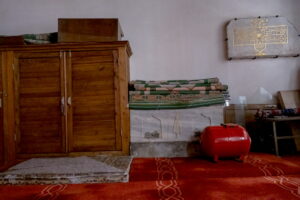
Arap Camii (İstanbul Şehir Rehberi, Harita 15), 716 yılında Konstantinopolis’i kuşatan Araplar tarafından inşa edilen bir cami olduğu bilgisinin tersine (Arseven, 1989), 14. yüzyılda Ceneviz Galata’sında yaşayan Dominiken Tarikatı mensupları tarafından inşa edilmiş bir manastır-kilisedir (Eyice,1969). Evliya Çelebi tarafından caminin kıble yönüne doğru inşa edildiğinin belirtilmesi, ayrıca minaresinin Şam Emevi Camii’ninkine benzetilmesinden dolayı yapının cami olarak inşa edildiğine inanılmıştır. Hem Arap hem Bizans kaynaklarına göre Arapların İstanbul’da bir camii inşa ettiği fakat bu caminin tarihi yarımada içinde bulunduğu ve 1204 Latin İşgali sırasında ortadan kaldırıldığı bilinmektedir. Dolayısıyla bu camiinin Arap Camii ile bir ilgisi yoktur (Koçu, 1956, s.938).
Yapının adı, ibadete açıldığı 1475’te Fatih Vakfiyesi’nde “Galata Camii” olarak geçmektedir. 1492’de İspanya’dan göç eden Endülüslü müslümanlar bu bölgeye yerleştirildiği için zamanla Galata Camii, Arap Camii olarak anılmıştır. (Koçu, 1956, s.941).
Yapının katmanlarını ve geçmişini anlamak için Cenevizlilerin bölgeye geliş sürecini bilmek gerekir. Konstantinopolis’in 1204 yılında Latinler tarafından işgal edilmesi sonucu bu bölgedeki ticari ayrıcalıklarını kaybeden Cenevizliler 13. yüzyılda Galata’ya yerleşmeye başlamıştır. Bu yerleşme sırasında Galata’nın Haliç kıyısına yakın bir yerde, 6. yüzyıla ait Azize Eirene adında terk edilmiş bir Bizans Kilisesi, Cenevizliler’e mezarlık alanı olarak tahsis edilmiştir. Bu bölgede, Latin işgali sırasında Aziz Paulus’a ithaf edilmiş küçük bir kilise inşa edilmiştir. 1325 yılında katolik tarikatı olan Dominiken tarikatı mensuplarınca kilise genişletilmiş “San Paolo ve San Domenico” manastırı adını almıştır. İstanbul’un fetih öncesinden kalan tek gotik kilisesi burasıdır. Günümüzde Arap Camii olarak gördüğümüz yapı esas olarak 14. yüzyılda tamamlanan ve adı “San Paolo ve San Domenico” olarak anılan yapıdır (Eyice,1969, s.45 & Pazazzo, 2014).
Eski Galata’nın en eski kiliselerinden biri olan ve Cenevizlilere mezarlık olarak tahsis edilmis olan Hagia Eirene Kilisesi’nin de bu civarlarda bulunduğu düşünülür (A. Schneider – î. Nomidis: Galata, Istanbul 1944, s.19
akt. Koçu, 1956, s.939). Nitekim 1913-1919 yıllarında camiide yapılan kampsamlı yenileme çalısmalarında döşemenin altında XIV-XV. yüzyıllara ait yüzden fazla İtalyan mezar taşı bulunmuş ve İstanbul Arkeoloji Müzeleri’ne kaldırılmıştır (Eyice, 1991, S.326).
On dördüncü yüzyıla ait yapının planı, İtalyan Gotik üslubunda inşa edilmiş üç nefli bir bazilikadır. İki yanda şapelle çevrili kare biçimli bir apsisi olan kilisenin narteksi yoktur. Mermer sütun dizileri orta ve nef yan nefleri birbirinden ayırır. Ancak günümüze sağlam olarak ulaşabilen tek mermer sütun, bugünkü yapının kuzeydoğu köşesindeki hünkâr mahfilini taşımaktadır. Orta nef, bemaya kadar ahşap çatı ile örtülüdür. Bema kısmı yan neflerden daha yüksek olup 6.7 ×7.0 metre boyutlarında tek ve etkileyici bir çapraz tonozla örtülüdür. Bemanın iki yanında
benzer tonozlara sahip birer mekân yer alır. Güneydoğuda yer alan orijinal çan kulesi daha sonra minareye dönüştürülmüştür. Orijinal pencereler sivri kemerli ve dardır. Ayrıca apsisin doğu duvarında sonradan iptal edilmiş bir gül pencere bulunduğu anlaşılmaktadır (Akyürek, 2011, s.304).
1453’te İstanbul’un fethi ile birlikte, Fatih Sultan Mehmet’in emriyle San Domenico kilisesi camiye çevrilmiştir. III. Mehmed (1595-1603) zamanında tamir edilmiş ve XVII. yüzyıl sonlarında çevresini saran evler yıktırılmıştır. I. Mahmud’un annesi Sâliha Sultan 1734’te yeni bir şadırvan yaptırmıştır. Camii, 1807’de bir yangın geçirmişse de hemen tamir edilmiştir. 1868’de avlunun altına bir sarnıçla bugün görülen şadırvan yaptırılmıştır. Arap Camii’nin 1913-1919 yıllarında çatısı kaldırılmış, avlu tarafındaki duvarı indirilip daha ileri alınmış, yeni bir son cemaat yeri yapılmış, içerideki mahfiller ahşap direkler üzerine yeniden inşa edilmiştir. Mihrabın solundaki hücre “Mesleme’nin çilehanesi” olarak düzene konmuş, dışarıda ise kaldırılan hünkâr mahfili merdiveninin yerinde bir Arap Baba kabri düzenlenmiştir (Eyice, 1991, S.326).
Yapının mimarisinden daha önemli bir nokta ise içinde bulunan bezemeler ve bunları yapan ustalardır. 1999 depremi sonrasında dökülen sıvalar altından çıkan freskolardan yapı içindeki sanat eserlerini öğrenmek mümkün olmustur. 2006 yılındaki rölöve ve 2007-2012 yılları arasındaki restorasyon çalışmaları sırasında, varlığı önceden bilinmeyen fresko ve mozaikler bulunmuştur. Yapıda, hem tasvir biçimi hem de tasvir konumu itibarıyla Bizans ustalarının çalıştığı kesindir. Bizans ressamlarının yapıdaki freskoları Katolikler adına yapması, normal şartlarda birbirlerinden mezhep farkları nedeniyle pek hoşlanmayan kişilerin bir arada çalışmış olması açısından dünyada çok nadir bulunan bir örnek oluşturmaktadır (Çetinkaya, 2010).
Kaynakça
Akyürek, E., (2011). Palaiologoslar Dönemi Konstantinopolisi’nde Dominiken Duvar Resimleri: Galata Arap Camisi (San Domenico Kilisesi) Freskoları. Istanbul.
Arseven, C. E., (1989). Eski Galata ve Binaları. Çelik Gülersoy Vakfı yay., İstanbul. s.46-50.
Çetinkaya, H., (2010). ’’Arap Cami in İstanbul: Its Arthitecture and Frescoes’’. Anatolia Antiqua, Cilt. 18, 2010, ss. 169-188.
Ergin, O. N., (1934). Istanbul Sehri Rehberi. Matbaacılık ve Nesriyat Türk Anonim Şirketi, İstanbul.
Eyice, S., (1969). Galata ve Kulesi, Türkiye Turing ve Otomobil Kurumu, İstanbul.
Eyice, S., (1991). “Arap Camii” Maddesi. TDV İslam Ansiklopedisi, Cilt 3, İstanbul., s. 5326-327. URL: https://islamansiklopedisi.org.tr/arap-camii (27.04.2024).
Koçu, R. E., (1946). İstanbul Ansiklopedisi, Cilt II, Istanbul Ansiklopedisi ve Neşriyat, İstanbul.
Palazzo, P. B., (2014). “Arap Camii veya Saint Paul Kilisesi”, Bilge Karınca Yayınları, İstanbul.