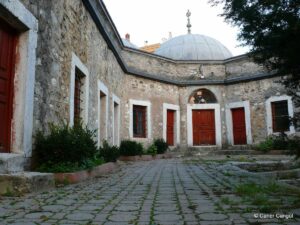
Çinili mevkiinde, Allame Caddesi ile Çinçin Hamam Sokağı’nın birleştiği yerdedir. Çinili Mescit Sokağı ile Çinçinli Hamam Sokağı’na açılan avlu kapıları vardır.
Camiin Çinçinli Hamam Sokağı’na açılan kapısı üzerinde Şair Fevzi Efendi’nin hazırladığı üç satır halindeki on iki mısralı şu kitâbe bulunmaktadır:
Mader-i Sultan İbrahim Han
Hazreti Sultan-ı ekrem valide
Bu binayi hakkı yapdı hayr içün
Ta ola beyt-i ibadet abide
Davet ola beş vakitde rahmete
Menzil ola abide ve zahide
Yapdı mektep çeşme hamam ve sebîl
Kim ona Hak lütf-ı hem ihsan ide
Ehl-i hayri bunda taat ideni
Dahil it yâ Rab cenan-ı halide
Fevzi’ya lafza ve mana tarihi
Oldu bin ellide hayrü’l-valide
Cami, 1050 (1640) tarihinde, Sultan I. Ahmet’in eşi, Sultan IV. Murat’ın ve Sultan İbrahim’in annesi Mahpeyker Kösem Sultan tarafından yaptırılmıştır. Camiden başka, bir medrese, bir şadırvan, bir sebil, bir mektep, bir çeşme ve bir de çifte hamam bina edilmiştir.
Avlunun etrafını, pencereli, kesme taş harpuştalı bir duvar çevirmiştir. Bu kapının sol tarafında, sekiz mermer sütunlu, bir sivri kubbenin altında, mermer şebekeli güzel bir şadırvan, bunun önünde ve avlu duvarı penceresi içinde ise, sebil bulunmaktadır.
Mabedin sol tarafında ve geride, set üzerinde, yedi odalı ve bir dershaneli, at nalı şeklinde medrese veya darülkurra, medresinin yan tarafında ve camiin kıble yönünde ise, iki mermer lâhit vardır. Ayak ve baş şâhidelerinde yazı olmayan bu mezarlar Behram Ağa ile eşine aittir. Bunların sağ tarafında oldukça büyük, bir yangın havuzu bulunmaktadır. Sonradan üstü kapatılan bu kesme taş eserin camiye bakan yüzünde iki, avlu kapısına bakan cephesinde ise, bir çeşme mevcuttur. Üçünün de kitâbesi yoktur.
Camiin son cemaat yerine, beş basamakla çıkılır. Mabedi üç tarafı, 22 mermer sütun üzerine oturtulmuş bir saçak çevirmiştir
Son cemaat yeri, devrinin en güzel çinileri ile kaplanmıştır. Yalnız, bir kısmı kaybolduğundan yerlerine yenileri konmuştur.
Sağ tarafta, kesme taştan yaptırılmış olan tek şerefeli minare yer almaktadır. Şerefesinin alt kısmı şekillidir.
Cami sahnına açılan cümle kapısı üzerinde, üç beyitlik şu kitâbe vardır:
Hemişe hazreti vâlâ cenab-ı Valide Sultan
Hulûs üzre li vechi’llah hayrat itmedir şanı
Yapub bu camii ana nice emlak vakf itdi
Muvaffak itdi hayrata anı tevfik-i Rabbanî
Tamam olunca didi Himmet’â tarihini hâtif
Bu camide olan taat ola makbul-i Sübhanî
Kitâbenin altında tarih yazılı değildir. Ebced hesabı ile 1051 rakamı çıkmaktadır.
Kare plânlı mabet tek ve sağır kubbelidir. Kubbe, köşe trompları üzerine oturtulan sekiz yüzlü bir kasnağa bindirilmiştir. Camiin dört duvarı, kubbe kasnağına kadar serapa çini ile kaplıdır. XVII. yüzyıl çiniciliğimizin en nefis örnekleri sanki bu şirin camide sergilenmiş gibidir. Çinilerdeki beyaz, siyah, açık mavi, mor, lacivert, kırmızı ve yeşil renklerle bezenmiş lâle, gül, karanfil ve papatyaların ahenkli uyuşması çok güzeldir. Mabet, altlı üstlü 20 pencereden ışık alır. Alt pencerelerin üstündeki çini panolarda mor zemin üzerine beyaz ile Besmele ve Ayete’l Kürsî yazılıdır. Üst pencerelerin altında da mor zemin üzerine beyazla Fetih Sûresi fırdolayı yazılmıştır. Pencere kapakları üzerinde Kaside-i Bürde yazılıdır. Kubbe, kalem işleri ile bezenmiştir.
Som mermerden yapılmış olan minberi, taş işçiliğinin nefis bir örneğidir. Şebeke desenleri emsalsizdir. Dört sütun üzerinde yükselen külahı renkli çinilerle kaplanmıştır.
Mihrabı da tamamen çini ile kaplanmıştır. Sağındaki çini panolardan Besmele yazılı olanının tamamı, soldakinin üst sırasından iki parçası yok olmuştur.
Camiin içinde bir de hünkâr mahfili vardır.
Çinili Cami, pek harap durumda iken, 1306-8 (1890-93) tarihleri arasında tamir edilmiştir. 1964 senesinde minarenin külah ve petek kısımları yıldırım isabetiyle yıkılmış ve sonradan aslına uymayan bir şekilde tamir edilmiştir. Bunu, külahın hemen altındaki petek kısmına yapılan kabartma şekillerinden ve şerefe altına yerleştirilen iri yaprak motiflerinden anlıyoruz.
Evliya Çelebi ünlü Seyahatname’sinde; “Bu Kösem Valide Sultan, Sultan Ahmet Han’ın hatunu olup, Osman Han’ın Dördüncü Murat’ın ve İbrahim Han’ın analarıdır. Sultan Ahmet’den beri yedi padişah zamanında iş görüp, bu camii sağlıklarında kendi nefisleri için yaptırmışlardır. Bir bayır üzerinde havadar bir yerde, bir büyük kubbeli, dış sofalı, haremli, minareli, aydınlık bir camidir.” diyor. Çelebi, Üsküdar imaretlerini sayarken, Yeni Valide İmareti adı altında, Kösem Sultan’ın bir eserinden; “Selâtin bahçesi önünde zaiflere, miskinlere ve misafirlere nimetleri boldur.” diye bahsetmektedir. Kösem Sultan Misafirhanesi’ni anlatırken de; “Âyânın ve büyüklerin yatmaları için tesis edilmiş mamur bir yüksek saraydır. Hâlâ içinde Kethüda Arslan Ağa oturmakta idi.” diye yazmaktadır. Bu eserler bugün mevcut değildir.
Hadîka’da ise şu kayıt vardır:
“….. İstanbul’da bulunan Büyük Valide Hanı bu camiin vakfından olup ve han içinde olan mescit dahi Kösem Sultan’ın hayır eseridir. Her sene hacca gidenler için Teberderan zümresinden küçük saka ve büyük saka tabirleriyle iki kimse tayin olunup yollarda su ve bazı mahallerde şeker şerbeti ile hacılara ikram ettirmek ve İstanbul’dan Surre çıktığı gün Padişah huzurunda ve selâtin camilerinde Kur’an-ı azimü’ş-san’dan birer ayet okutmak Valide Sultan’ın vakfındandır. Anadolu Kavağı’nda da bir camii vardır.”
Kösem Sultan’ın ayrıca Mekke ve Medine’de ahaliye dağıtılmak üzere bir çok hediyeler gönderilmesi vakıfları arasında idi. Yukarıda yazılan hayır eserlerinden başka, Sultanselim civarındaki Valide Medresesi Mescidi’nin ve bunun yanındaki çeşmenin de bânisidir. Çakmakçılar Yokuşu’ndaki hanın yerinde Sadrazam Cerrah Mehmet Paşa’nın büyük sarayı bulunuyordu. Bu cesim han, o devirde bir banka görevi görerek, büyük servet sahiplerinin para ve kıymetli eşyaları burada saklanırdı.
Çinili Cami’nin mimarı Kasım Ağa’dır. Kendisi iki defa Başmimar olmuş, 1049 (1633)’te Üsküdar Sarayı’nı ve bu sarayın bahçesindeki ‘Baltacılar Koğuşu’nu tamir etmiş ve ayrıca bir küçük ahır da yapmıştı. Aynı yıl, Topkapı Sarayı’ndaki İftariye Kameriyesi’ni inşa eden Kasım Ağa, Bağdat Köşkü’nün de yapımcısı sayılır. Sanat gücünü Çinili Cami ile kanıtlıyan Ağa, Haseki’deki Bayram Paşa Medresesi, türbesi ve sebilinin de mimarıdır.
Kasım Ağa, kendi adına da Şehzadebaşı’nda, Hoşkadem Camii yakınında bir medrese, Üsküdar, Saraçhanebaşı ve Mahmutpaşa’da Hacı Köçek Camii yanına birer çeşme yapmıştı. Evliya Çelebi’nin yazdığına göre “Kasım Ağa reis-i mimaran” iken kendi memleketi olan ve Arnavut Belgrad’ı denilen Berat’a 1054 (1644)’te bir çeşme inşa etmişti.
Kasım Ağa’nın Üsküdar’da, Çinili Cami’nin de üzerinde bulunduğu Çinçinli Hamam Sokağı’nın Kartalbaba Caddesi ile birleştiği yerde bir çeşmesi vardır. Bu çeşmenin hemen yanında da ‘Kasım Baba Türbesi’ bulunmaktadır. Bu türbenin Kasım Ağa’ya ait olduğu sanılmaktadır. Semt, hâlâ onun adını taşımaktadır. Türbenin yanında da bir tekke vardı.
Naimâ Tarihi’nden öğrendiğimize göre Çinili Cami, 1051 senesi Ramazan’ında (Aralık 1641) “medresesi ile tamam olup çifte hamam dahi tamamlanmaya” yaklaşmıştı.
Eserde, yalnız cami-i şerif ismi geçtiğine göre, cami yapımından bir müddet sonra Çinili ismini almış demektir. Evliya Çelebi de camii, Kösem Valide Sultan Camii adıyla anmaktadır.
Avlu kapısı üzerinde görülen 1050 tarihi, avlu duvarlarının, kapısının, sebilinin ve şadırvanının bitim tarihi olup mabet, bu tarihten en az 6-10 ay sonra tamamlanmıştır.
Camiin kıblesi yönünde Kösem Sultan’ın kethüdası Behram Ağa ile eşinin kabirleri vardır. Kabirler lâhit şeklinde olup üzerlerinde yazı yoktur. Behram Ağa’nın şâhidesi poligonal sütun şeklinde, eşininki ise düzdür. Lâhdin yan yüzlerine iri rozet kabartmaları yapılmıştır. Üsküdarlı olan Ağa 18 Cemaziyelâhir 1056 (1 Ağustos 1646) tarihinde vefat etmiş ve yerine Şeyh Camii bânisi Kurt Ağa’nın oğlu Arslan Ağa Valide Kethüdası olmuştur. Behram Ağa, “Azim-i devlet ve vüsat sahibi idi. Efendisinin umûruna ve hayratına nazır idi.” (Sicill-i Osmânî, 2/33)
Çinili Cami ve çeşmesi 1318 (1900) tarihinde ve Evkaf Nazırı Galip Paşa’nın zamanında tamir ettirilmiştir.
Kaynak: Yüzyıllar Boyunca Üsküdar, Sayfa 162