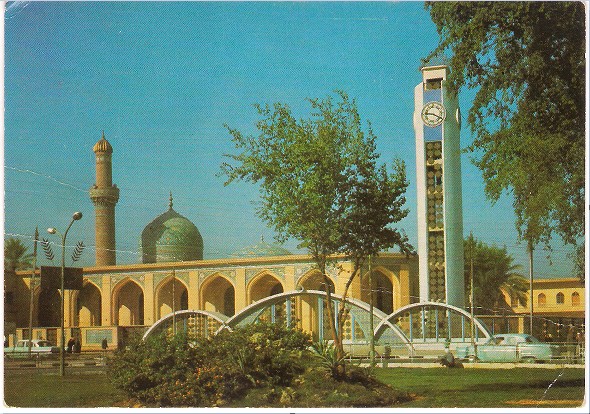
150 (767) yılında Bağdat’ta vefat eden İmâm-ı Âzam Ebû Hanîfe, Âzam sıfatına izâfetle bugün Âzamiye olarak anılan semte defnedilmiş ve kabri üzerine kerpiçten bir mezar yapılmıştı. Selçuklu Veziri Şerefülmülk Ebû Saîd el-Hârizmî 459’da (1067) mezarın üzerine bir türbe, yanına da bir medrese inşa ettirdi. Türbe çok uzaklardan görülebilen mukarnas külâhlı Selçuklu tarzı kubbeli bir yapıya sahipti. Medrese ise Nizâmiye’den dört ay on üç gün önce 27 Cemâziyelâhir 459’da (15 Mayıs 1067) hizmete açılarak Bağdat’ta kurulan ilk Selçuklu medresesi olmuştur.
Şah İsmâil’in Bağdat’ı istilâ etmesinden sonra harap olan İmâm-ı Âzam Türbesi ile medrese Kanûnî Sultan Süleyman tarafından cami, imaret, ribât ve hamam ilâvesiyle 1534’te yeniden yaptırılmıştır. 50.000 metrekarelik bir alanda etrafı surlarla çevrili olan İmâm-ı Âzam Külliyesi, Mimar Sinan’ın eserlerini gösteren listelerden birinde yer almakta ise de üzeri çizilmiş olduğu için Mimar Sinan’ın bu eserle olan bağlantısı şüphelidir. Şah Abbas’ın işgali sırasında ikinci defa zarar gören İmâm-ı Âzam Türbesi, Sultan IV. Murad’ın 1639’da Bağdat seferi sırasında yeniden elden geçirilmiştir. Külliyenin dökülen çinileriyle minarenin altın kaplamalı külâhı 1802’de Süleyman Paşa, cami 1816’da Dâvud Paşa, türbe 1839’da Sultan Abdülmecid tarafından tamir ettirilmiştir. Külliyenin tamamını ise 1871’de Pertevniyal Vâlide Sultan ve 1903-1910 yıllarında da Sultan II. Abdülhamid yeniden yaptırmışlardır. Zengin vakıfları sebebiyle düzenli kadrolara sahip olan Âzamiye Külliyesi’ne ayrıca çok sayıda kandil, şamdan ve halı gibi kıymetli eşyalar da hediye edilmiştir. Irak hükümeti tarafından 1948 ve 1959 yıllarında yapılan tamirlerde mimari ve süslemede birtakım değişikliklere gidilmiş, külliyeyi çeviren sur duvarları, taçkapılar, medrese, imaret, hamam ve batı revakları yıkılarak yerine modern tarzda yeni avlu duvarları, sembolik iki taçkapı ile ek binalar inşa edilmiştir.