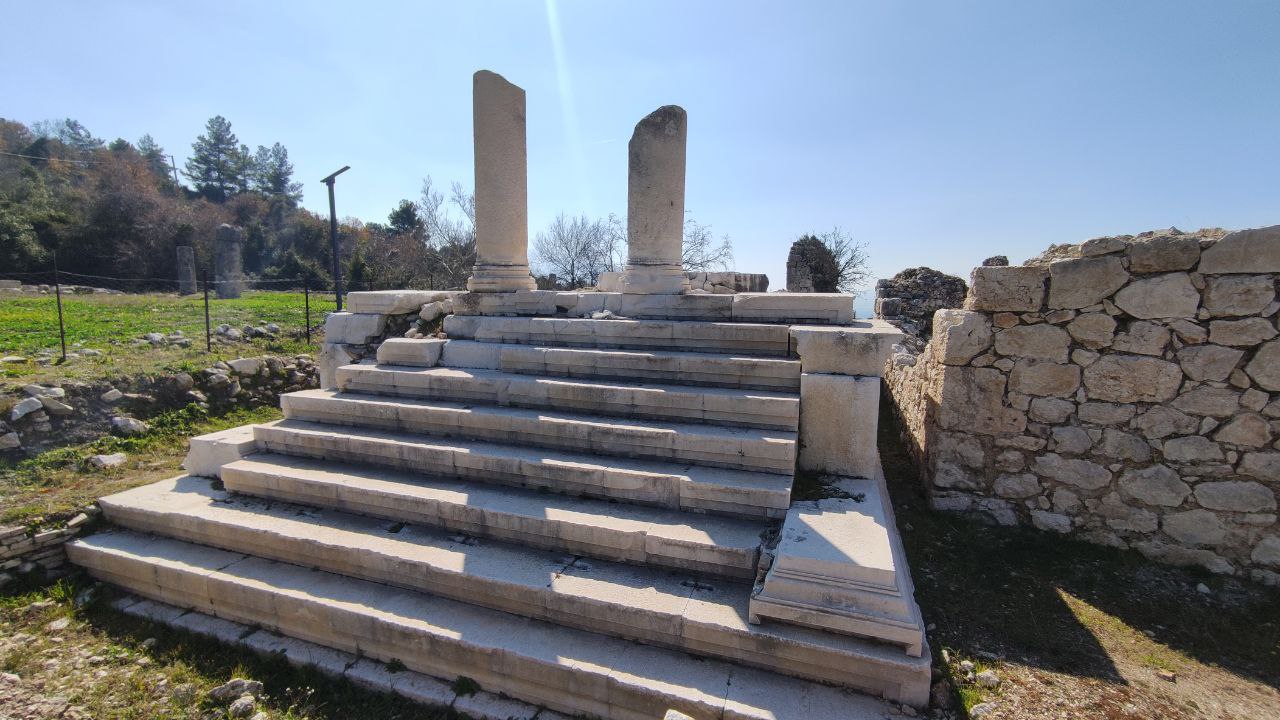
Kuzey güney doğrultulu konumlandırılmış tapınak teplum in antis planlı olup, 15.67 x 7.78 m ölçülerinde bir platform üzerine oturur. Tapınağa giriş kuzey yöndeki 7 basamaklı merdivenle sağlanır. Pronaos ve naos olmak üzere iki mekandan oluşan yapı Korinth mimari düzeninde inşa edilmiştir. Ante uçları arasındaki iki sütunun içinden geçilerek 5.14 x 3.07 m ölçülerinde olan pronaosa ulaşılır. Naos kareye yakın planlı olup 6.97 x 5.23 m ölçülerindedir. Pronaos ve naos bölümünde temel dolgusunun üzerini kapatan orijinal zemin blokları antik çağlarda sökülmüş, Kent Bazilikası’nda devşirme malzeme olarak kullanılmıştır. Tapınağın podyum, krepis sırası, pronaosa girişi sağlayan merdiven ve temel dolgusuna kadar olan kısmı insitu olarak günümüze ulaşmıştır. Tacı ve kaidesi ile birlikte yüksekliği 1.89 m ölçülen podyum üzerinde tek basamaklı krepis sırası yer alır. Krepis üzerinde profilli bir kaide ile başlayan duvar örgüsü, entablatür sırasının altında duvar tacı olarak adlandırılan bir silmeyle sonlanır. Architrav, friz ve geison sırasından oluşan entablatürü tamamlayan alınlıkla birlikte yapının platforma kadar olan yüksekliği 10 metreye ulaşır. Astragal dizisi ile süslenmiş architrav bloklarının üzerinde zengin bitkisel bezemelerin yer aldığı friz kuşağı bulunur. Kuzey ve güney alınlıkların korunan parçaları sima kuşağının aslan çörtenleriyle birlikte verildiğini gösterir. Epigrafik buluntulara göre Tanrı Kronos’a adandığı anlaşılan tapınak mimari özellikleri dolayısıyla MS 2. yüzyılın ikinci yarısına tarihlenmektedir.
Anıl Karadağ • 2023
Tlos Kronos Tapınağı
- Type
- Temple
- Century
- 2nd century
- Status
- Accessible
- Region
- Türkiye›Ege Bölgesi›Muğla›Seydikemer

Last Updated:
Anıl Karadağ - 17:54, 09 Dec 2025
Contributor:
Anıl Karadağ,
A. Erdem Şentürk
KE No
117576
Citation
“Tlos Kronos Tapınağı”, Kültür Envanteri, 9 December 2025,
https://kulturenvanteri.com/en/?p=117576 .