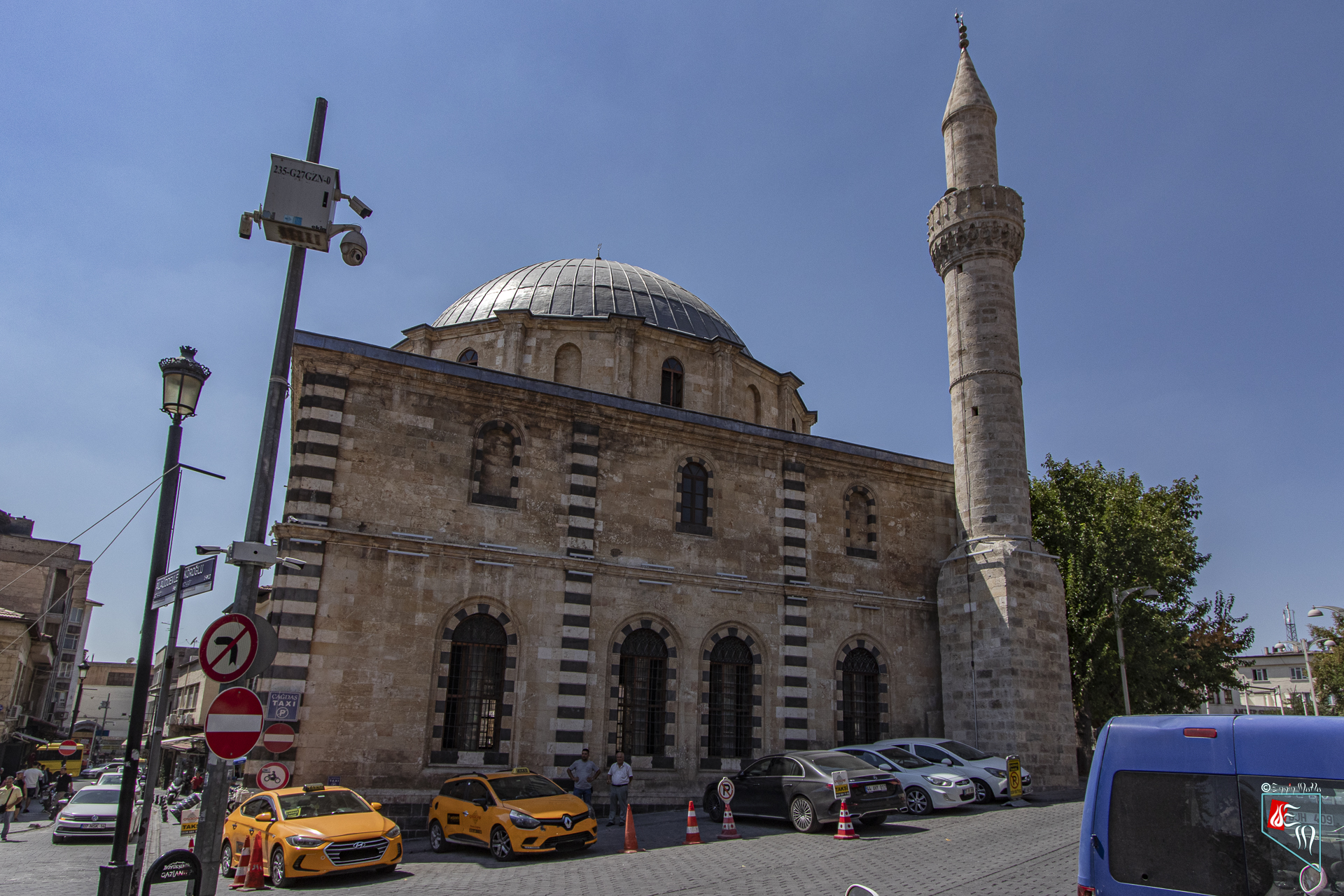
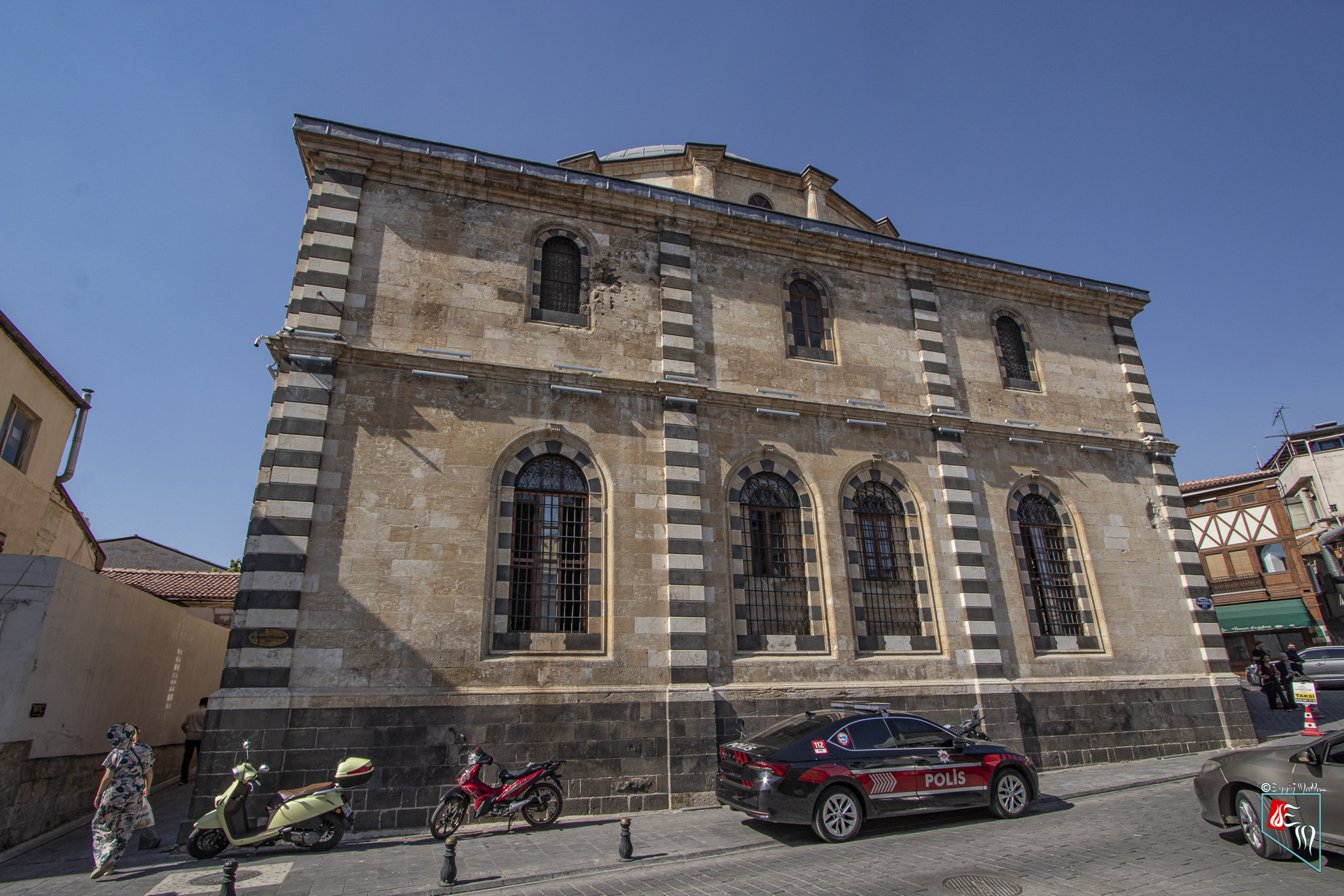
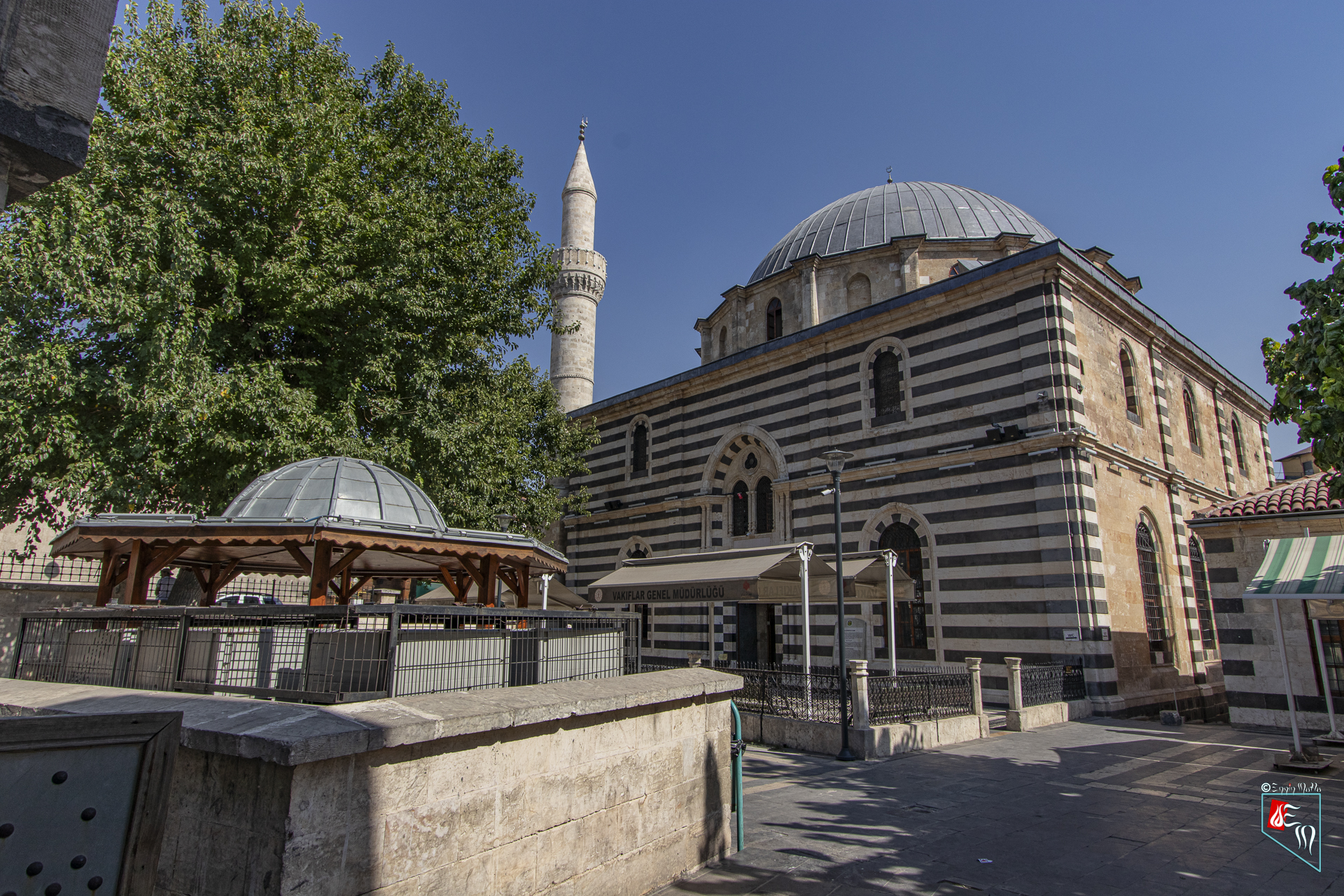
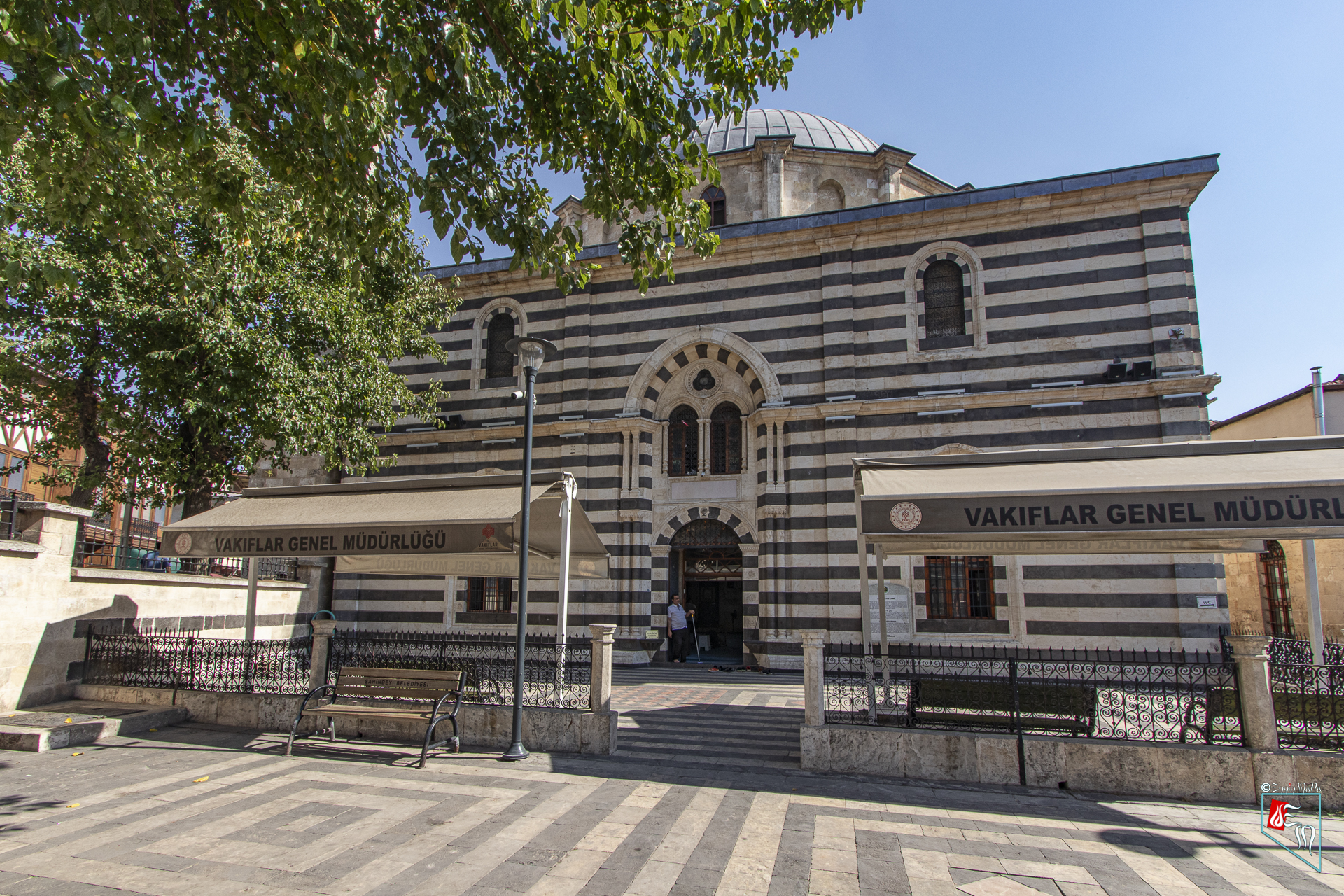
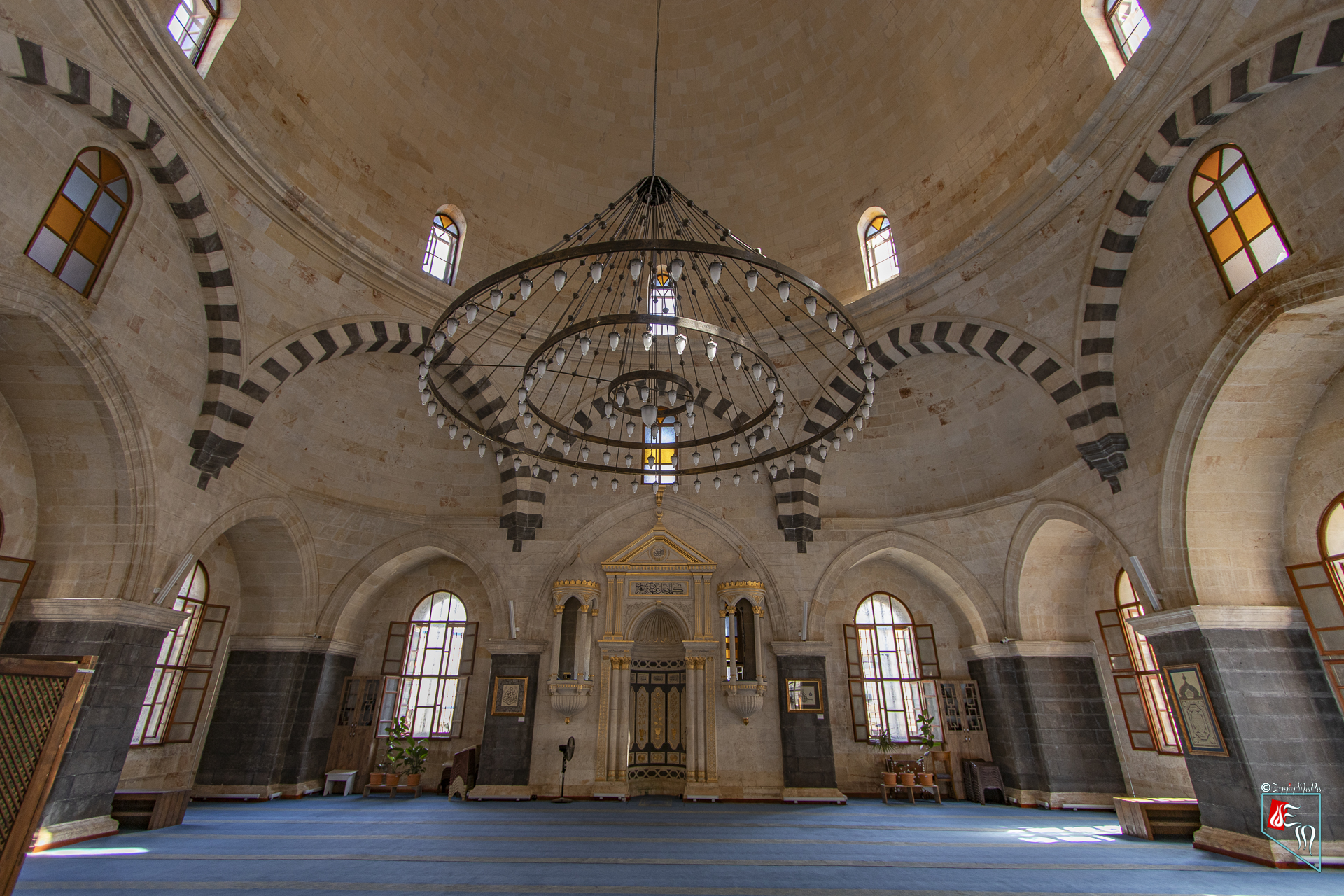
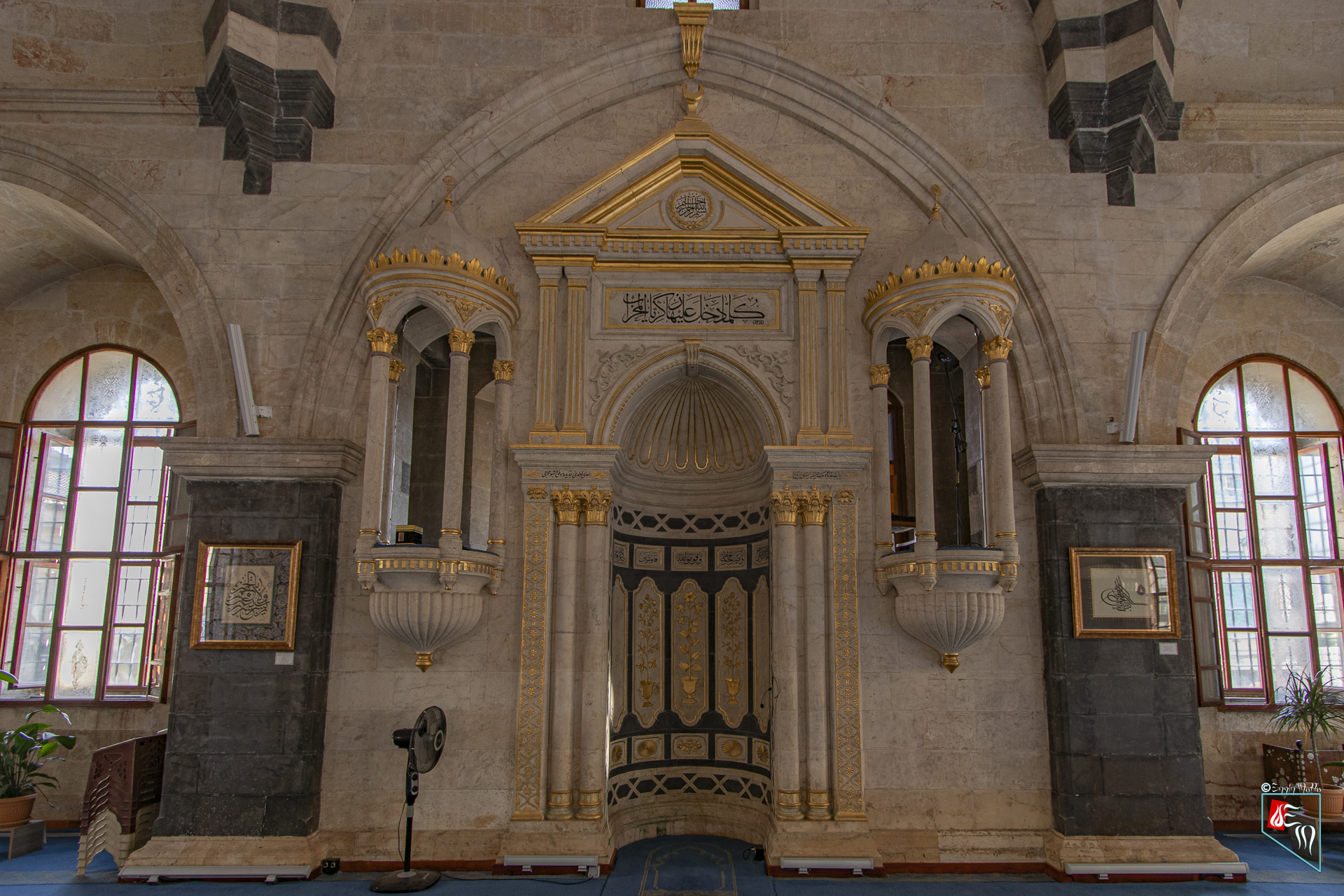
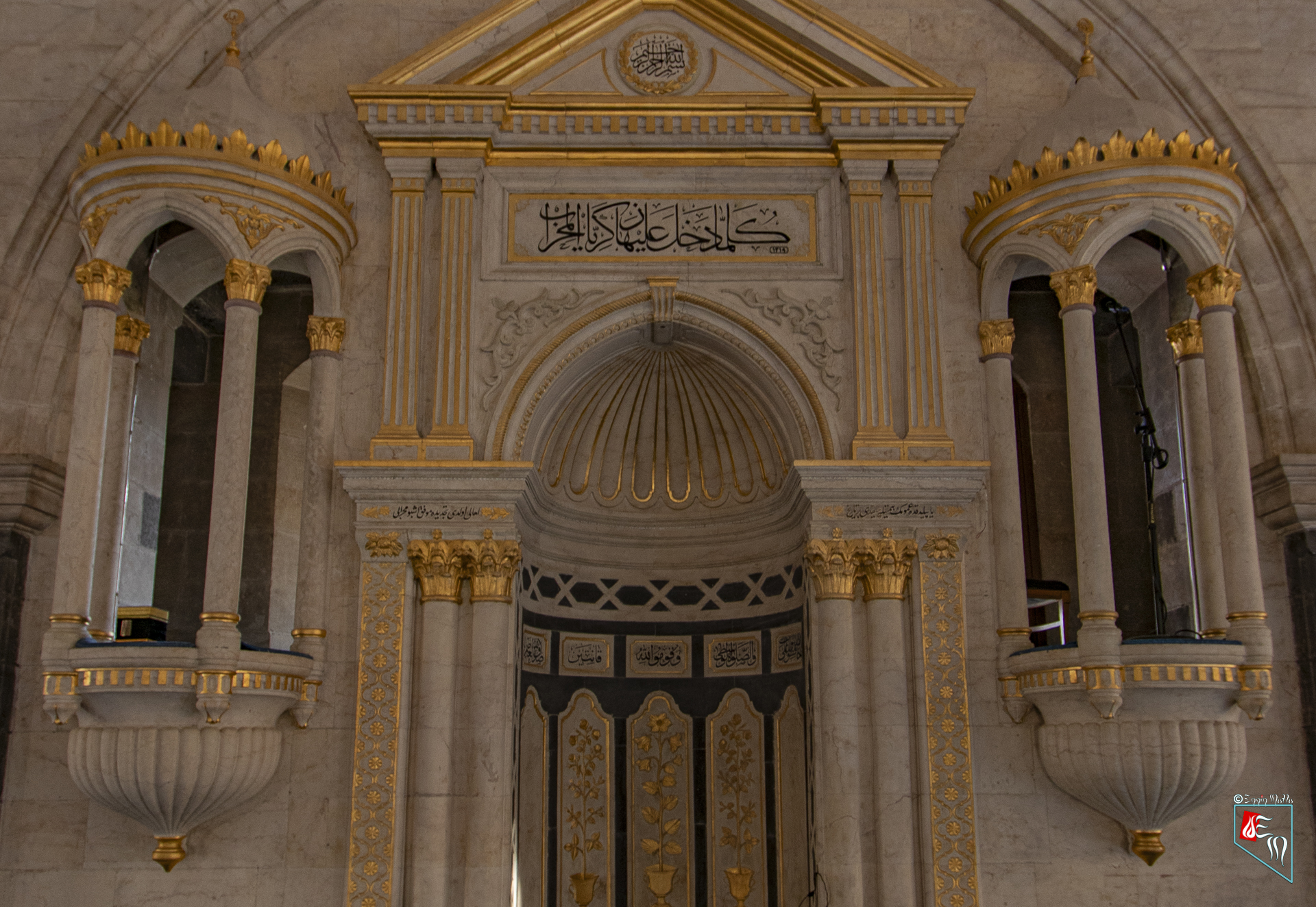
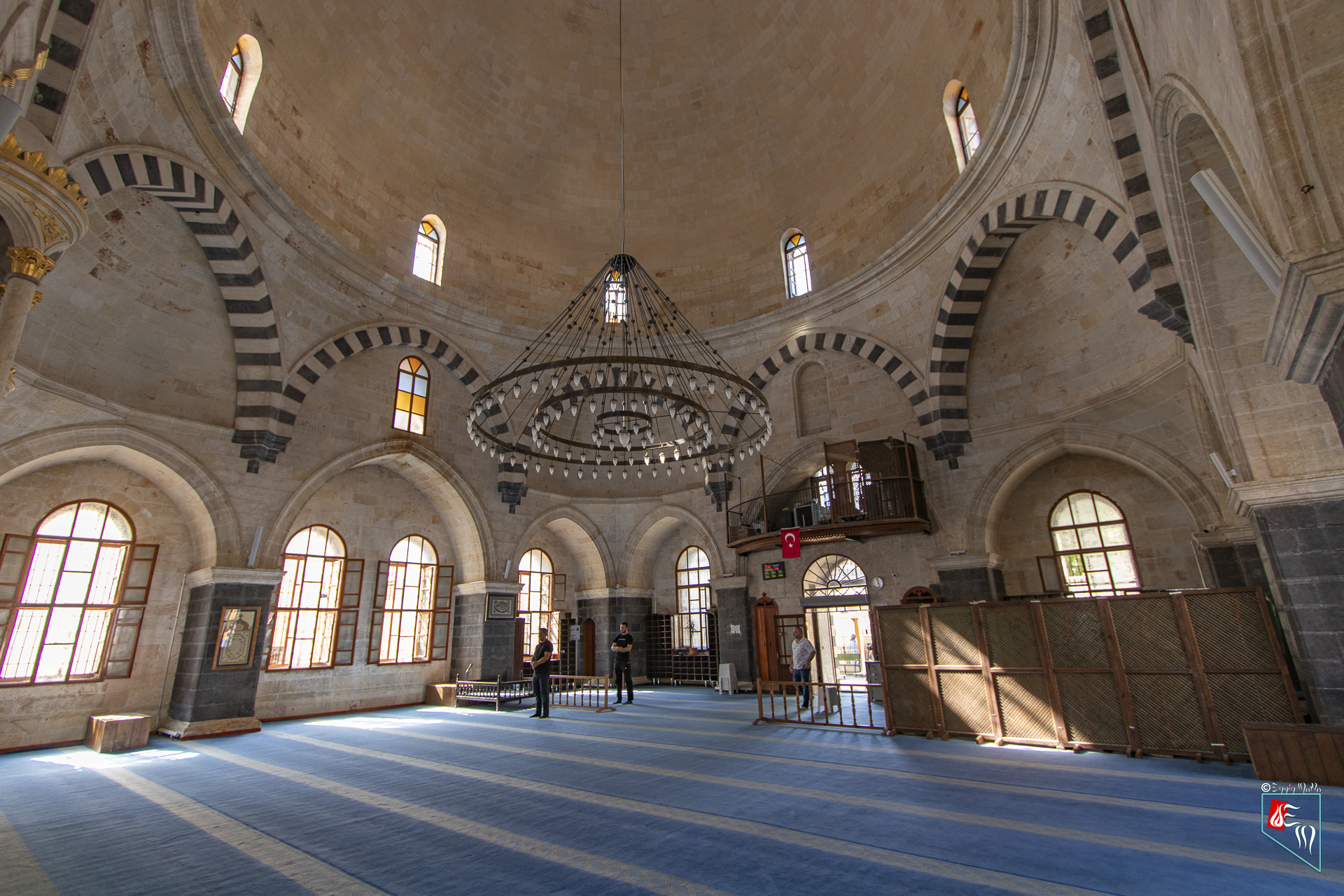
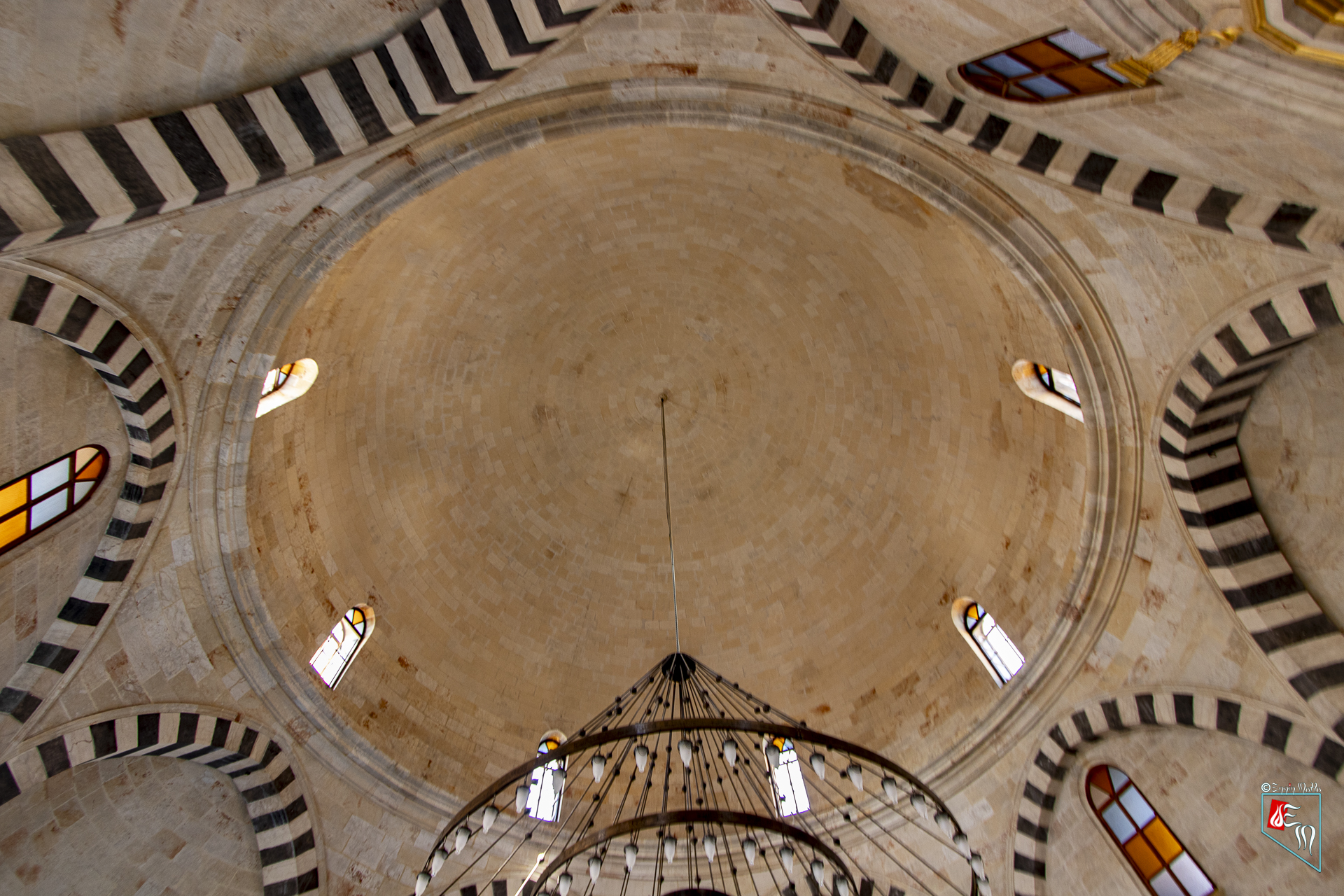
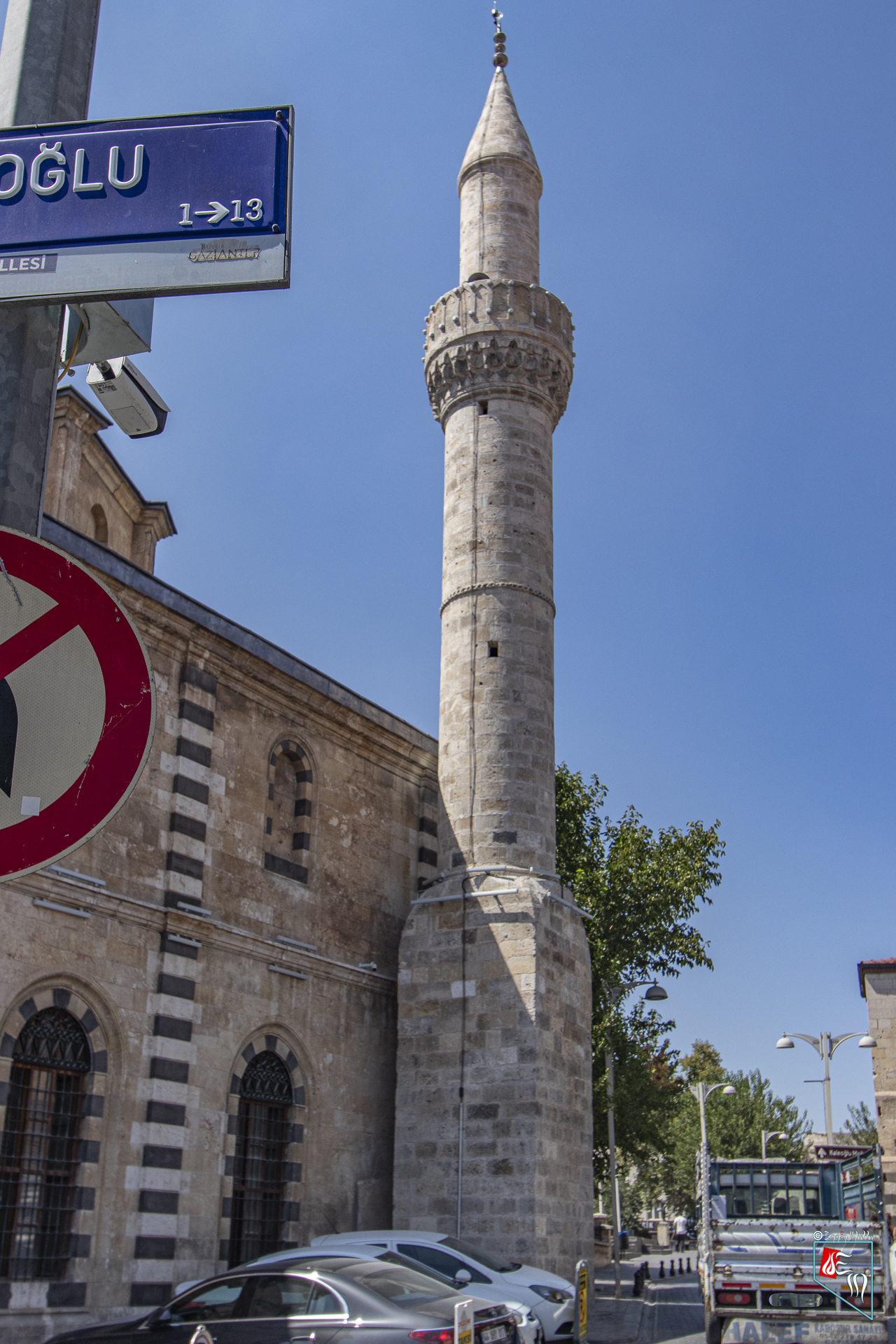
It is located on Eski Saray Street, west of Uzun Çarşı. It is also known among the locals as the Ali Dola Mosque. Alaüddevle (According to Evliya Çelebi’s Travelogue, it was built between 1479 and 1515 during the reign of Alaüddevle Bozkurt Bey of the Dulkadiroğulları dynasty) He was the last ruler of the Dulkadiroğlu Beylicate, which held sway over Maraş. Although the exact date of the mosque’s construction is unknown, considering that Alaüddevle, who commissioned the mosque, passed away in 1515, it is evident that it was built before that date. The mosque, of which only the minaret has survived intact to the present day, was rebuilt in 1901 with a single dome and a facade of black and white stones. The architect of the mosque was Armenek, and the master builder was Kirkor. The design featuring a small columned window within an arch—a motif commonly seen in Christian art—and a round window above it is also employed here. The placement of the mihrab within a triangular pediment is another feature borrowed from churches. Furthermore, the large-scale moldings surrounding the side wall windows and the interior mihrab decorations exhibit Baroque characteristics.1
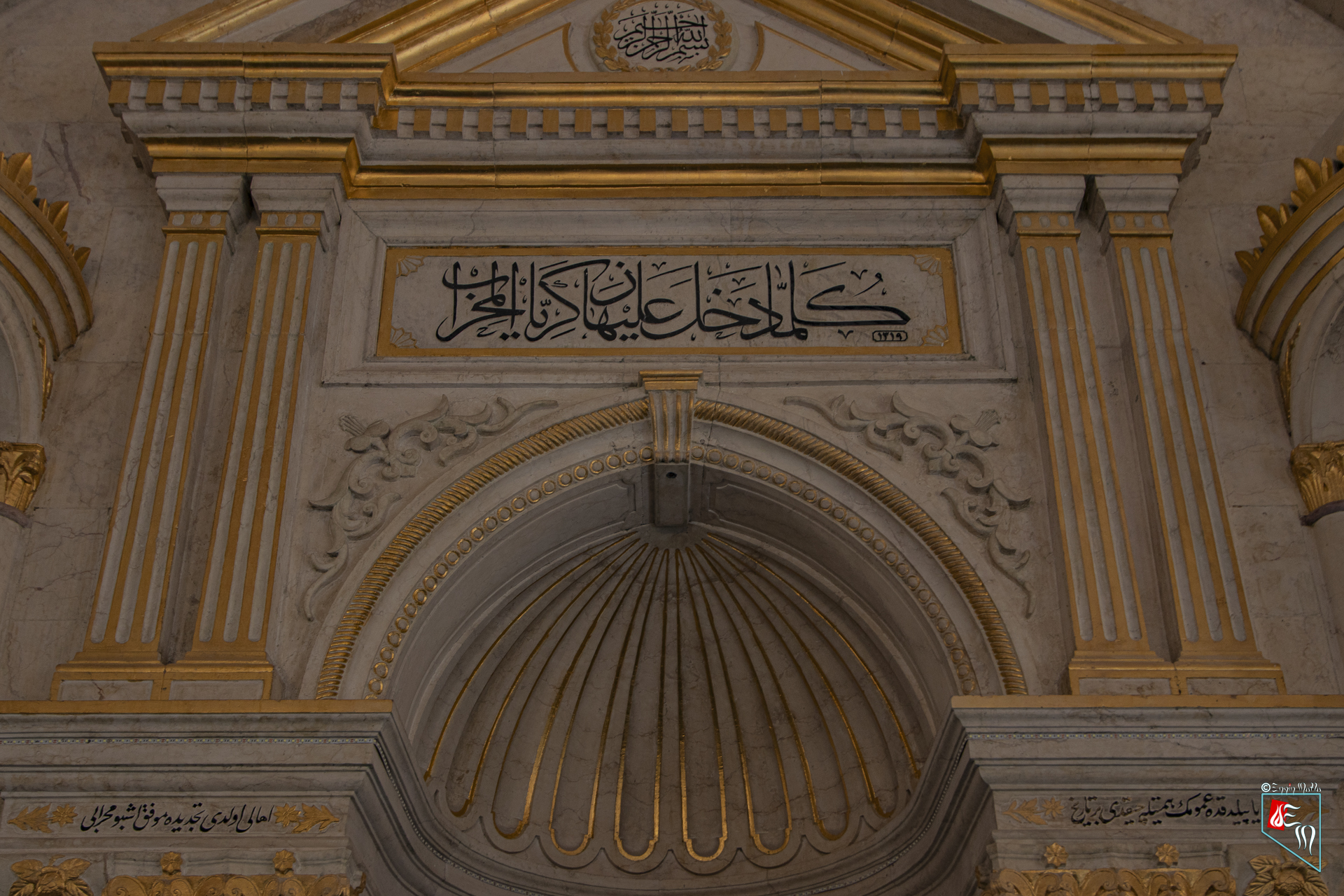
There are five inscriptions in the mosque, the texts of which are as follows:
1. On top of the twin columns flanking the mihrab niche, there are inscriptions of one line each, written in naskh script by Hacı Abdullah Edip Efendi. The text of the inscription on the right reads:
“When it was built, a date emerged through the collective efforts of the people.”
The translation is as follows: “It was built with the support of everyone
, and a date was inscribed.”
2. The text of the inscription on the left side of the mihrab niche reads:
“The people succeeded in renovating this mihrab (R. 1319)”
The translation is as follows: “The local community
succeeded in renovating this mihrab (M. 1903)”
3. At the top of the mihrab, the phrase “Bismillāhirraḥmānirraḥīm (In the name of Allah, the Most Gracious, the Most Merciful)” is inscribed within a circular medallion.
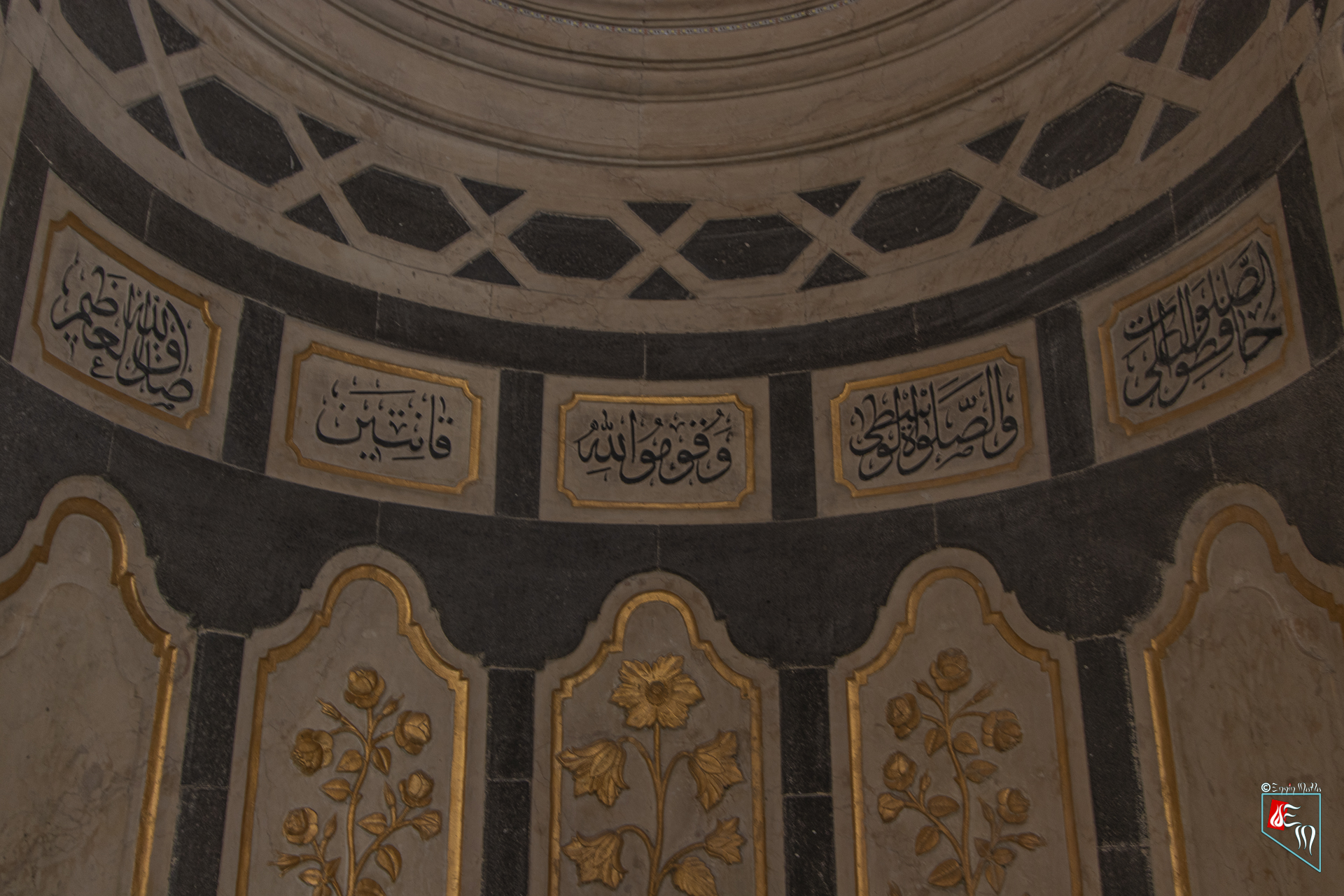
4. Inside the mihrab niche, beneath the arch, verses from the Qur’an are inscribed in five horizontal rectangular rows. The first four lines from the right contain the 238th verse of Surah al-Baqarah. is inscribed: “Hāfizū
‘alā’ṣ-ṣalevāti ve’ṣ-ṣalāti’l-vusṭā ve ḳūmū lillāhi ḳānitīn.”
The translation is as follows: “Maintain consistency and regularity in your prayers
. And especially in the middle (morning) prayer! And stand before Allah as those who are wholeheartedly devoted to Him (with respect and devotion)!”
The last line reads: “Sadeḳallāhü’l-ʿazīm (Allah, the Mighty, has spoken the truth.)”
5. On the inscription panel of the mihrab, within a horizontal rectangular panel, a portion of verse 37 of Surah Al-Imran is inscribed: “Küllemā
deḫale ʿaleyhā zekeriyyā’l-miḥrāb.” The date 1319 (R.) is inscribed.
The translation reads: “Whenever
Zechariah entered the mihrab (sanctuary) to be with her (Mary), he would find sustenance there.” 1903.2 — 3
It is among the structures damaged in the February 6, 2023, earthquake.