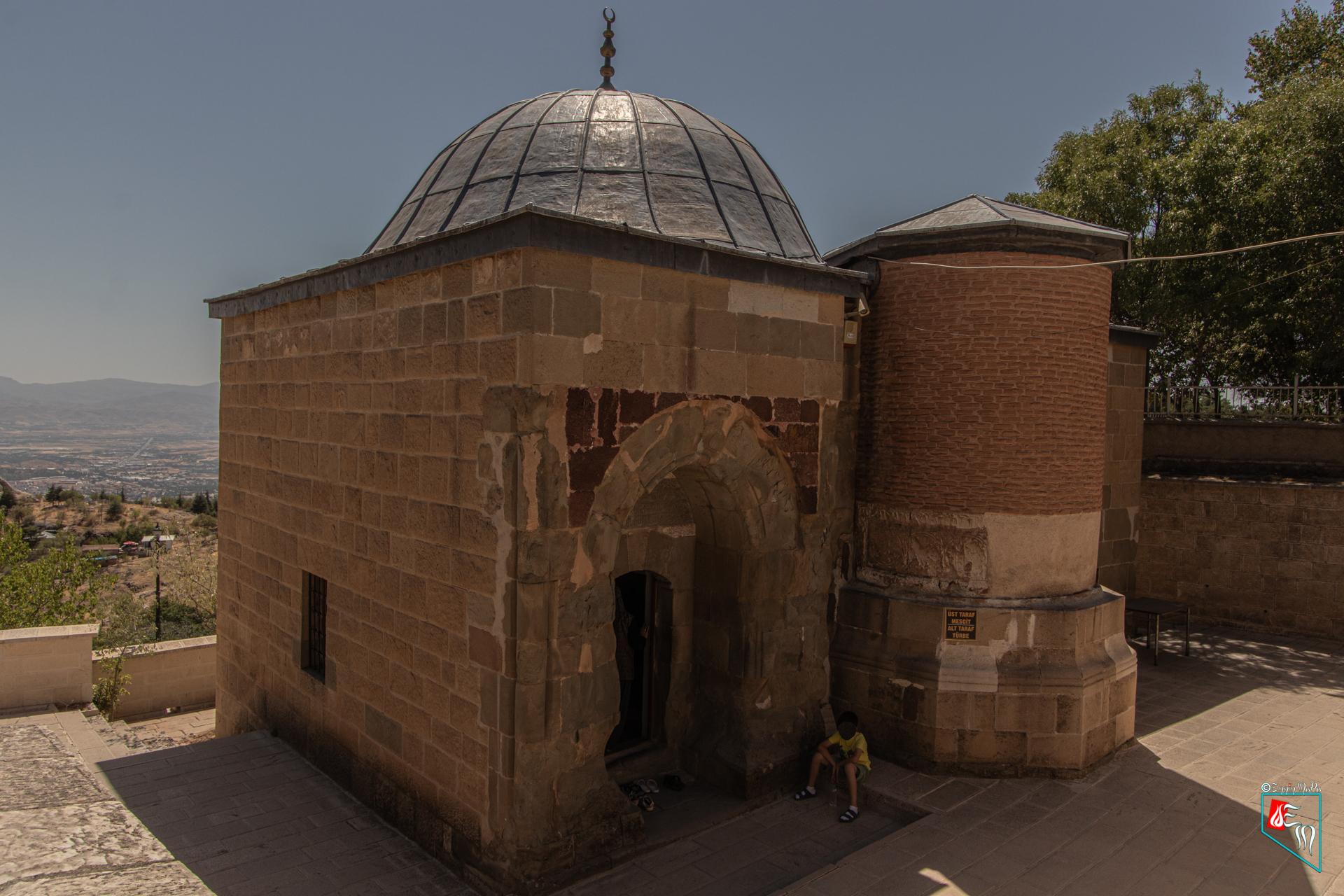
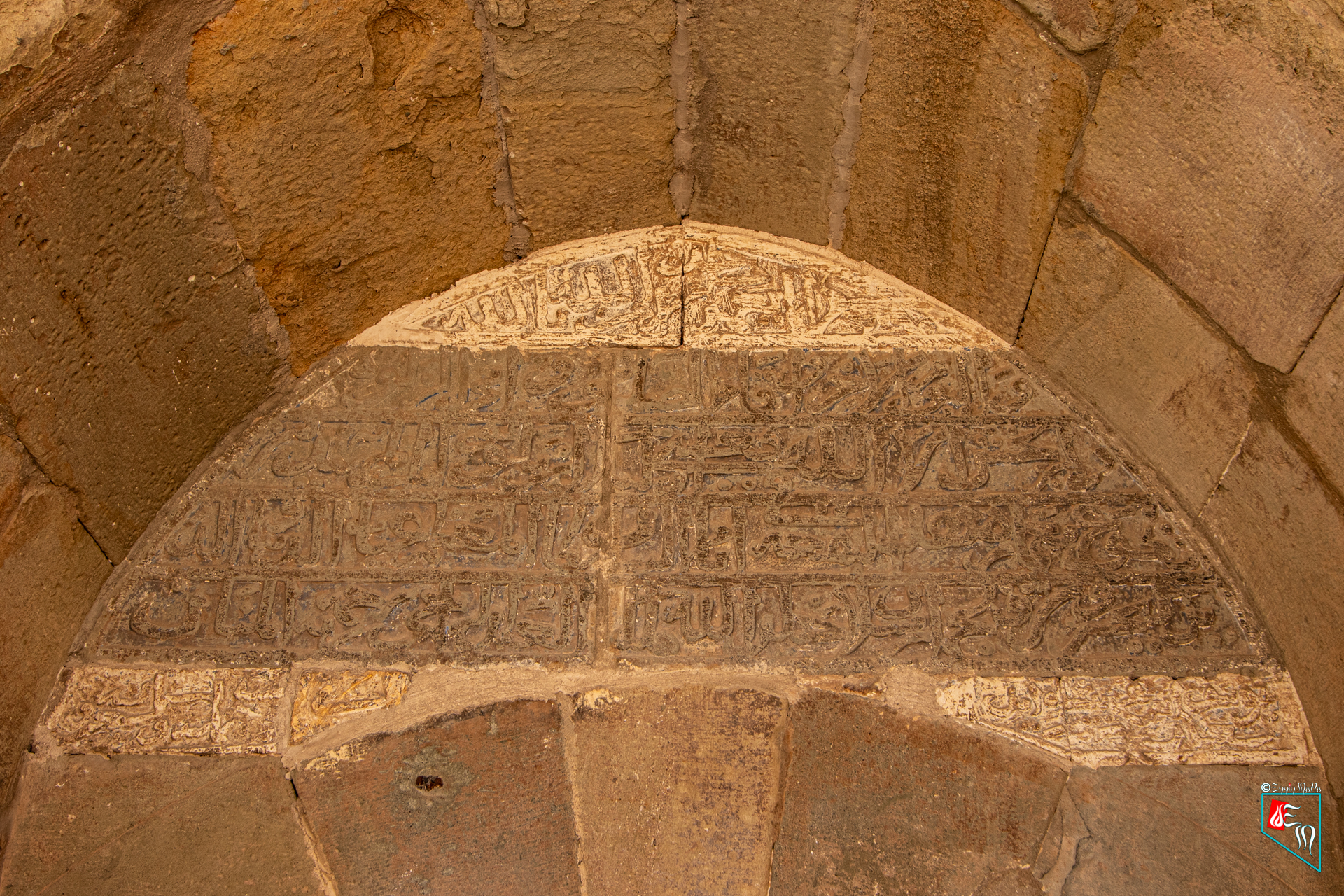
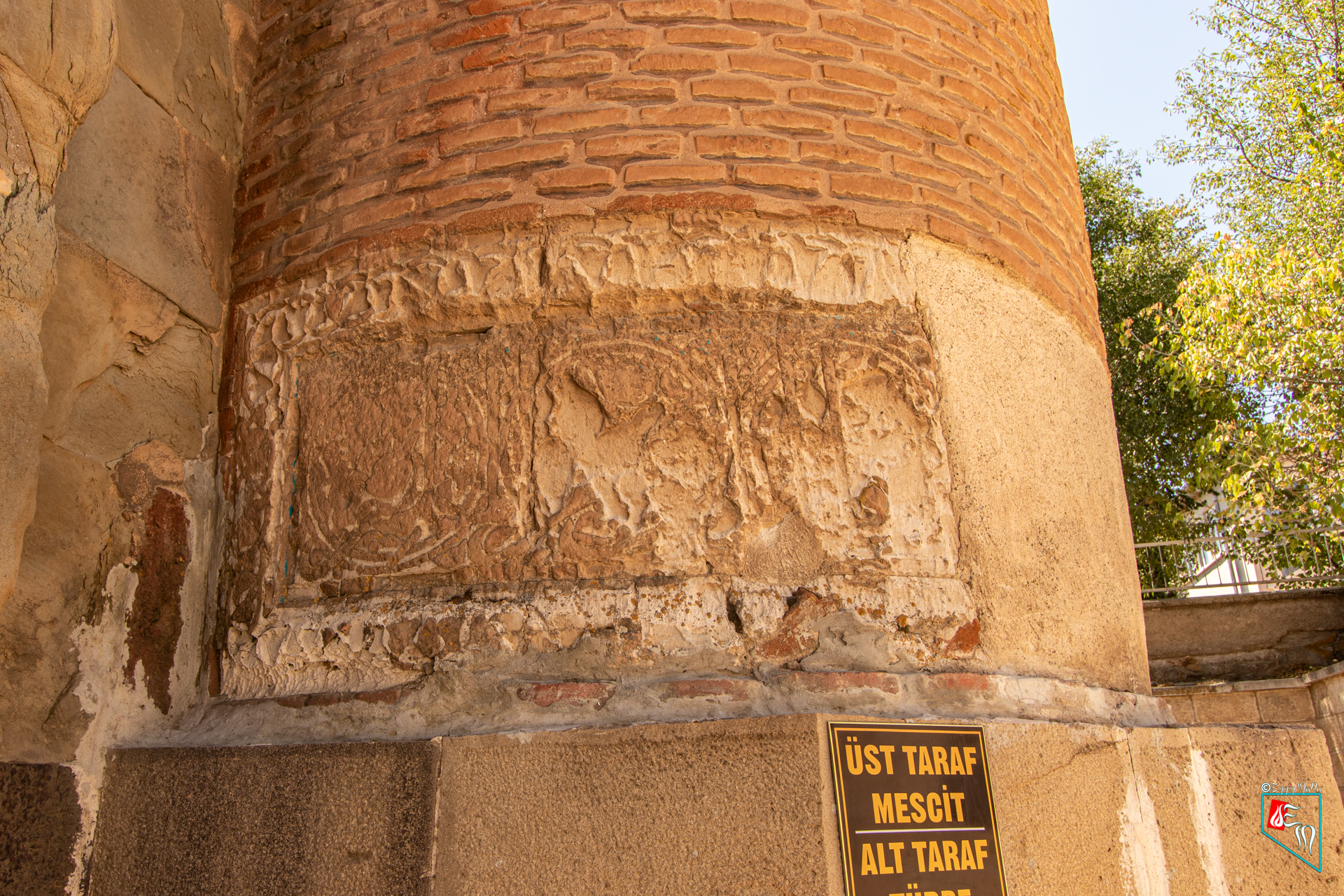
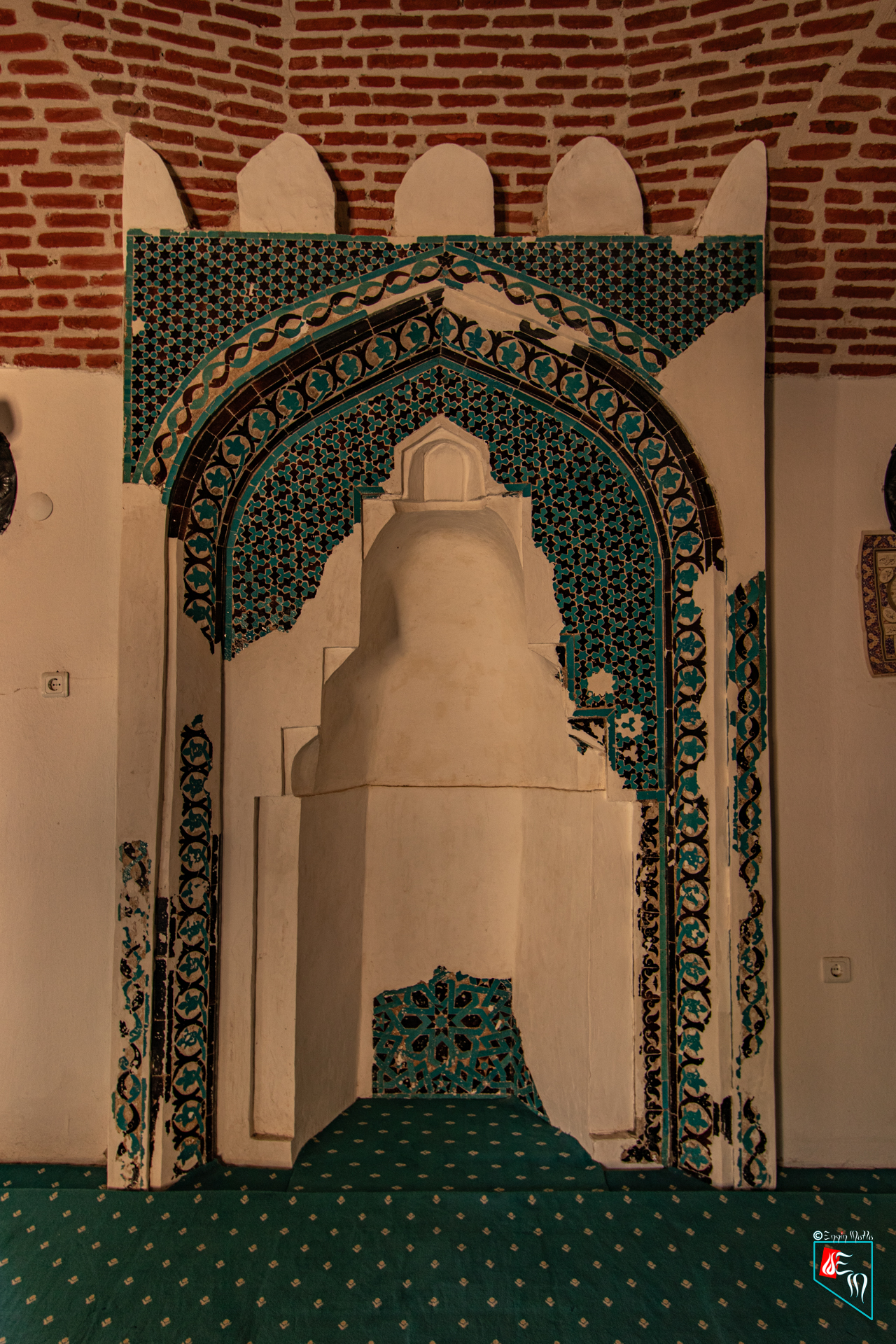
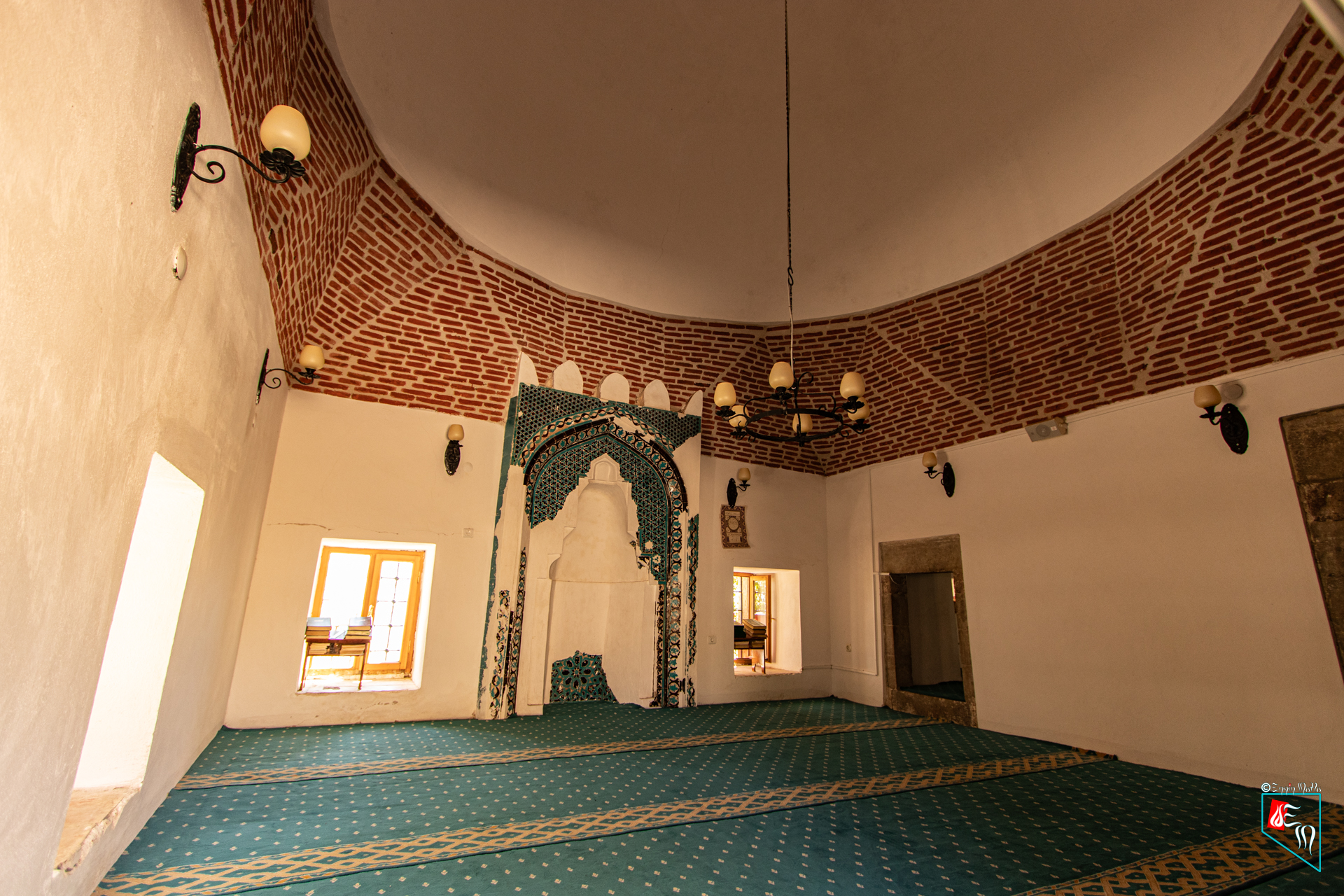
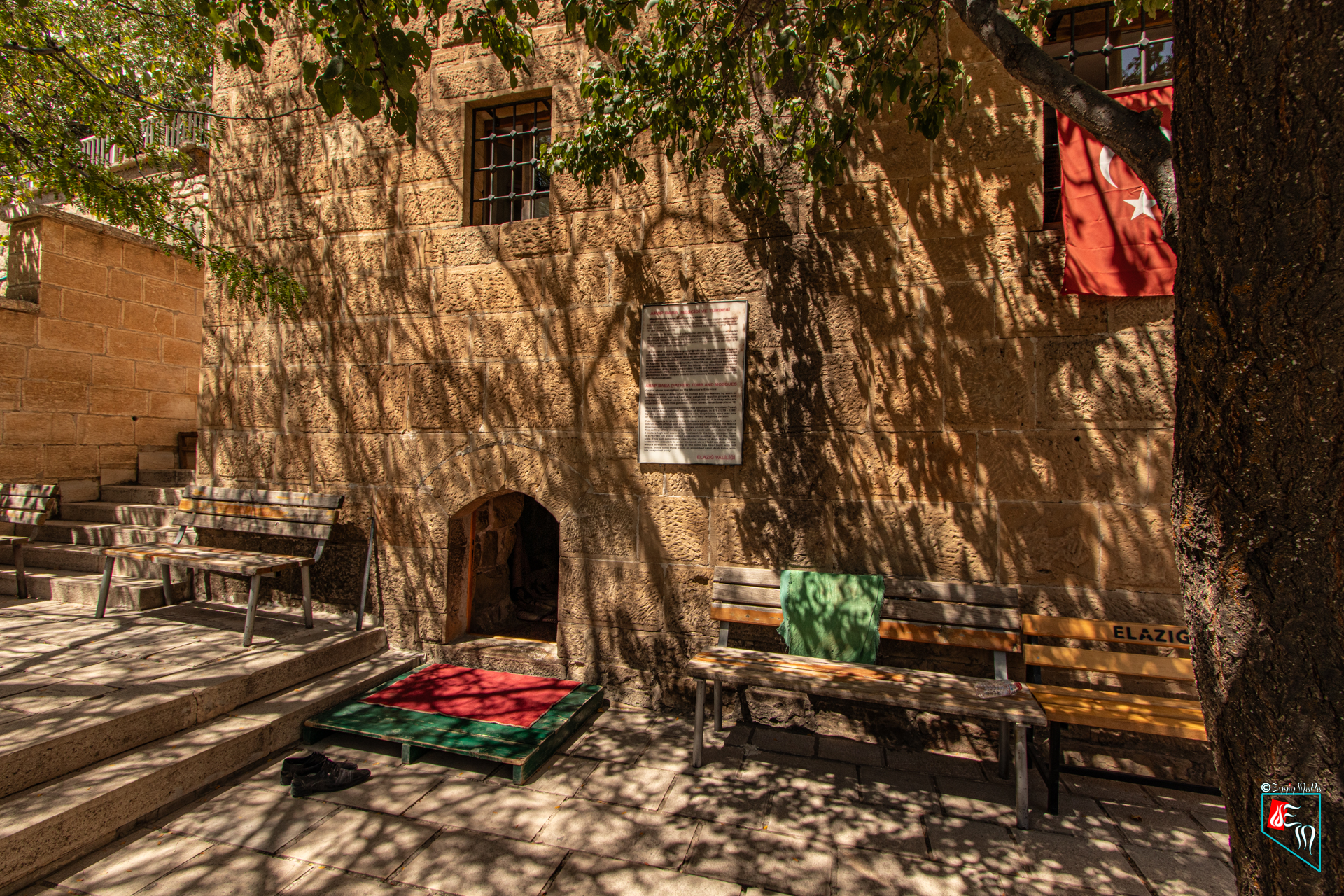
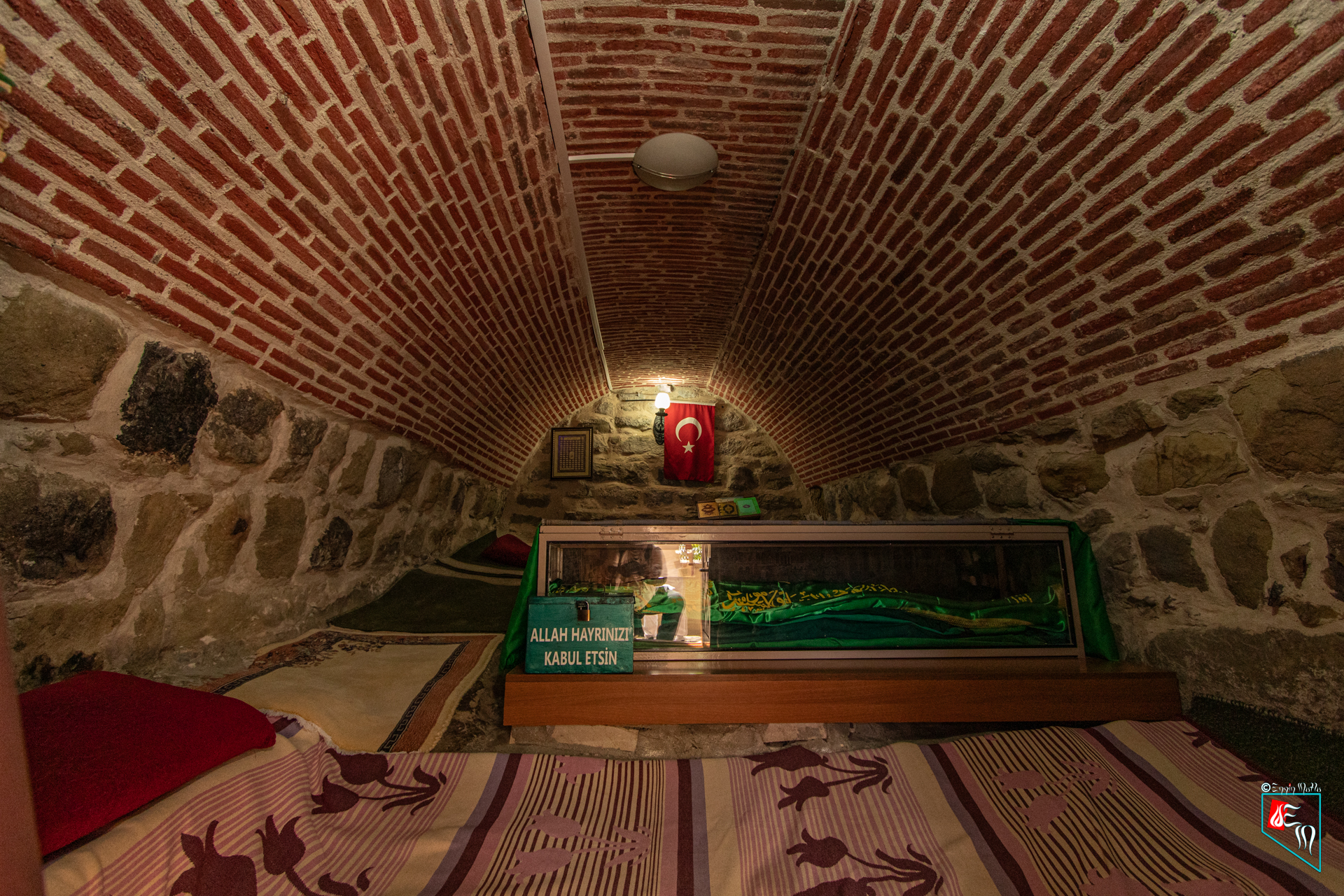
Harput ilçesi Sara Hatun Cami yolu üzerinde çıkmaz sokakta bulunan iki katlı yapının üst katı mescit, alt katı türbedir. 678-1279 tarihini veren inşa kitabesi her ne kadar mescit girişinde bulunsa da türbe ve mescidin birbiriyle olan ilişkisi, iki yapın aynı tarihlerde inşa edildiğini göstermektedir.
Mescit giriş kapısı üzerinde altı satırlık Arapça kitabesi şöyledir:
1- İnnemâ ya‘mürü mesâcidallâhi men âmene billâhi
2- Ve’l-yevmi’l-âhiri ve ekâme’s-salâte ve âte’z-zekâte
3- Ve lem yahşe illallâhe fe‘asâ ülâike en yekûnû mine’l-mühtedîn.
4- Tetavve‘a bi imâreti hâze’l-bük‘ati fî eyyâmi’s-sultâni’l-mu‘azzam Gıyase’d-dünyâ ve’dîn
5- Keyhusrev bin Kılıç Arslan halledallâhü mülkehû el-‘abdürrâcî rahmetü rabbihî’l-mennân
6- Yûsuf bin Arabîşâh ibni Şabân. Fi seneti semaniye ve seb‘în ve sitte mie.
Çevirisi:
Allah’ın mescitlerine ancak Allah’a ve ahret gününe inanan ve namazı hakkıyla edâ eden ve zekâtı veren ve Allah’tan başkasından korkmayan kimseler mamur eder. Ve işte hidayete erenlerden olmaları umulanlar da onlardır! (Tevbe Suresi, 18) Bu imareti, Selçuklu sultanlarından dinin ve dünyanın destek ve yardımcısı olan, Allah mülkünü daim etsin büyük Sultan Kılıç Arslan’ın oğlu Keyhüsrev zamanında, Mennân (çok iyilik eden, ihsanda bulunan, nimet veren, lütuf sahibi) olan Cenab-ı Hakk’ın rahmetini dileyen Şaban’ın oğlu Arabişah’ın oğlu Yusuf yaptırdı. Sene H. 678 (M. 1279/1280).1 , 2
—–
- Kültür Bilincini Geliştirme Vakfı – Arap Baba Türbesi ↩︎
- Kitabenin Arapça metninin okunuşunda ve çevirisinde Engin Mutlu tarafından düzeltmeler yapılmıştır. ↩︎