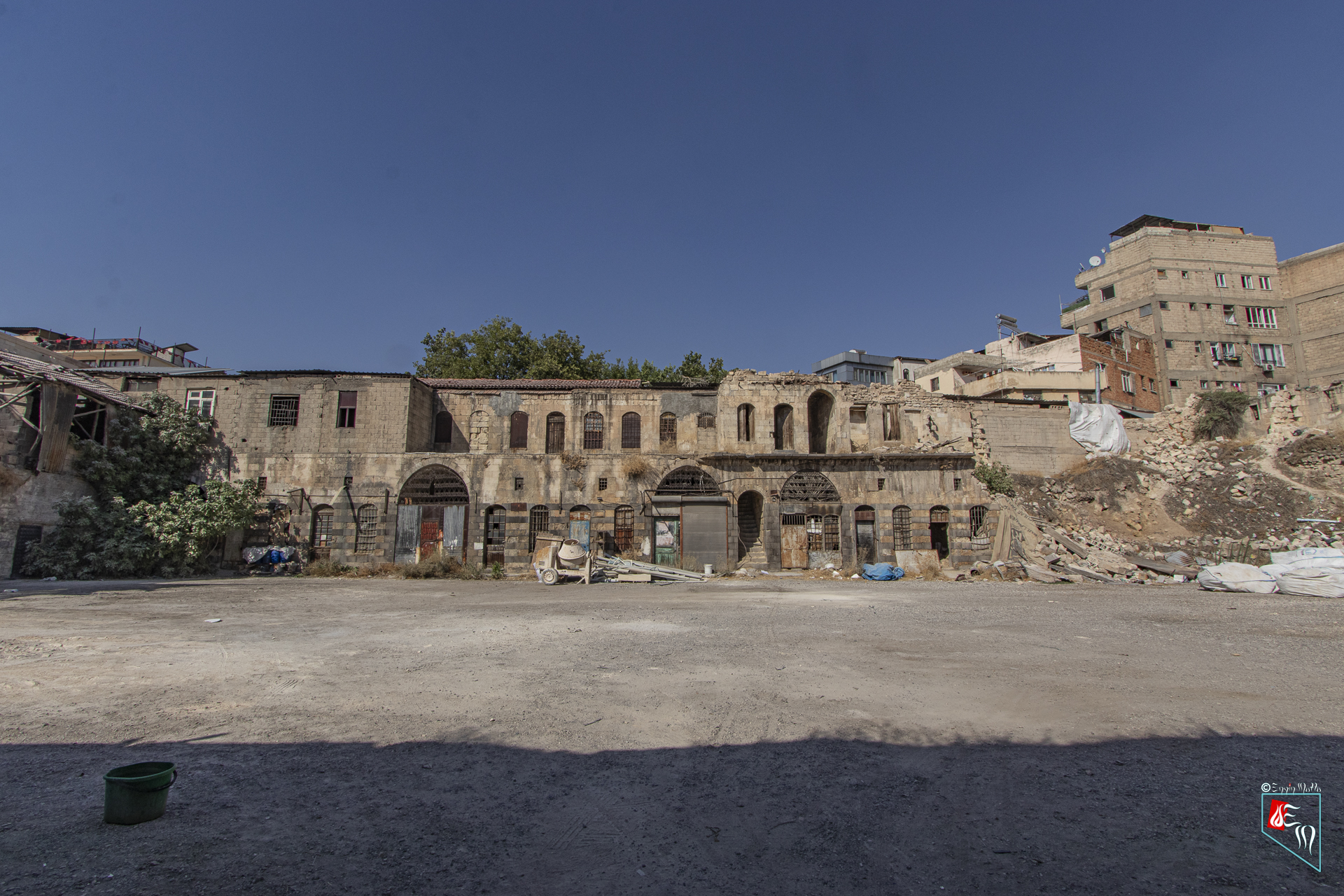
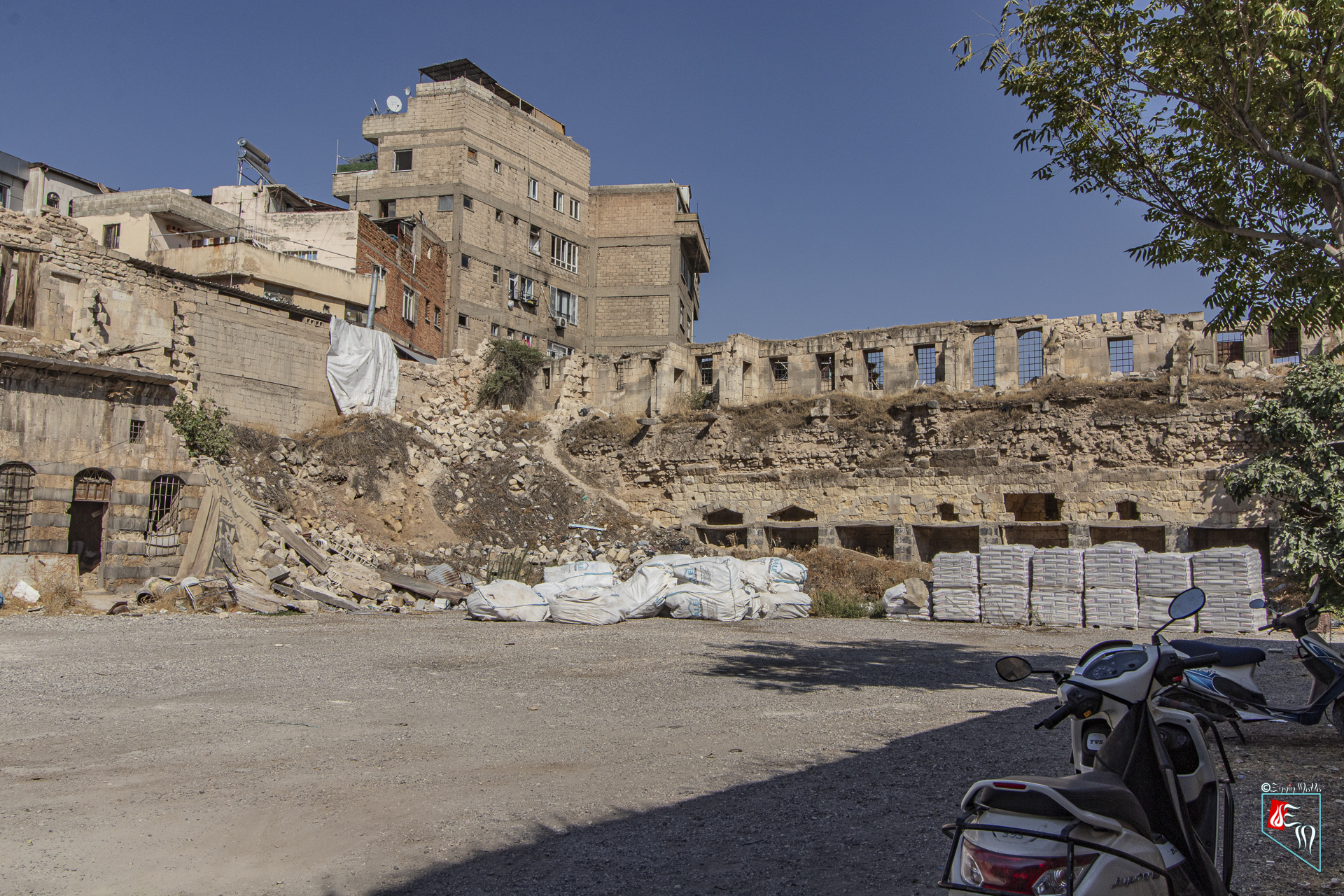
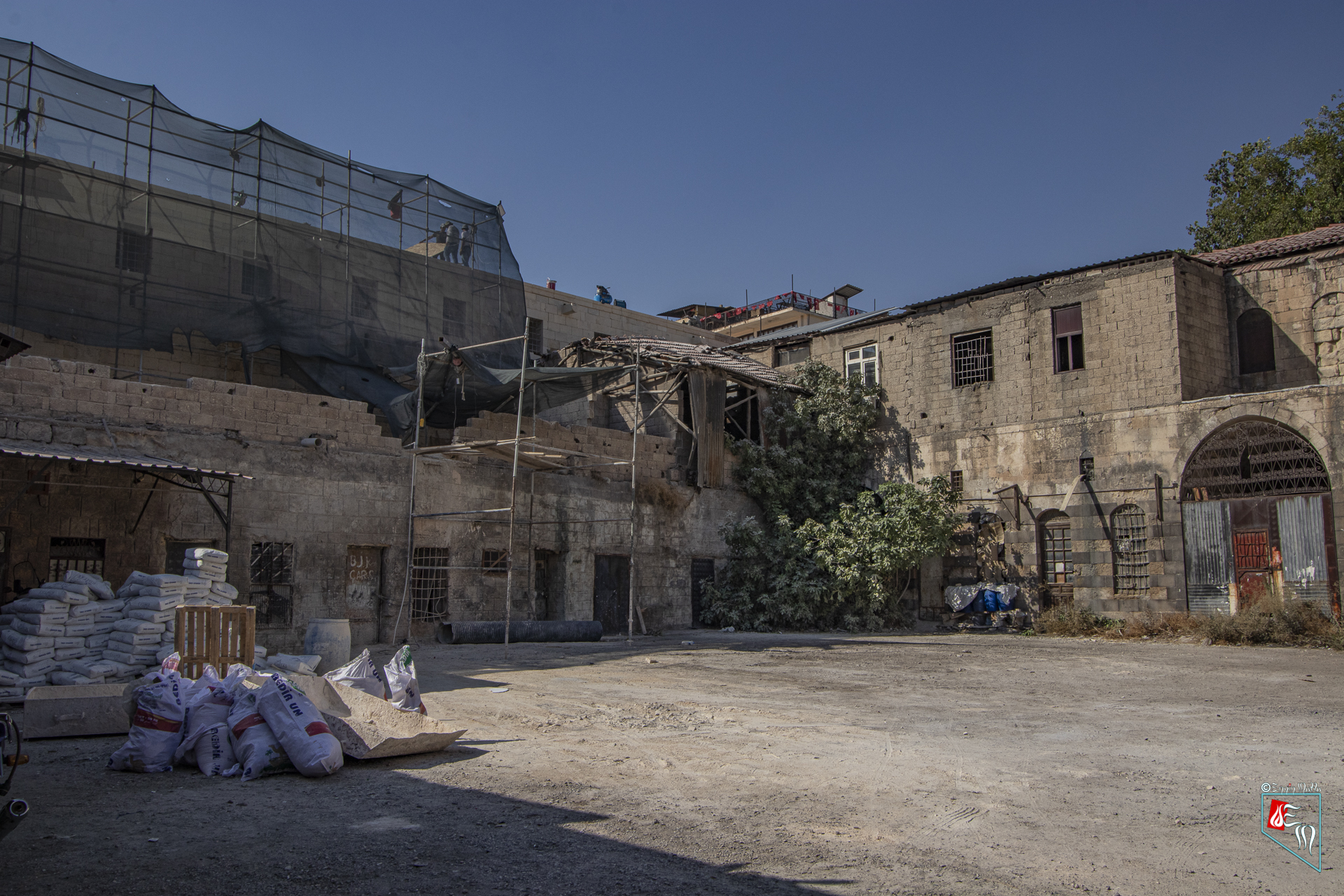
It is not known when or by whom the caravanserai, located on Eski Saray Street right next to the Zincirli Bedesten, was built. Based on available documents, this caravanserai must date from before the Ottoman period, possibly from the Mamluk or Ayyubid eras. Although it is claimed that Alaüddevle of the Dulkadiroğulları had the caravanserai built—based on the fact that, in his 1500 waqf deed, he endowed the caravanserai mentioned as being near the mosque he had commissioned— there is no record in historical sources that Alaüddevle had a caravanserai built, nor is there any mention of such a construction in his waqf deed.
Since Hüseyin Pasha’s endowment deed dated 1719 states that the Han-ı Sebil, built by Seyyid Ali, was present, it is believed that the caravanserai was either repaired by Seyyid Ali in the 1700s or demolished and rebuilt, repaired by Emir Ali in 1741, and rebuilt by Hacı Arif Efendi in 1822 following the fire of 1791.
Built as a caravanserai on a sloping piece of land facing south, the structure is now in a state of significant disrepair, with a large portion of it unusable. Due to the street’s location and the topography of the land, the structure—which lacks an inscription—has an irregular layout and consists of a single, fairly large rectangular courtyard and two stories. According to the registry, it had three large caves and a pool, twelve shops on the south facade, and a house on the north facade.1