The Cultural Heritage Atlas was launched to identify immovable cultural assets belonging to civilizations that have left their mark on the geography of Turkey. The scope of the project continues to expand by tracing assets belonging to Turkish culture that are located outside of Turkey. To date, the number of identified cultural assets has exceeded 16,000. Operating as a participatory and interdisciplinary platform, the project also serves as a prime example in the field of “Digital Humanities.”
Driven by the motto “If we know, we protect!” and enriched daily by the contributions of volunteers, the Cultural Heritage Atlas launched in its new format on December 1, 2019, as a collaborative effort by Caner Cangül and A. Erdem Şentürk. The number of documented cultural assets, which stood at 7,000 at launch, has now surpassed 16,000. Thanks to the contributions of nearly 100 “Cultural Ambassadors” who have joined the project to date, an average of about 1,000 new cultural assets are identified each month. At the same time, while information on dozens of cultural assets is updated daily, the visual archive is also being enriched with both archival photos and current photos taken by the volunteers themselves.
In the Cultural Inventory Atlas, you can trace the legacy of the Turks in works from some 50 countries outside Turkey, including Iran, Afghanistan, India, Pakistan, Greece, Bulgaria, Bosnia and Herzegovina, Serbia, Hungary, Uzbekistan, and Turkmenistan; It also features the surviving traces of over 100 civilizations—from the Göktürks to the Ottomans, and from the Ghaznavids to the Mughals, as well as the Hittites, Caria, Lycia, Cilicia, and Byzantium—that once existed in Anatolia.
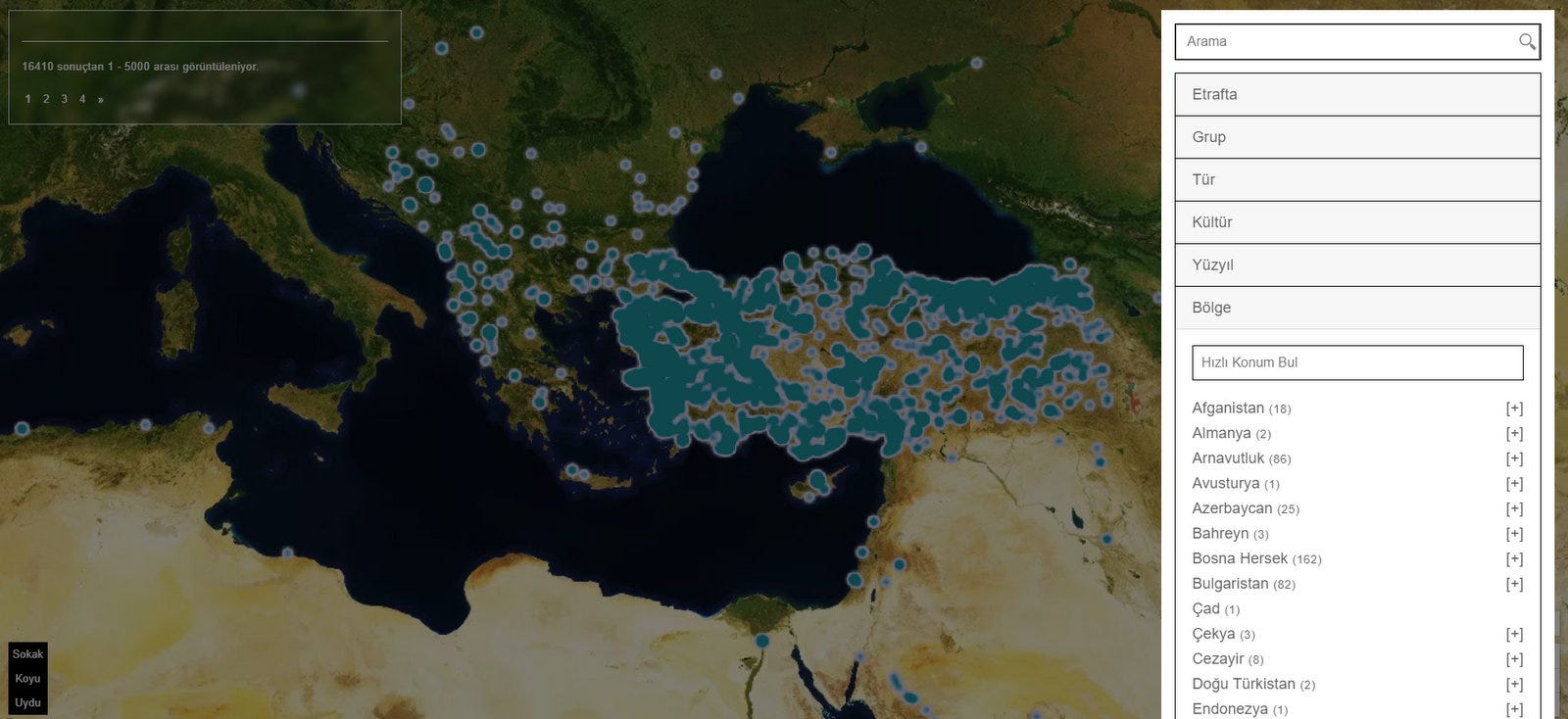
The Cultural Heritage Atlas offers filtering options by defining the types of cultural heritage sites. Since every cultural asset entered is categorized under more than 150 predefined types, you can place cultural assets of any specific type or combination of types on the map. Using cross-filtering options, you can also display specific types of cultural assets from a selected culture within a desired region on the map.
Just search and find!
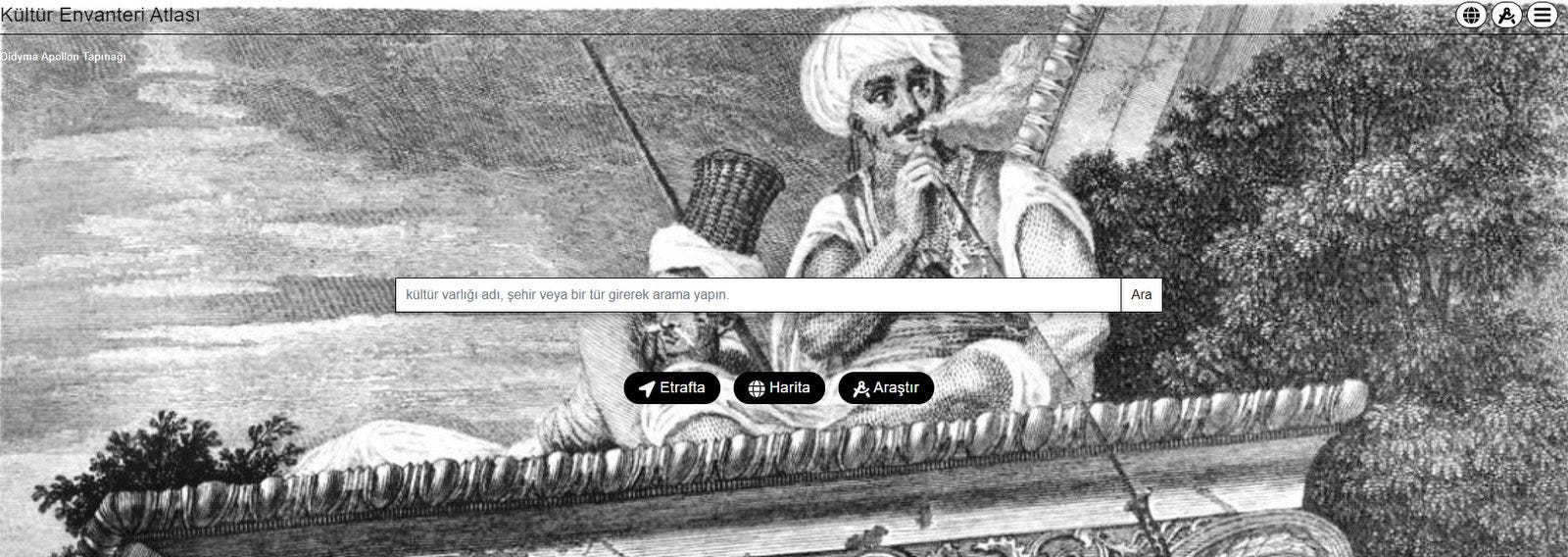
The Cultural Inventory Atlas uses advanced search capabilities to display results on the map that match the keywords or phrases you enter. The terms you use in your search can be the name of a work, the name of a settlement, or even a part of the name of a cultural asset.
See what’s around you!
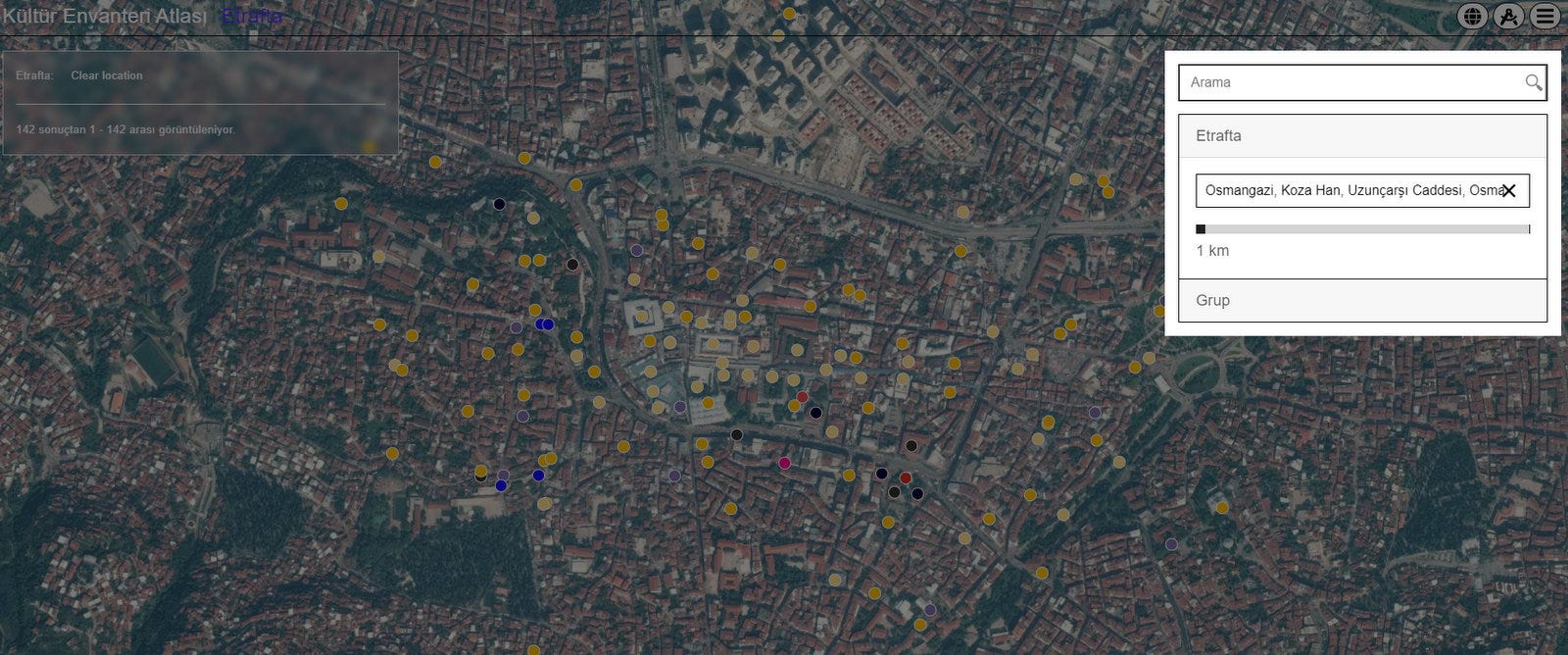
One of the Cultural Inventory Atlas’s strongest features is that it not only lets you see cultural assets in your vicinity using your location but also allows you to enter the address of a place you want to visit to list and filter cultural assets in that area on the map. This way, you can quickly access a list of cultural heritage sites within a specified distance range on the map using your phone—which is always with you—and even create a route to the cultural heritage site of your choice.
Take a quick look with thematic maps!
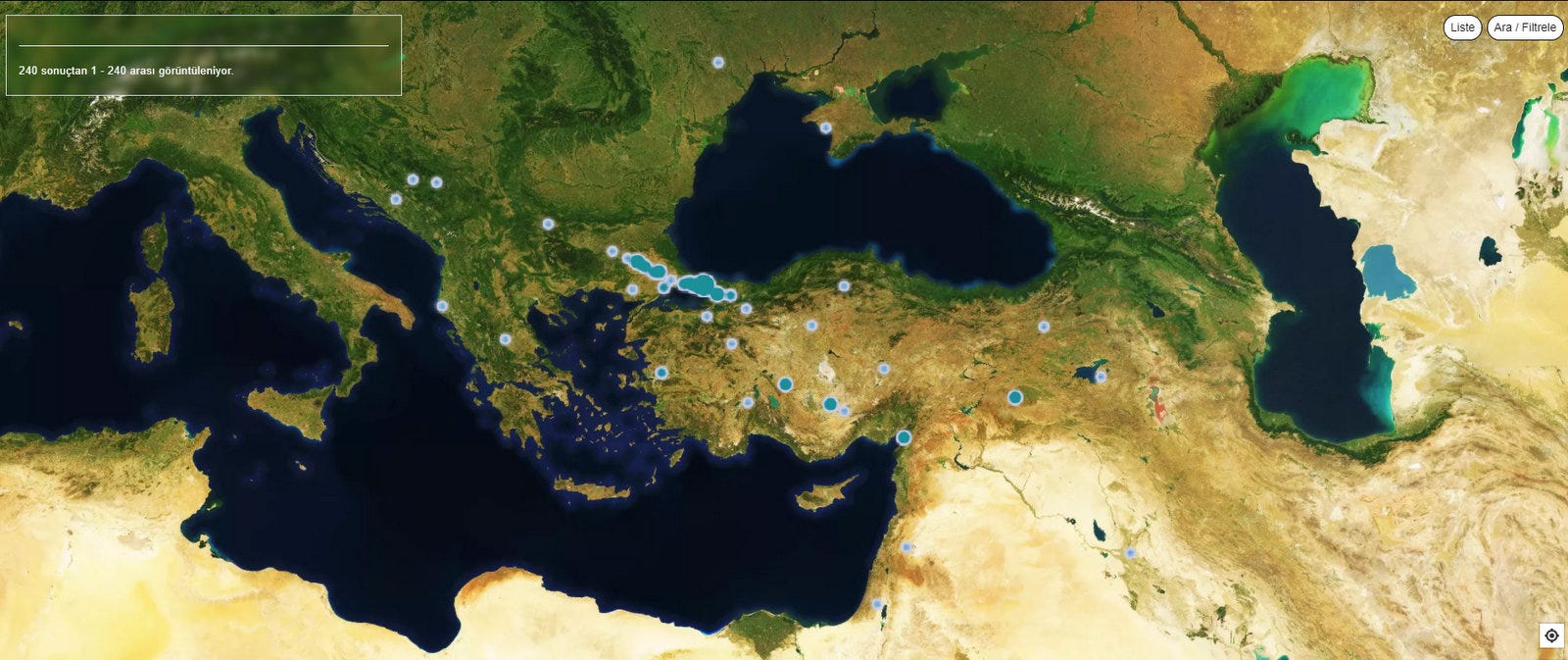
The Cultural Inventory Atlas continues to establish connections by creating thematic maps while cataloging cultural heritage sites. Thematic maps allow you to view all works related to a specific theme at a glance on the map. Numerous different thematic maps created so far—such as those for the Works of Mimar Sinan, works from the First National Architectural Movement period, Female Patrons, and works inscribed on the UNESCO World Heritage List—are being further enriched by suggestions from Cultural Ambassadors.
Cultural assets are also being documented visually
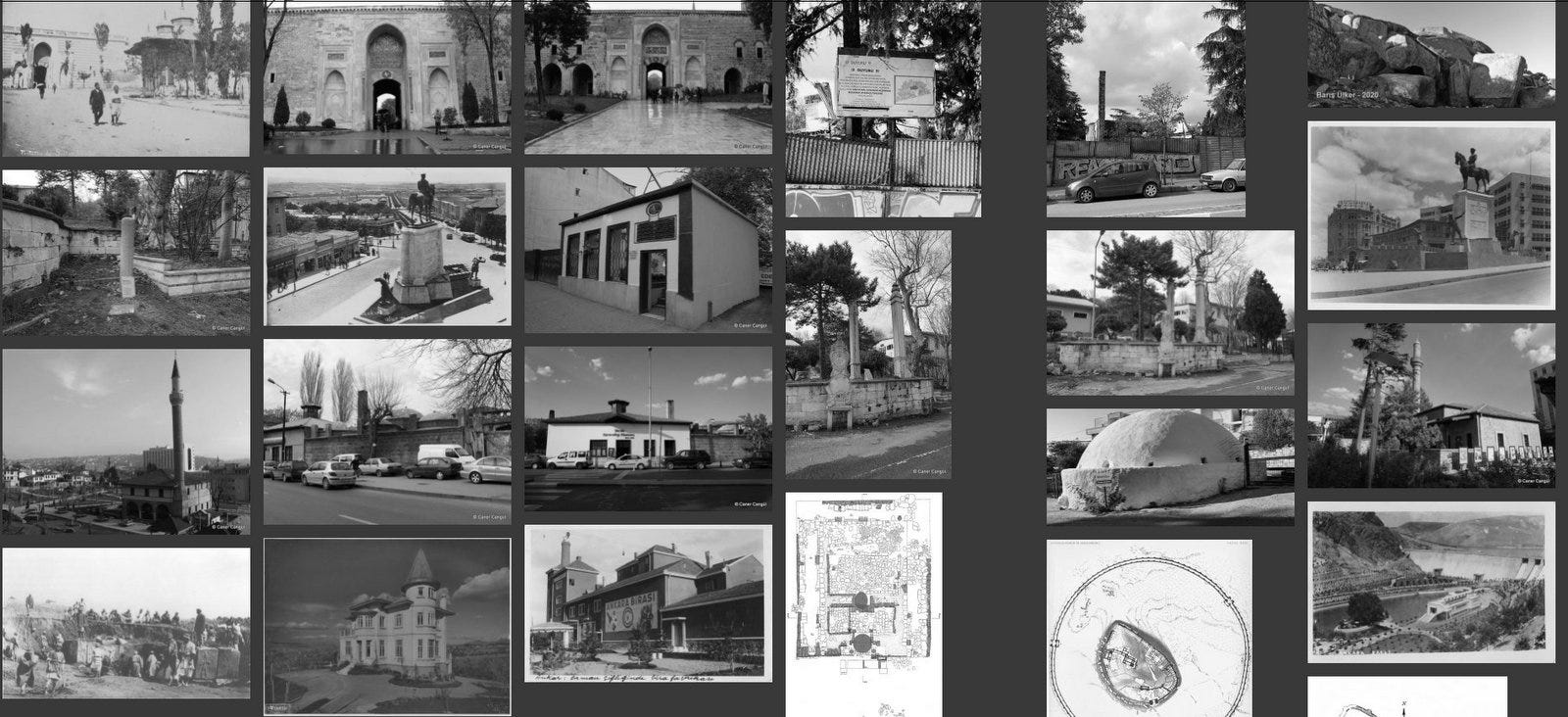
The Cultural Inventory Atlas also features a wealth of visual content. In a dedicated gallery for each cultural asset, Cultural Ambassadors meticulously add drawings, plans, and photographs—both current and archival—related to that asset.
In this way, the historical visual trail of a cultural asset is also traced.
Explore by following the cultural routes!
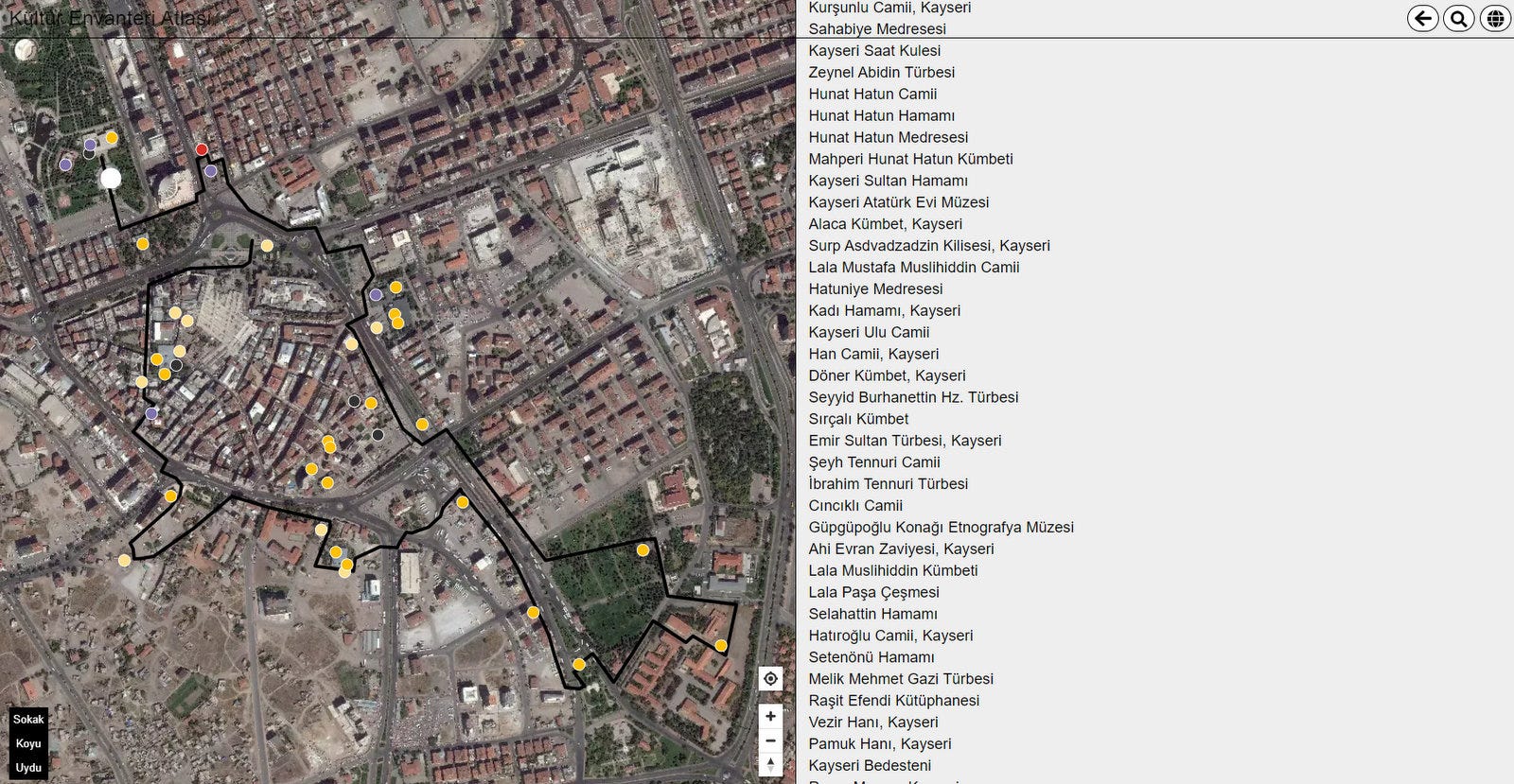
The Cultural Inventory Atlas not only makes it easier for travelers and tourists to plan their trips but also creates cultural routes by offering suggested itineraries. It aims to eventually create travel routes for all cities, building on existing ones such as the Mimar Sinan Works tour routes, the Lycian Way, and the Kütahya and Kayseri Cultural Routes.
All information is updated by volunteers: “Cultural Ambassadors”
All content in the Cultural Inventory Atlas is created by Cultural Ambassadors who contribute on a volunteer basis. A Cultural Ambassador is someone who identifies, researches, and produces content about cultural assets in their local area—in short, someone who takes responsibility for cultural assets. The project aims to have at least one Cultural Ambassador in every city; while there are currently nearly 100 Cultural Ambassadors, the goal is to reach 200 by the end of the year. If you would like to serve as a Cultural Ambassador and help identify and update cultural assets, please visit https://kulturenvanteri.org/kultur-elcileri/.
What do Cultural Ambassadors say about the project?
I recently joined the Cultural Inventory Project. As someone who works on urban history, while reviewing the Cultural Inventory Atlas, I realized just how much we need a project like this the moment I was able to easily see many of the artifacts I had researched and was curious about, and I wanted to contribute to the project as much as I could. Through this project, we’re making already known cultural assets visible by marking them on the map, while also discovering just as many previously unknown works. We’re also marking our cultural assets located outside our country’s borders. From this perspective, a very broad and rich inventory is being created. The project process is particularly exciting for me because it also contributes to my own self-awareness.
Dilara Oruç — Cultural Ambassador
My goal in becoming a cultural ambassador is to get to know our cultural heritage—which we often just pass by—a little more closely and gain a deeper understanding of it. Discovering this entire legacy of masterpieces is such a pleasure. And exchanging ideas with ambassadors who share similar interests, learning from them—and most importantly, working together on a project—is as fulfilling as planting seeds in a field, watching them grow, and harvesting the crop.
İnan Kenan Olgar — Cultural Ambassador
Our country possesses a history and cultural heritage unlike any other in the world. I have no doubt that we possess just as many valuable treasures buried underground as there are above ground. With this in mind, as someone deeply in love with our cultural heritage, history, art history, and—most importantly—my country, I wanted to participate in this project as a cultural ambassador. My goal was to contribute to my country and future generations, and to instill in our youth the purpose of preserving, researching, and learning about our cultural heritage. In my view, Turkey is a country that deserves far more than simply being born into this world to breathe. Because we have a founder that no other country in the world is blessed with, and I am personally aware that I am indebted to him. I strive to repay that debt to the best of my ability. This sense of obligation was one of the reasons I participated in the Cultural Inventory Atlas project. Guided by the motto “If we know, we will preserve,” we sought to create a roadmap and guide for everyone—from seven to seventy—who is curious about history and our cultural heritage. I hope its value and purpose are understood, and that future generations will take this work even further.
Ayşegül Acar — Cultural Ambassador, Cultural Inventory Atlas
The Cultural Inventory Atlas invites you to rediscover this unique geography that has been home to dozens of civilizations.