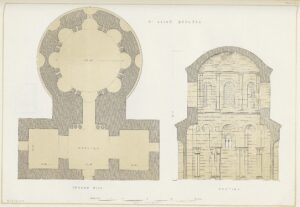
The Orhan Gazi Madrasa in Kaleiçi—or, as it is commonly known, the Monastery Madrasa—was established as one of Orhan Gazi’s first actions following the conquest of Bursa, by converting the monks’ cells of the existing monastery within the castle into a madrasa. Based on the accounts of Hoca Sadeddin Efendi, it is generally accepted that the structure was most likely founded in 1335 (736 AH).
According to the accounts of the historian Neşri, rather than building this educational institution from scratch, Orhan Gazi converted an existing monastery building within the castle into a mosque and mausoleums (by repurposing it) and put it into use. The monks’ cells were also converted into madrasa rooms, classrooms, and a laundry room. Indeed, another official document dated 1844 describes the building’s physical condition as “having a classroom with fifteen cells and a wooden roof.” This structure was not merely an architectural conversion project during the early Ottoman period; it also served as an important educational institution for the dynasty. Davud-i Kayseri, a renowned historical figure appointed by Orhan Gazi as Bursa’s first madrasa instructor in 1336, served at this madrasa and taught there.
Although the structure underwent numerous repairs over time—none of which have survived to the present day—it was restored by Governor Ahmed Vefik Pasha in 1864 and subsequently relocated to the site of the elementary school (Tophane Elementary School) adjacent to the Osman Gazi Mausoleum.
Remains of the monastery can be seen in the floor tiles of the Orhan Gazi Mausoleum.