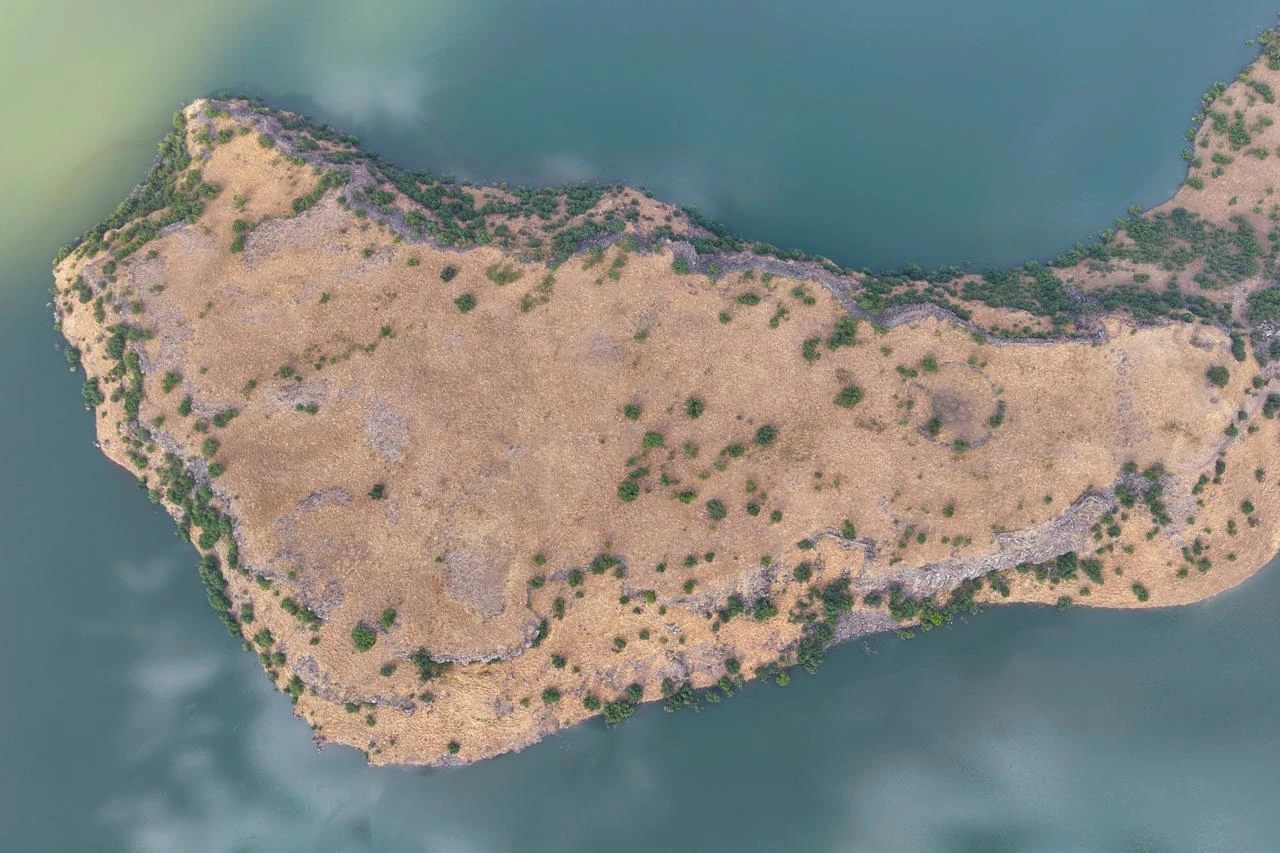
This is a large-scale archaeological fortification site identified near the village of Mescidli in Turkey’s Muş Province. Reported to cover an area of approximately 120,000 m² and to be surrounded by defensive walls whose remains can be traced for about 1.4 kilometers today, was identified in 2026 by archaeologist Melik Mirbey Ömeroğlu through the analysis of satellite imagery followed by fieldwork. The cyclopean and polygonal stonework observed in the wall remains has led to the assessment that the structure may date to the Early Iron Age and, in particular, the early Urartu period; Ömeroğlu noted that the architectural features resemble those of the Aşağı Anzaf and Zivistan castles in the Van region. However, archaeological research and excavations are needed to definitively date the structure and confirm its connection to the Urartu Kingdom. An application has been submitted to the Van Regional Council for the Protection of Cultural Assets to have the site registered as a cultural heritage site. Given its location, the castle is believed to be significant in terms of the Urartu Kingdom’s westward expansion and ancient transportation routes; it has been suggested that it could contribute to the ongoing discussions regarding the early Urartu settlement of Arzaskun, whose exact location has not yet been determined, however, this connection has not yet been proven.1
Mescitli Castle
- Type
- Castle
- Culture
- Urartu
- Status
- Accessible
✶ Media
Last Updated:
Caner Cangül - 13:01, 06 Sep 2026
Contributor:
Caner Cangül,
A. Erdem Şentürk
KE No
507981
Citation
“Mescitli Castle”, Kültür Envanteri, 6 September 2026,
https://kulturenvanteri.com/en/?p=507981 .