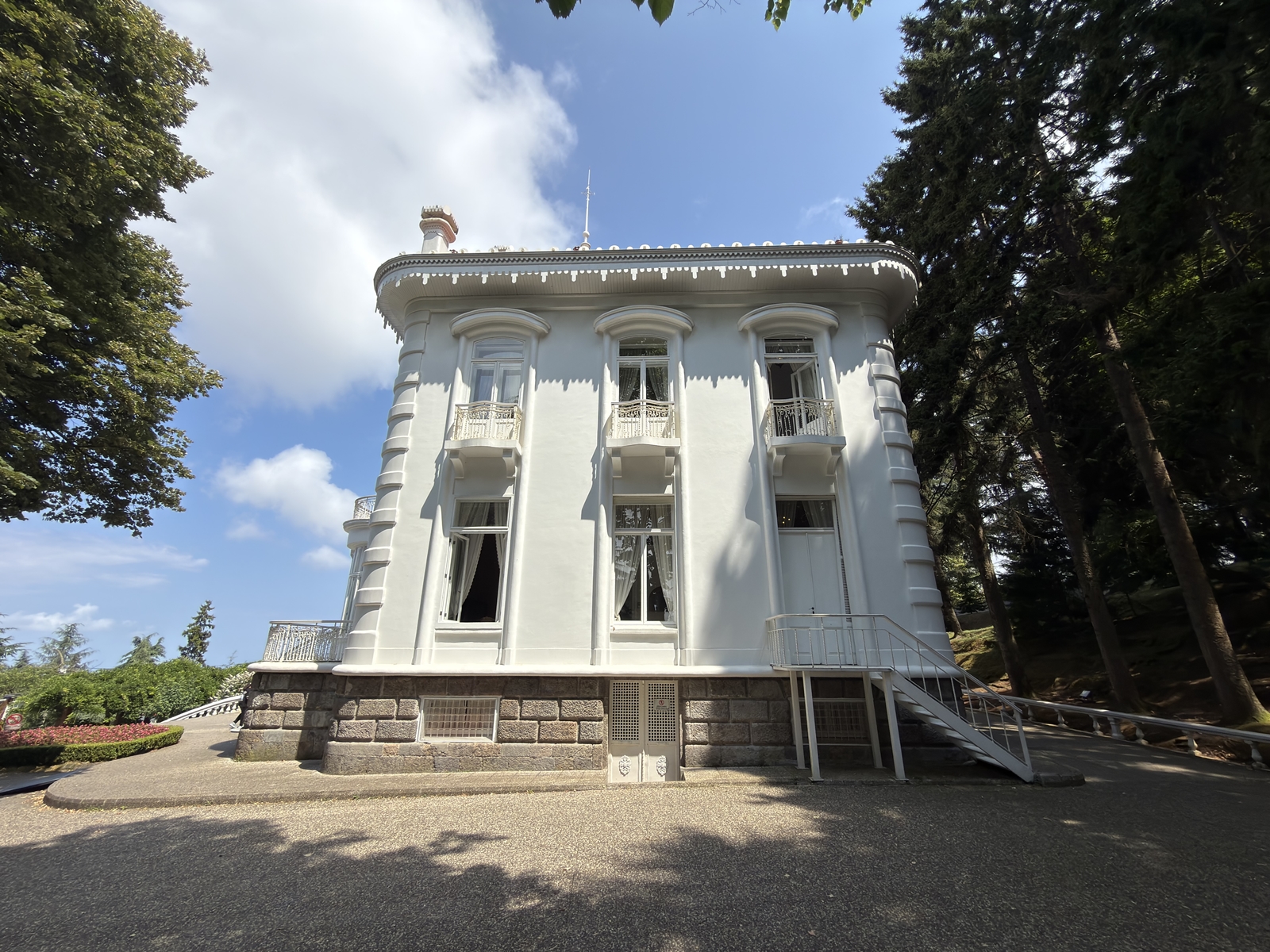
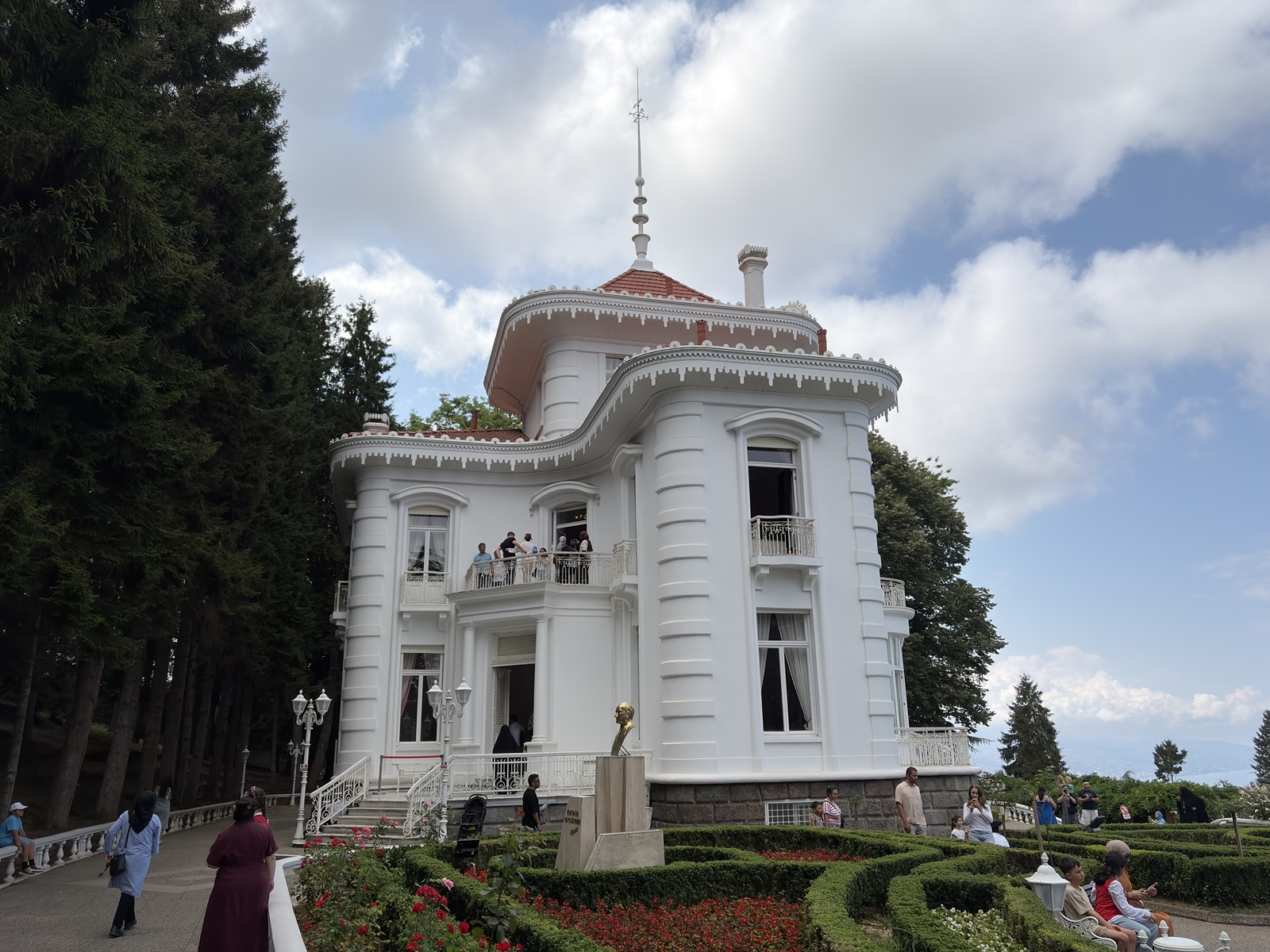
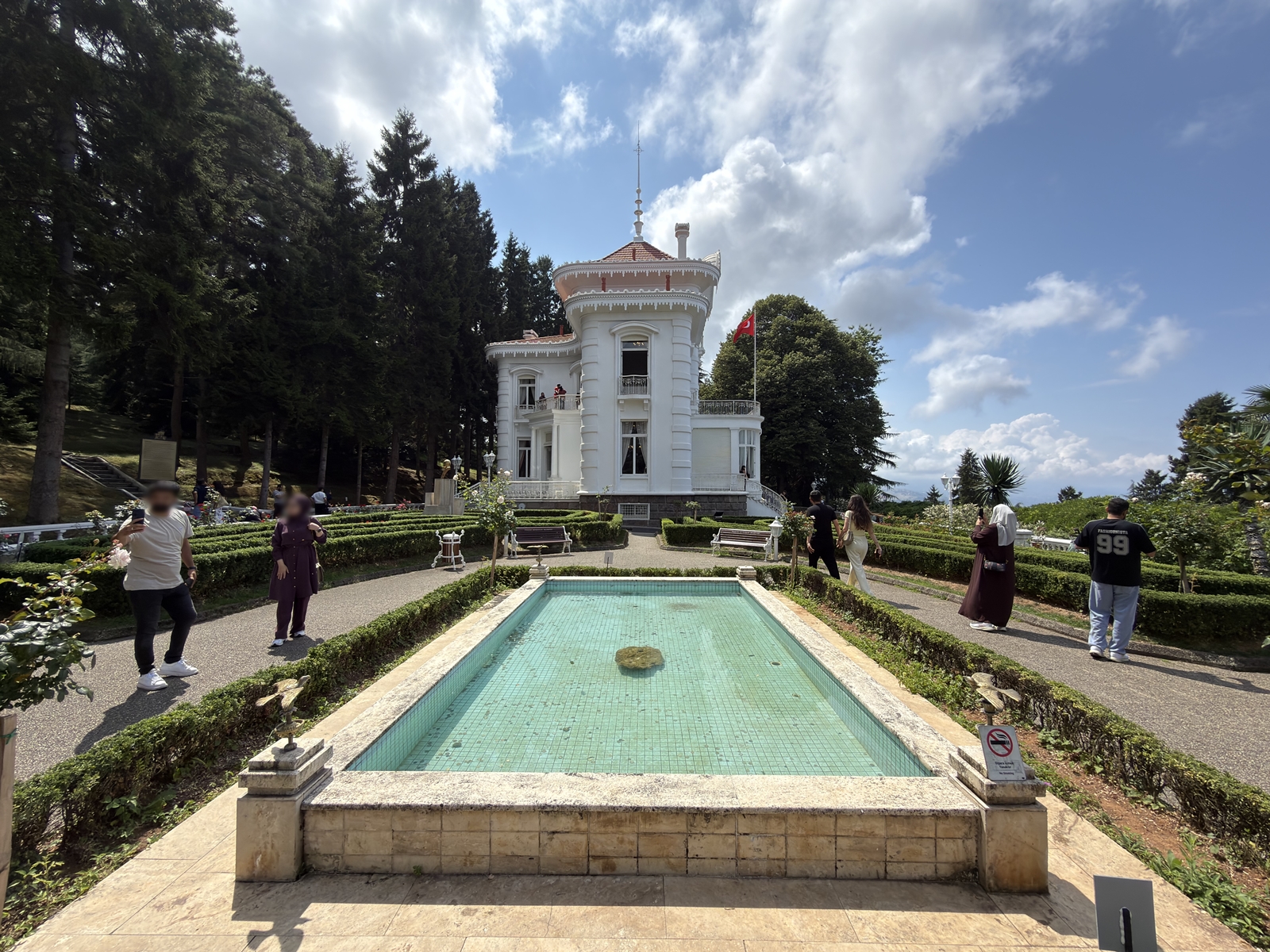
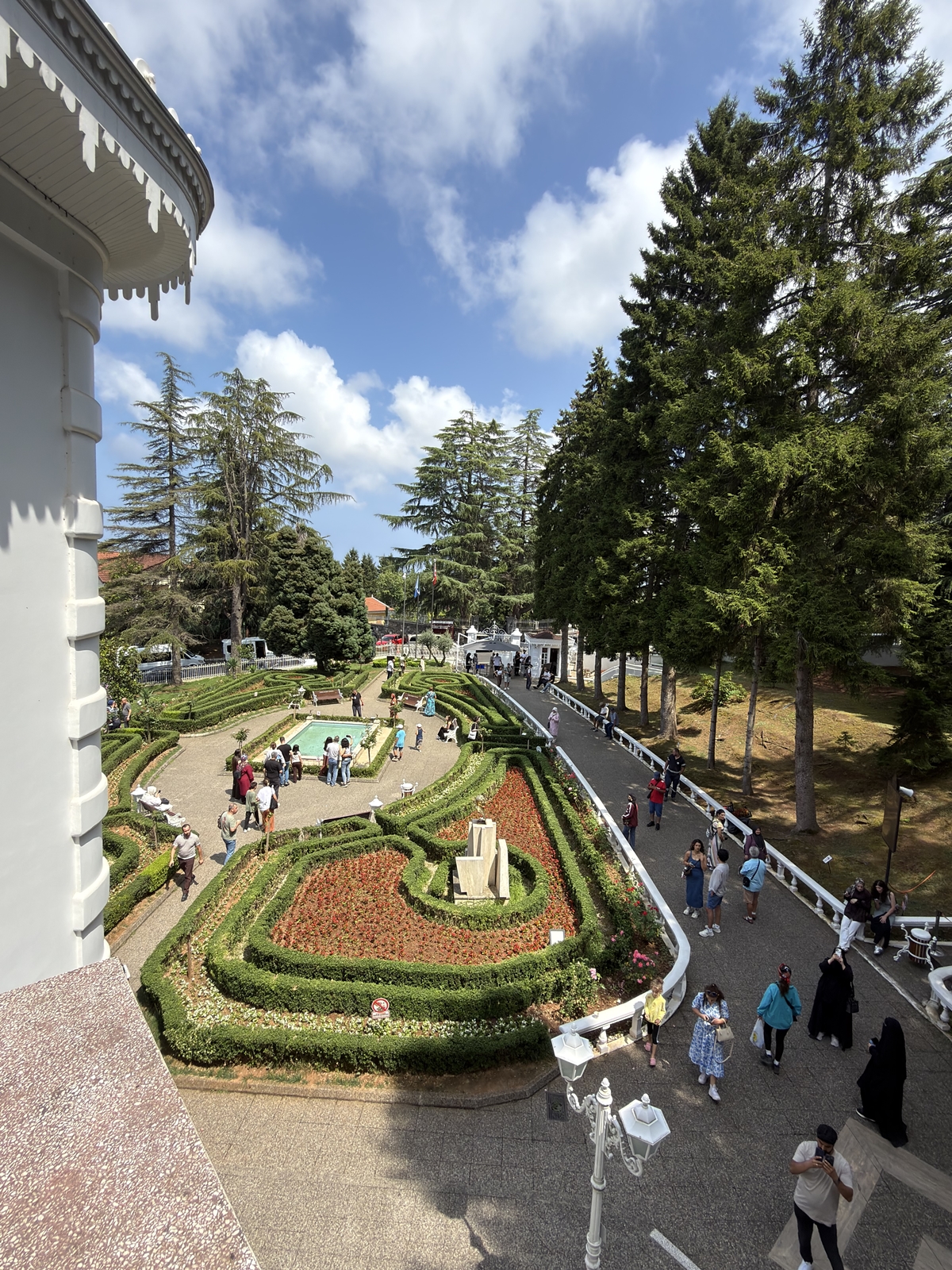
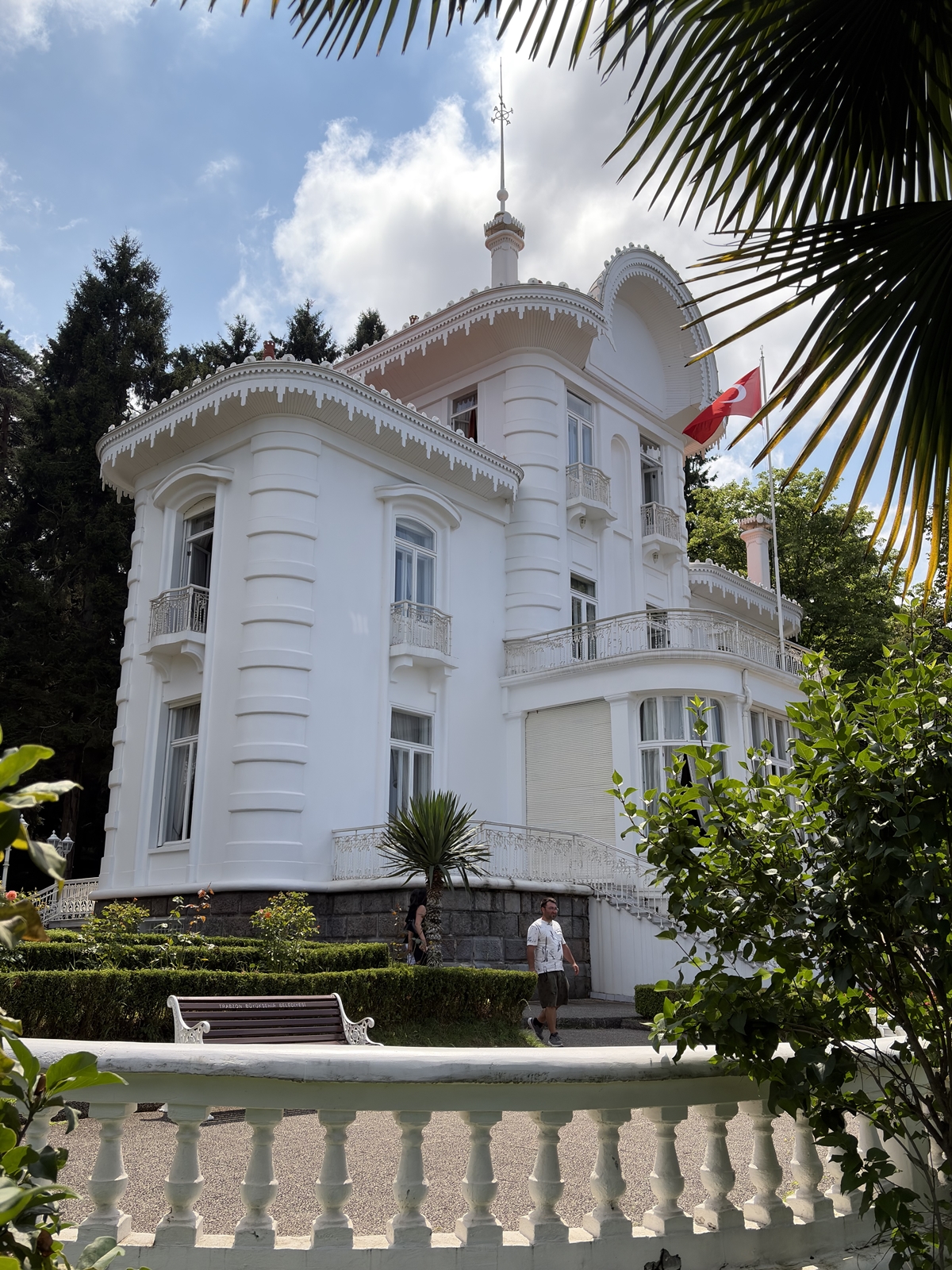
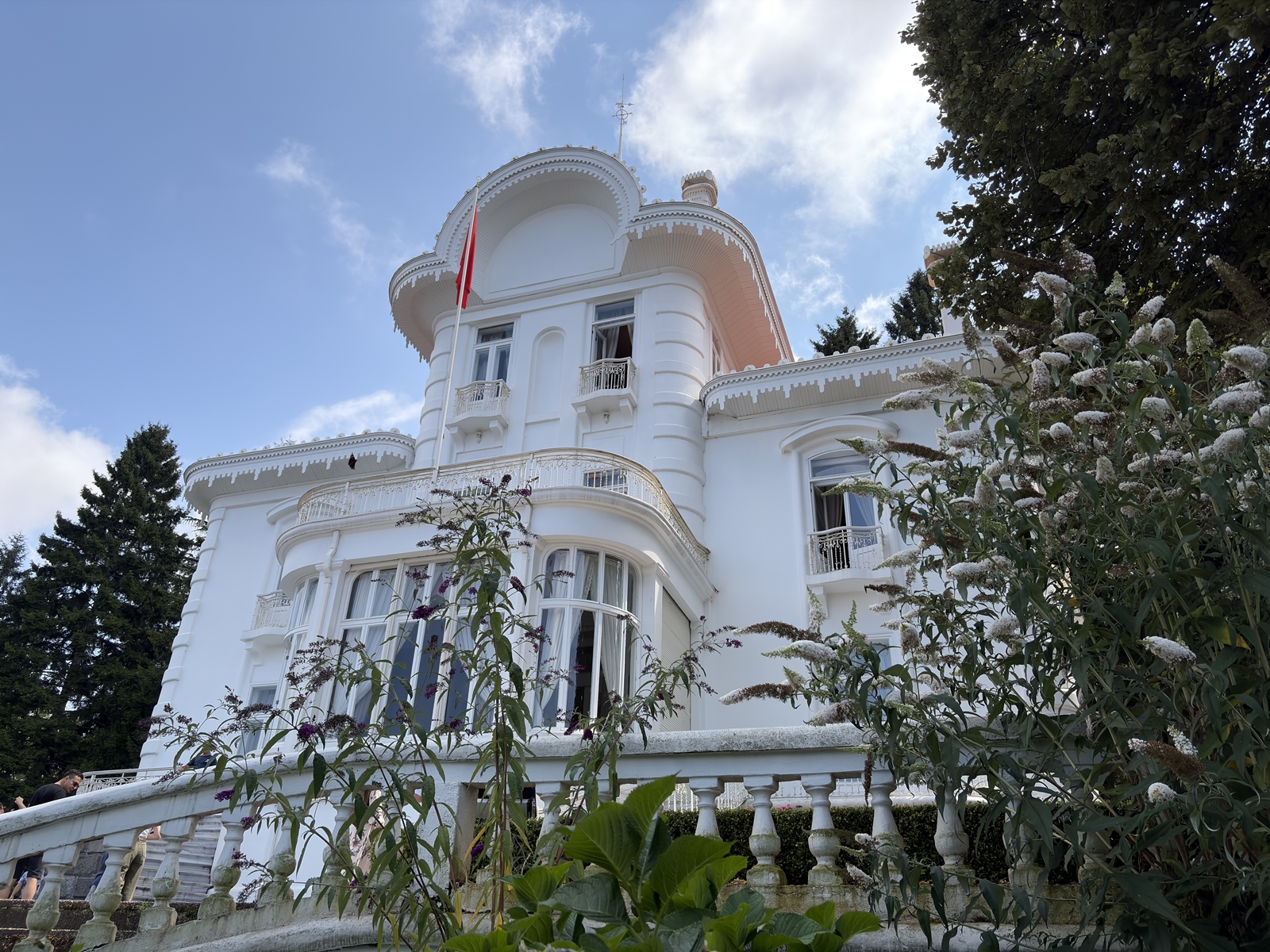
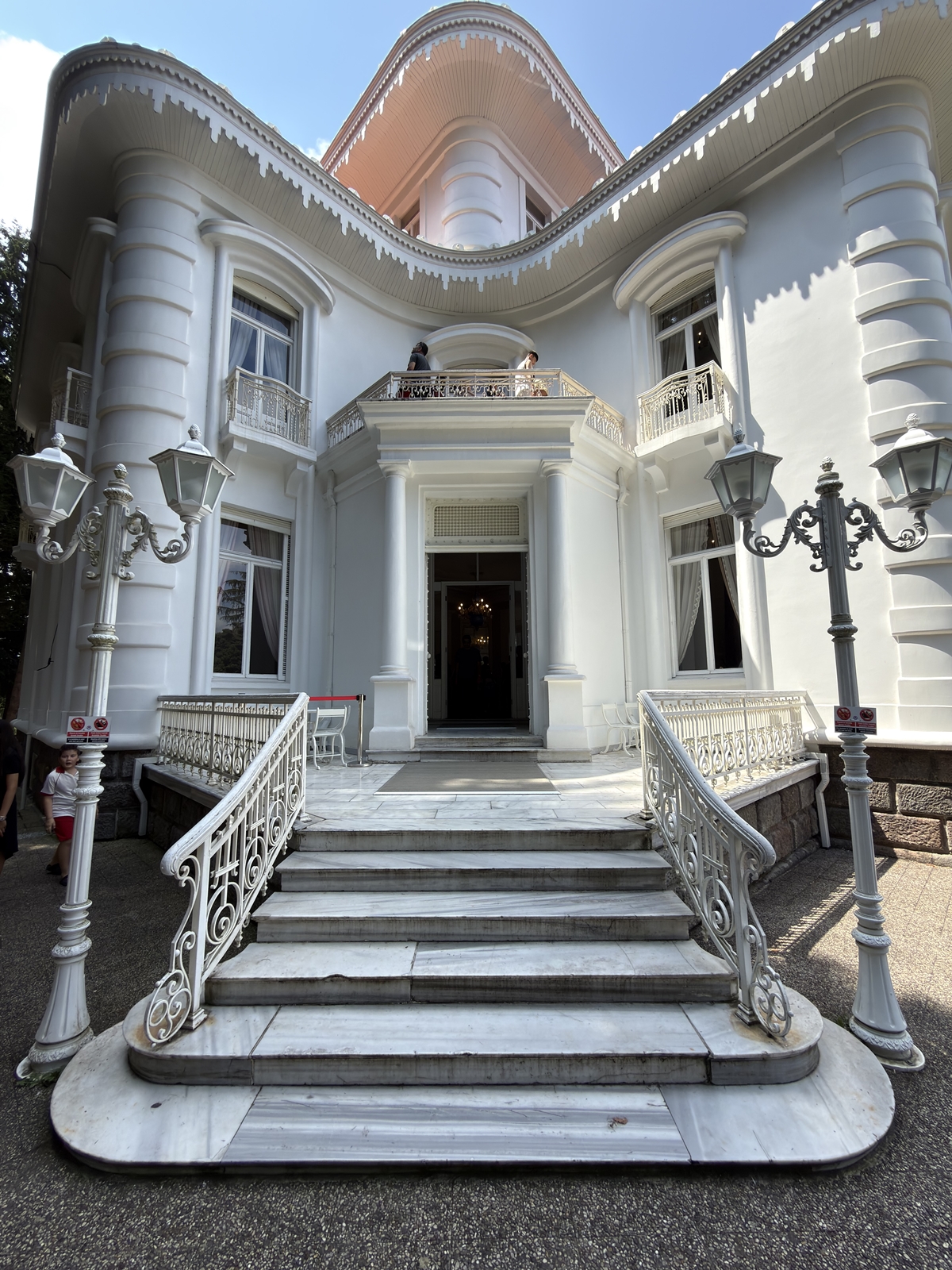
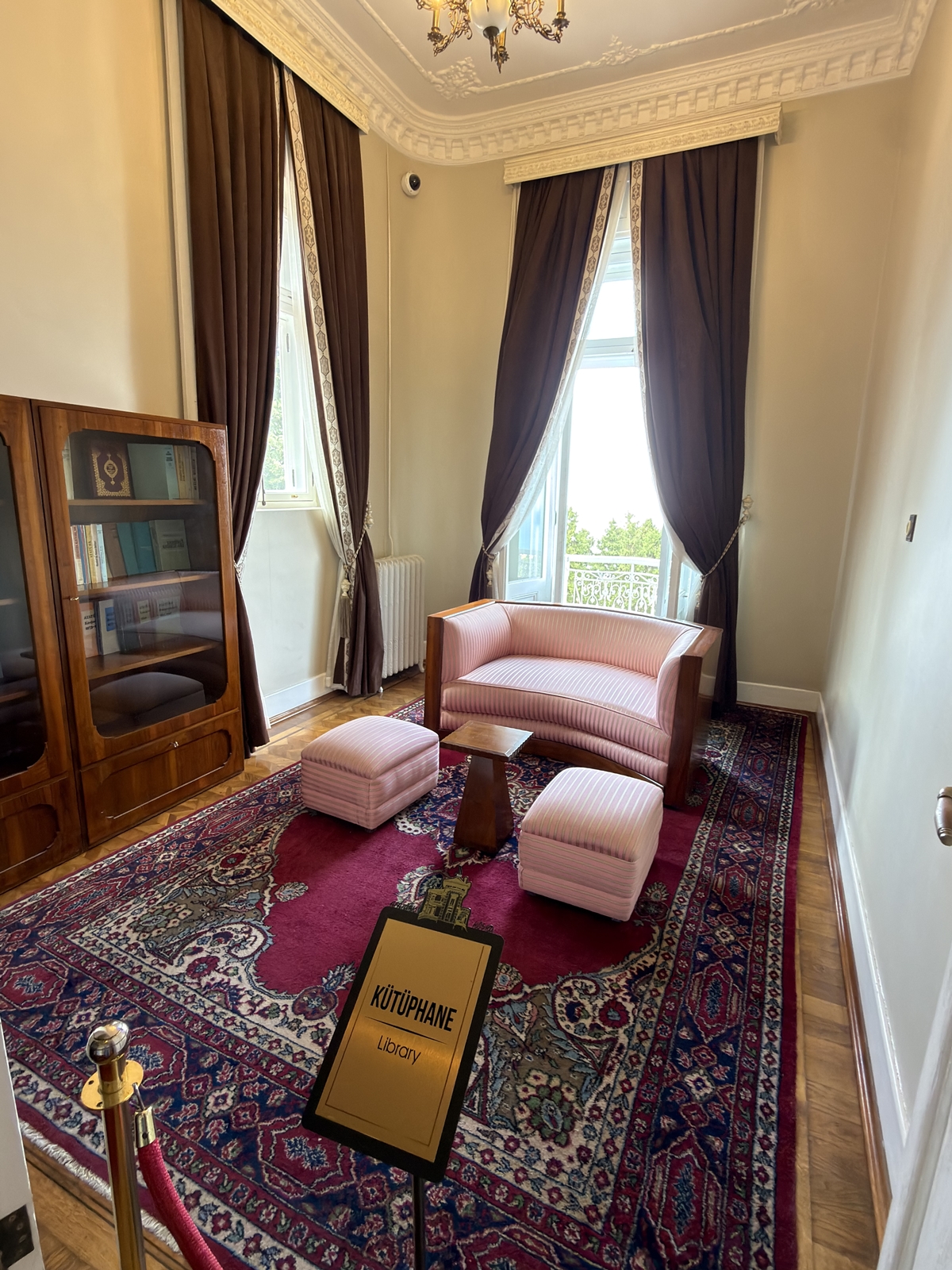
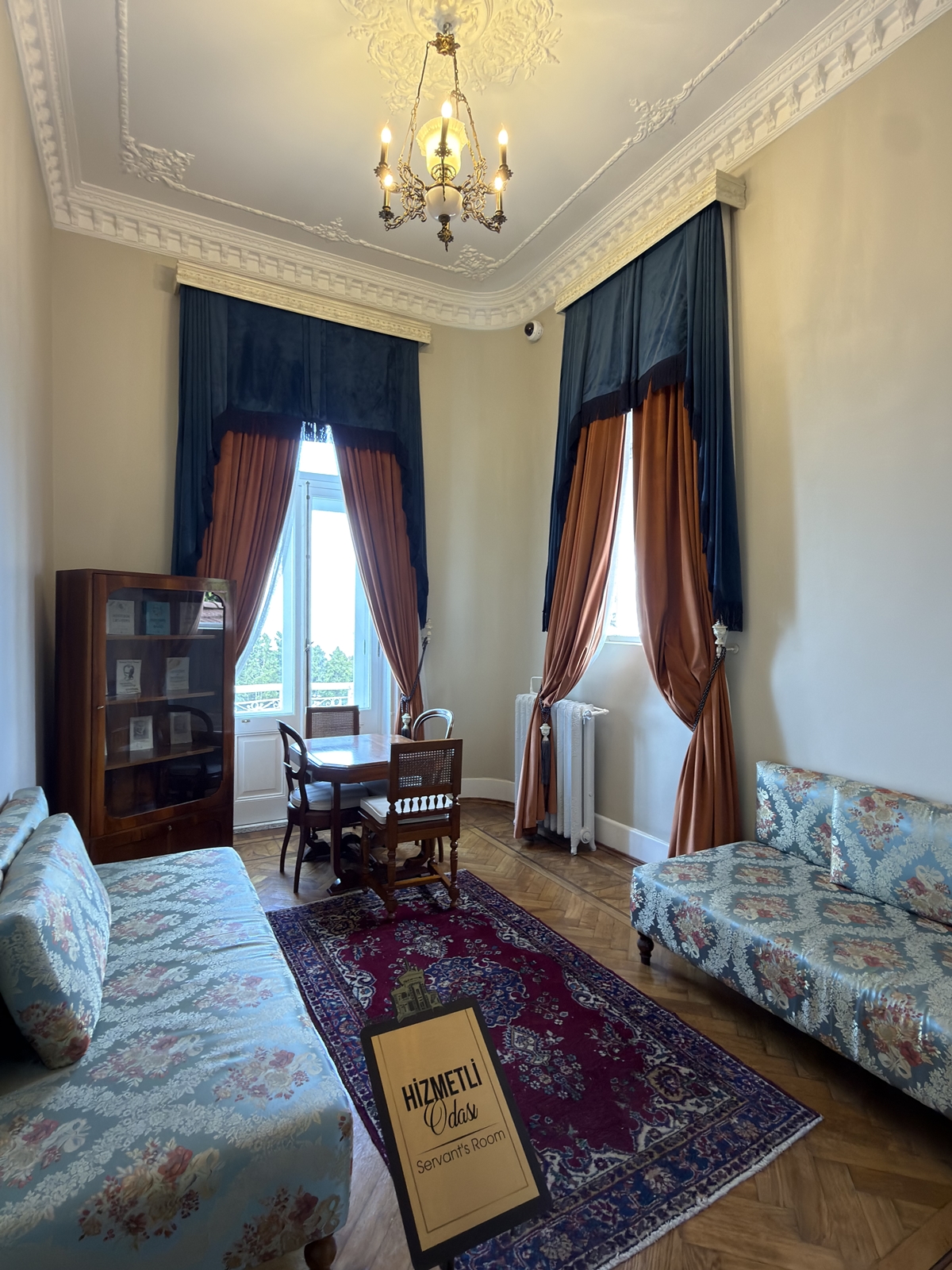
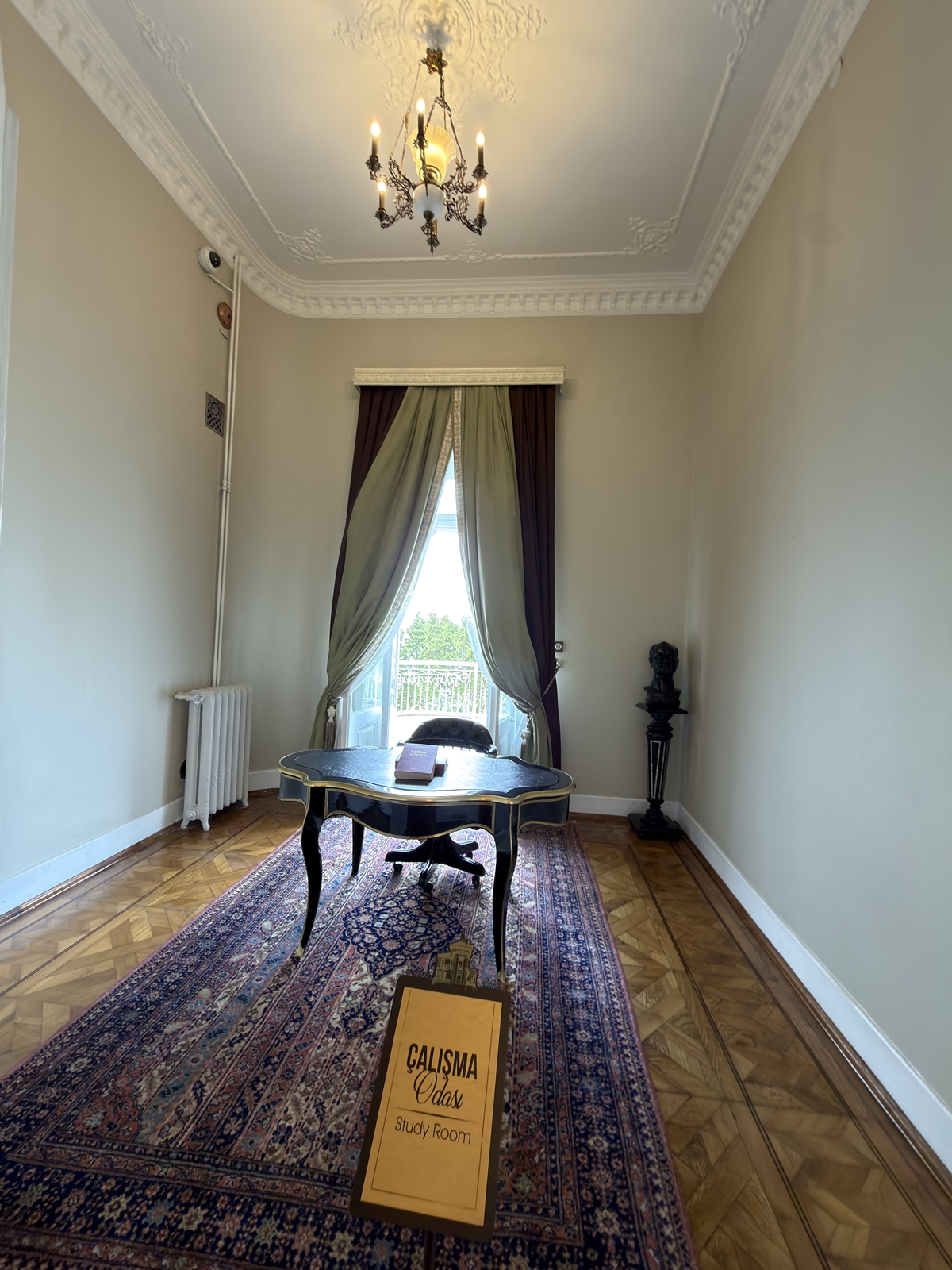
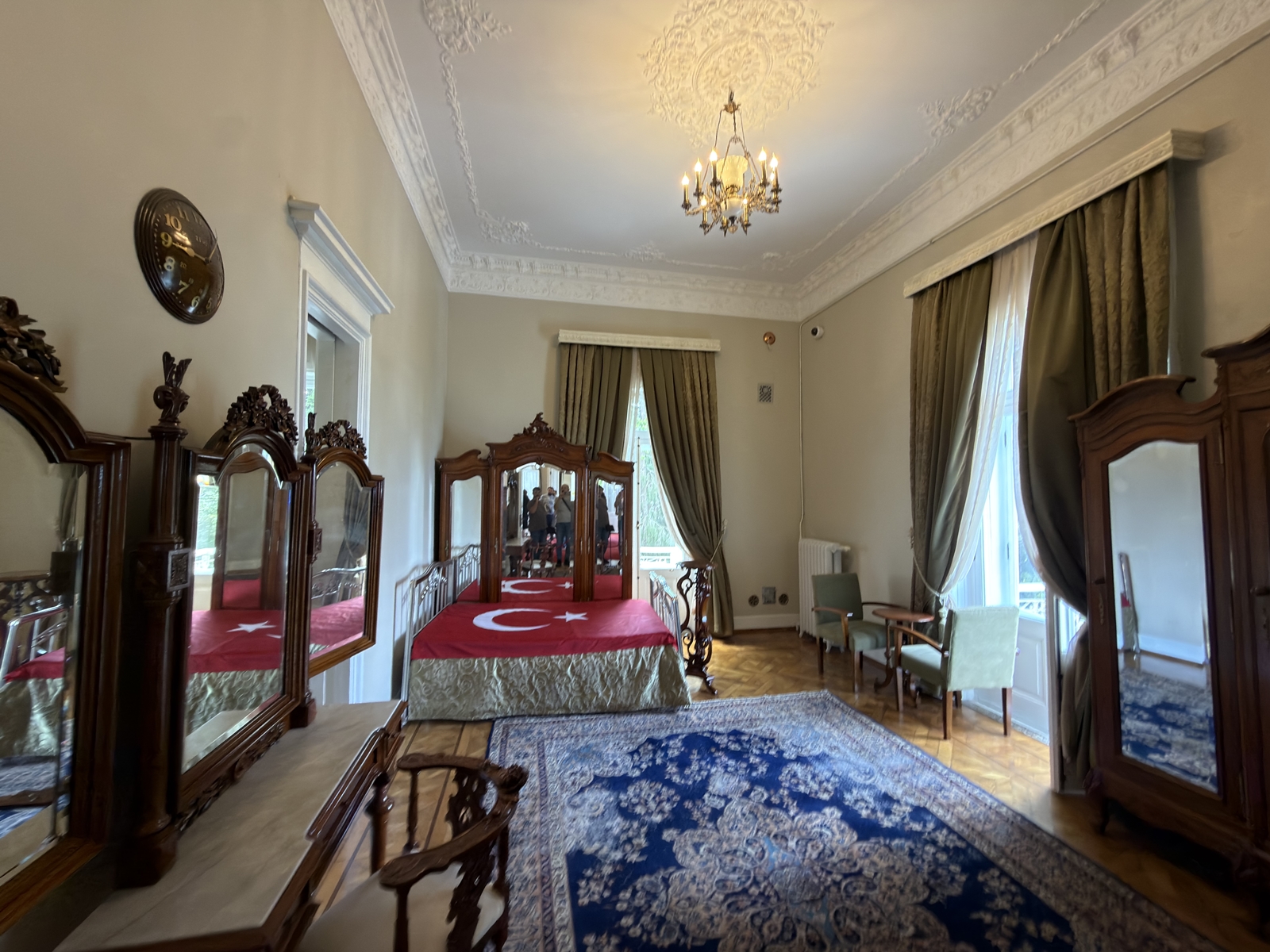
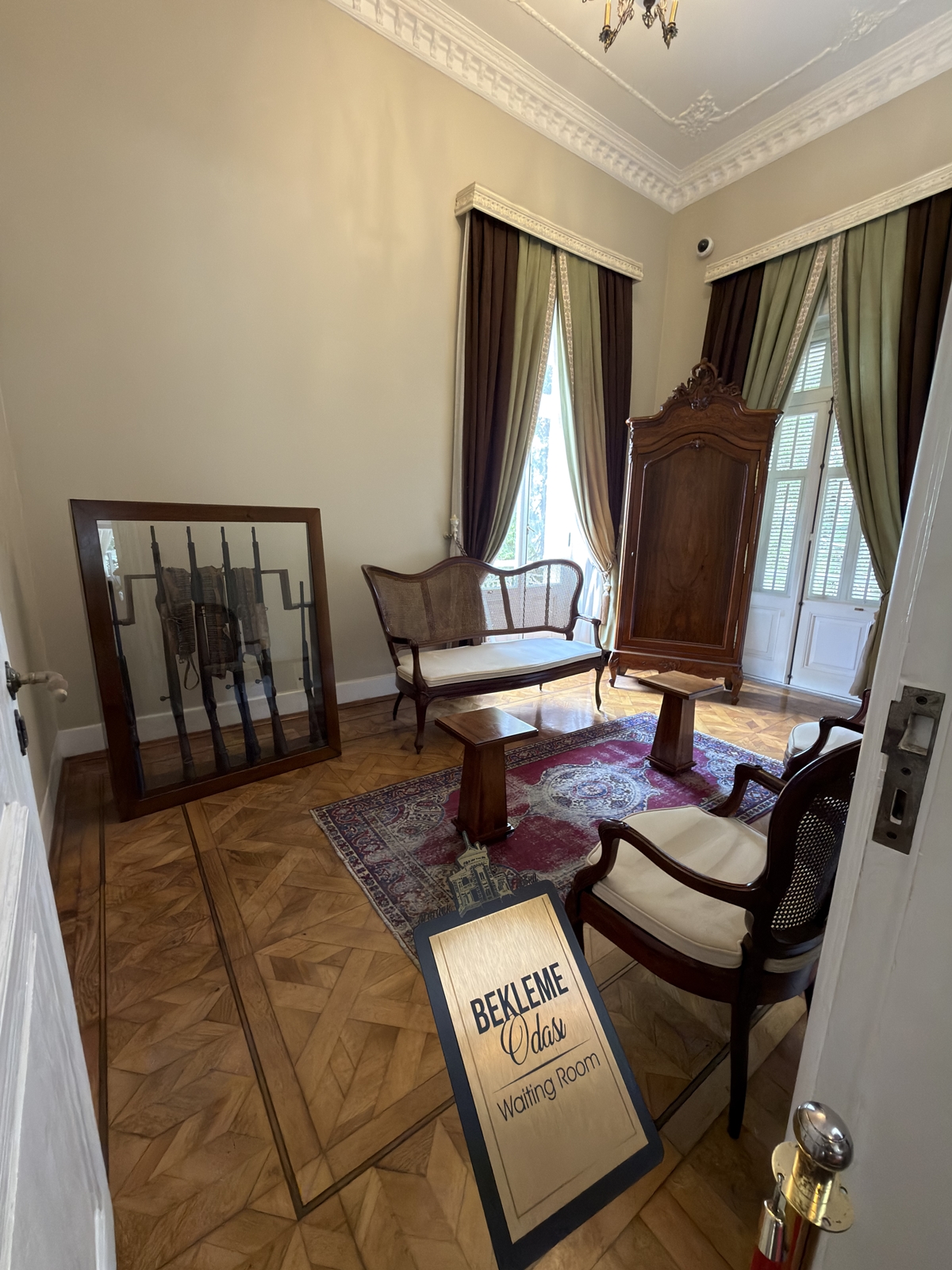
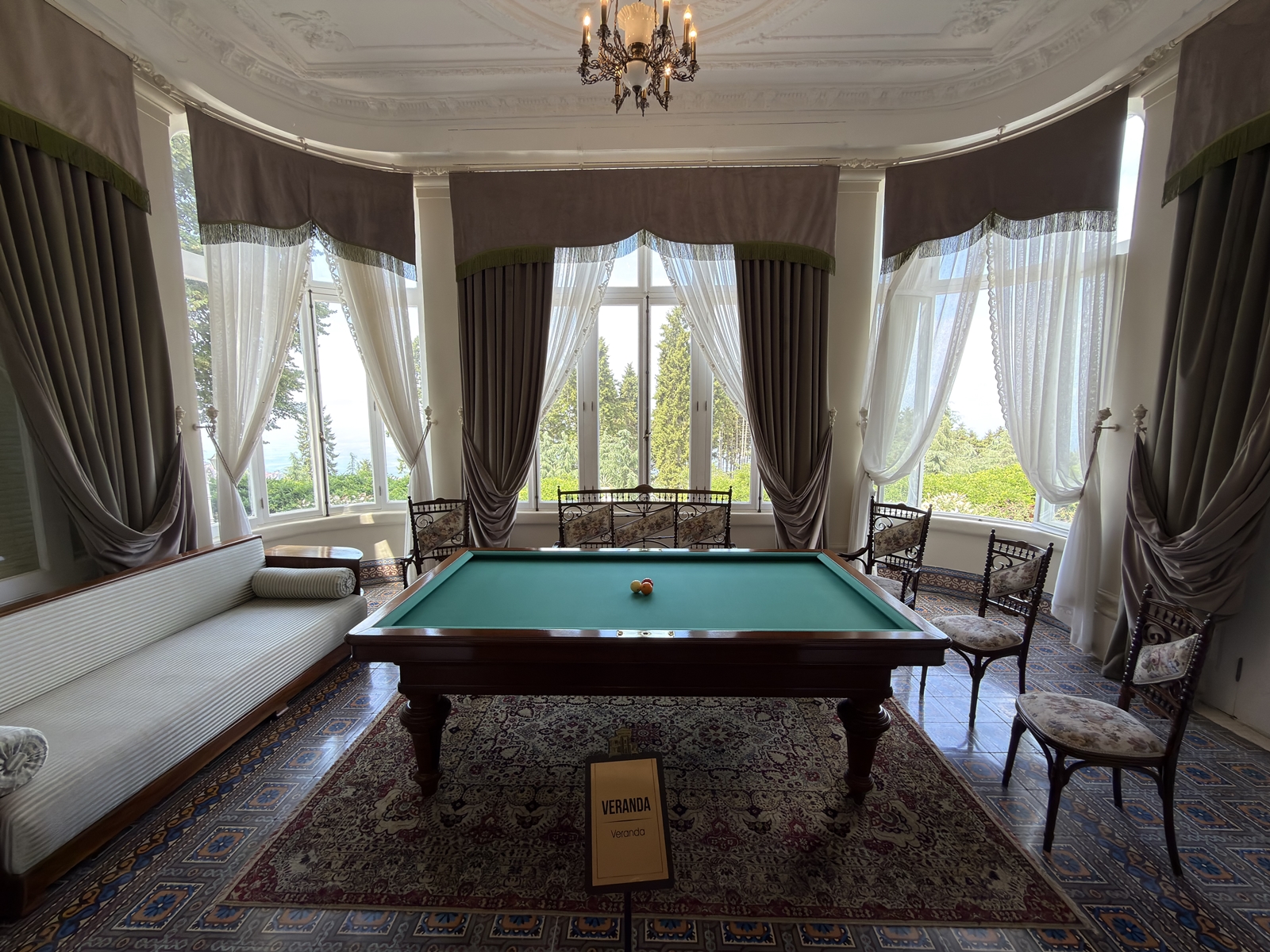
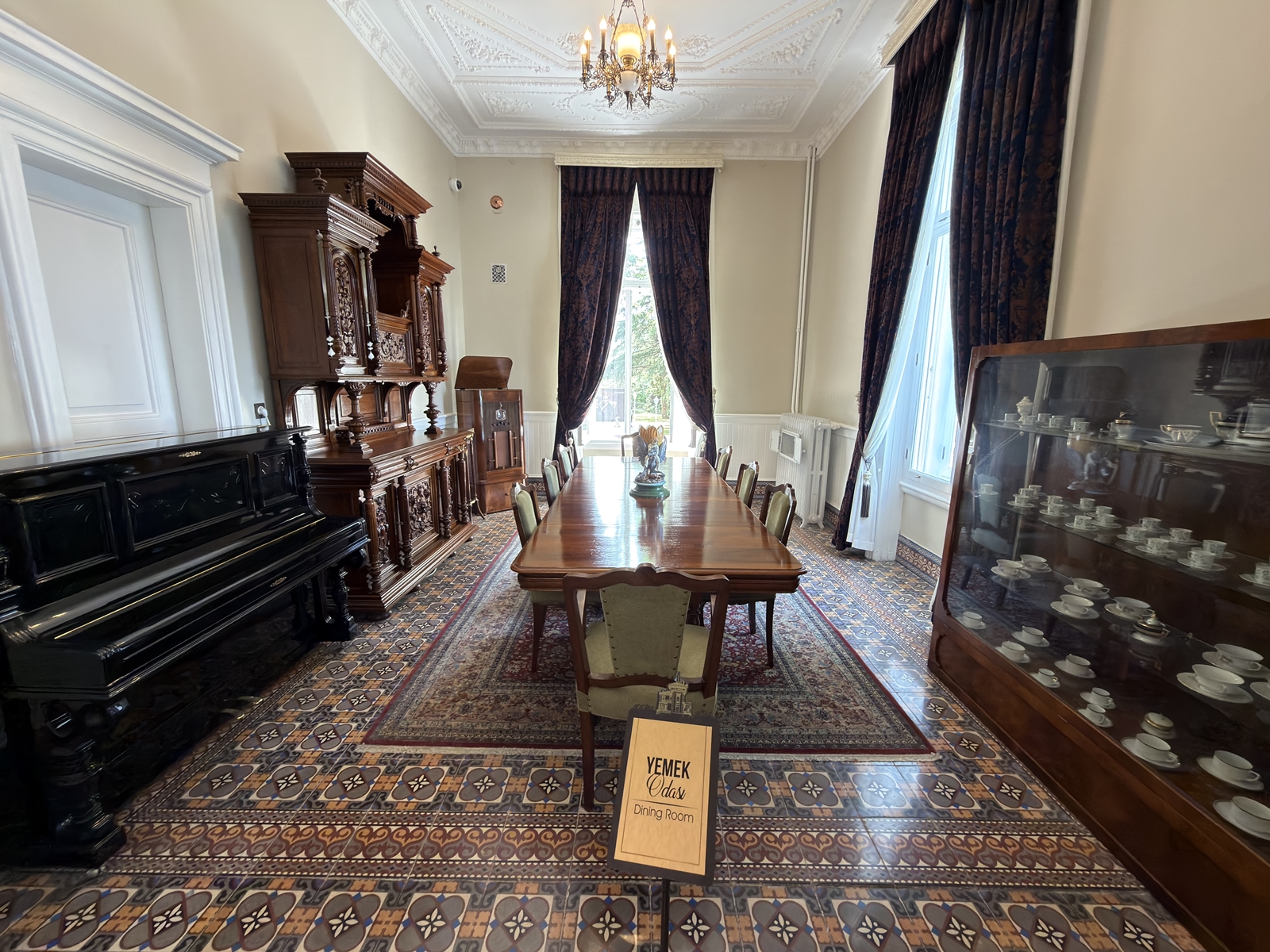
The Atatürk Mansion was built as a summer home between 1906 and 1910 in the Soğuksu neighborhood of Trabzon by Konstantin Kabayanidis/Kostas Kapagiannidis, a merchant from Trabzon’s local Greek community. The land on which the mansion was built was purchased in 1905; construction began in 1906 after official permission was obtained from the Ottoman Empire, and the building was completed in 1910. It is believed that Raimando D’Aranco was the architect of the project, and it appears that the building was completed under the supervision of local architect Aleksadr Kakulidis. One of the rare examples of the Art Nouveau style in Anatolia, the mansion is a three-story structure built on a basement and arranged in a central hall floor plan. The formal curves and massive projections on the veranda and in the eastern entrance hall are the primary features of the Art Nouveau style reflected in the plan.
The villa’s primary building materials are cut and rubble stone, masonry brick, and wood. The structural system was constructed using the masonry technique. During scraping work carried out during the most recent restoration, it was observed that the lime-based mortar used as a binder contained undersize black sand aggregate and flax shives. The building’s massing features prominent oval and elliptical forms, stepped levels, concave and convex surfaces, horizontal and vertical contrasts, the contrast between open and enclosed spaces, and effects of movement and dynamic motion. These features are also evident in the façade details as distinctive elements of the Art Nouveau style.
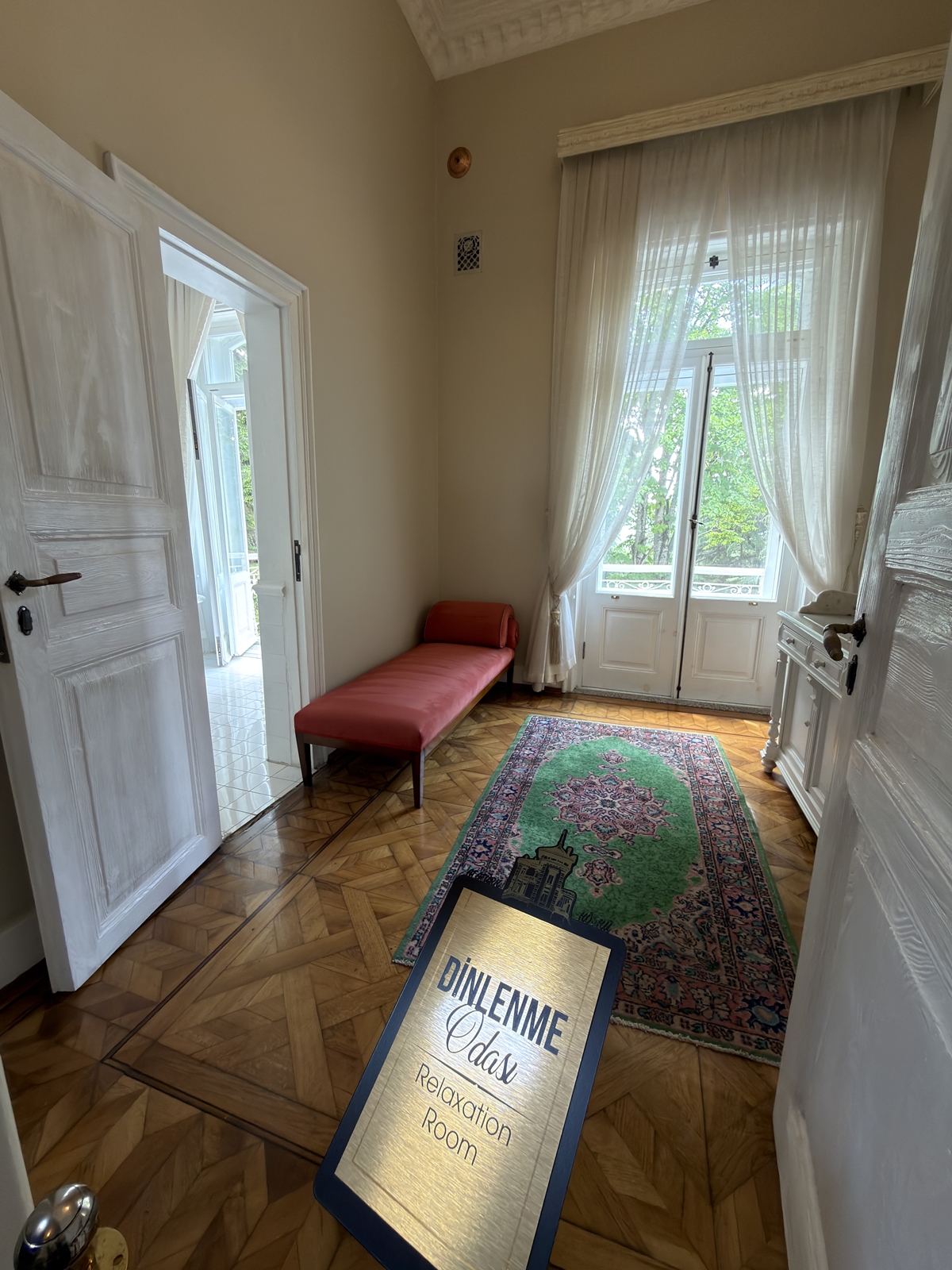
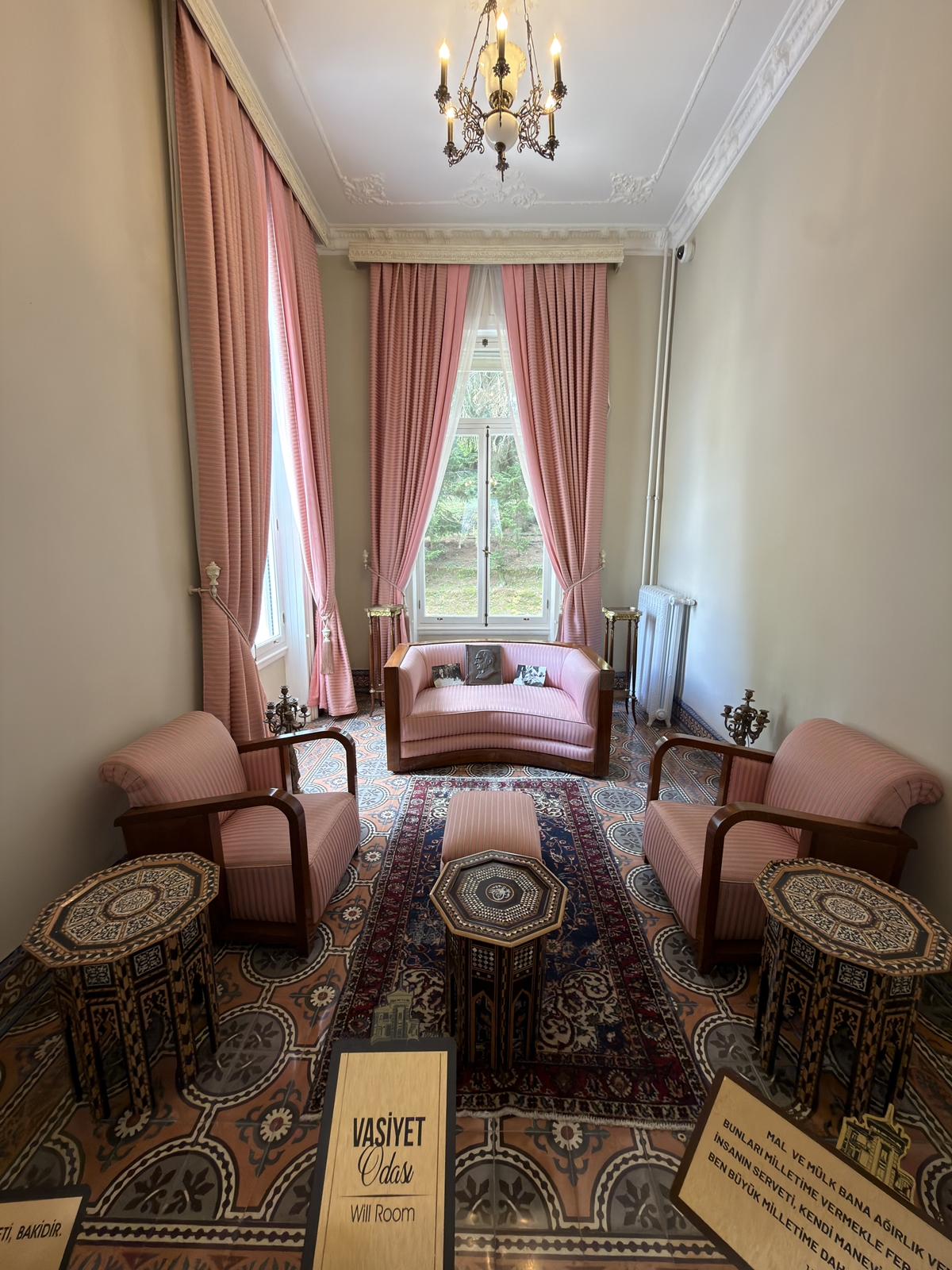
The north facade, designed as the front of the mansion, features elliptical staircases surrounding the veranda, its veranda projecting outward from the main structure, a terraced floor with abrupt rising lines borrowed from the Neo-Gothic style, and a porch arch that parallels the Art Nouveau-style cradle arch. The sense of movement and aesthetic sensibility created by playing with the forms on the exterior facades is continued in the interior decoration program as well. Tiled mosaics were used on the floor surfaces of the independent rooms, ceramics on the walls of wet areas, stucco and woodwork on the ceilings, and stained-glass decorations created using a surface-etching technique on the windows.
The villa was built as a summer residence in the Soğuksu neighborhood, located southwest of the city of Trabzon at an elevation of approximately 250 m above the city. Its patron, Konstantin Kabayanidis, was born in Trabzon in 1868 as the second child of Grigoris Kapagiannidis (1836–1907?), a merchant from Trabzon’s local Greek community, and Domna Amirogli (1843–1935). At the time of Konstantin’s birth, his father had transformed the small wholesale business he operated into a large company. Taking over the management of the company in the early 20th century, Konstantin Kabayanidis, together with his father and brother, founded the Kapagiannidis Bank in 1904 in the building that later served as the Old PTT building in Trabzon. Kabayanidis, who was also active in international maritime trade, undertook various urban development projects in downtown Trabzon. His dual citizenship—as both a Greek and a Russian national—facilitated his import and export activities, enabling him to source construction materials from various countries around the world. Kabayanidis faced a difficult period during World War I and passed away in 1915.
The Kabayanidis family was both related to and at odds with the Kostaki family, the founders of the Kostaki Mansion, which is now used as the Trabzon Museum. The Kostaki family had previously had a mansion built in the Soğuksu area and had a road constructed leading to it. Although the Atatürk Mansion, built by Kabayanidis, was located very close to the Kostaki family’s mansion—and although it would have been possible to reach it by simply extending the Kostakis’ road a short distance—Kabayanidis did not use that route; instead, he had the longer western road constructed.
In accordance with the population exchange provisions of the Treaty of Lausanne signed in 1923, the mansion was transferred to the state treasury. Gazi Mustafa Kemal Atatürk visited the mansion during his trip to Trabzon in 1924 and greatly admired the building. Consequently, the people of Trabzon decided in 1926 to present the mansion to Atatürk as a gift, although the transfer of ownership did not take place until 1931. Atatürk also stayed at the mansion during his visits to Trabzon in 1930 and 1937 and wrote one of his wills there.
After Atatürk’s passing, ownership of the mansion passed to his sister, Makbule Boysan. The building was purchased by the municipality in 1943, with the purchase price paid in full, and converted into a museum. The mansion suffered significant damage during unscientific restorations carried out in 1955, 1963, and 2005; however, the problems caused by these interventions were rectified through a comprehensive and high-quality restoration carried out in 2023.