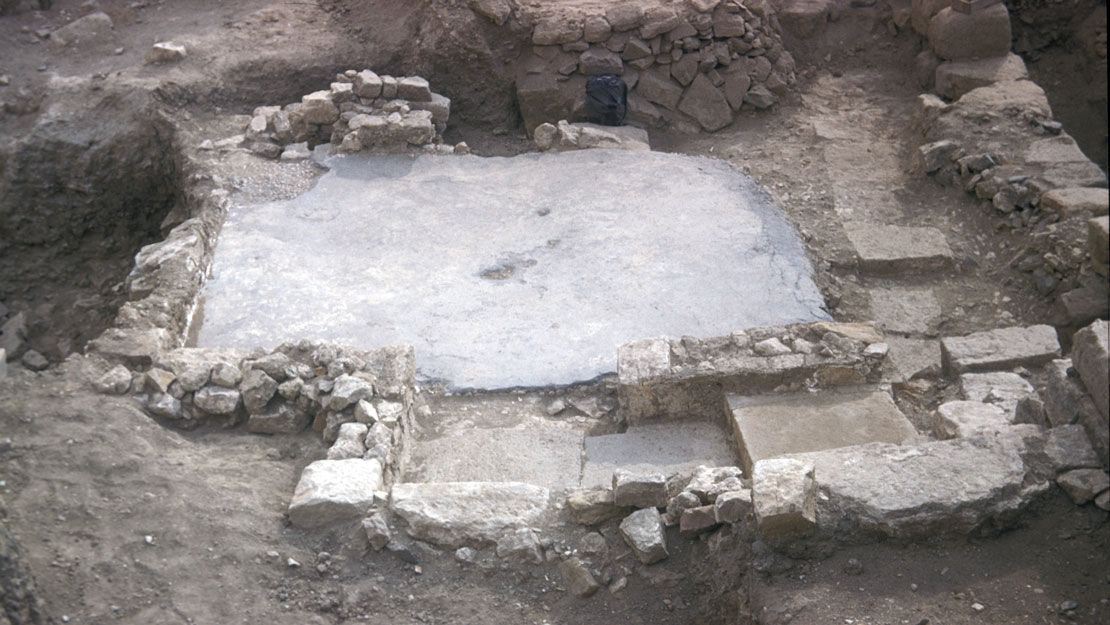
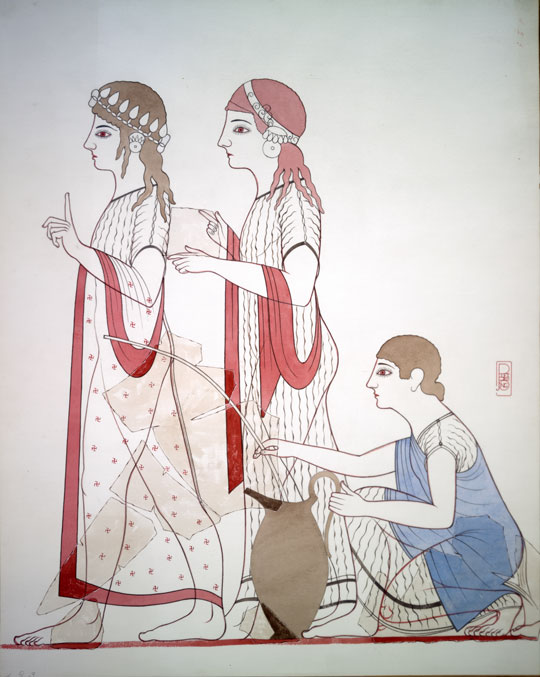
Located at the Gordion Inner Castle Mound, between two Middle Phrygian megara and within the outer courtyard of the castle entrance complex, the Painted House is a unique structure dating to the Early Achaemenid Period, approximately 500–490 BCE. Small and partially sunken into the ground, the structure features a narrow, winding entrance and a main chamber measuring approximately 4.50 × 3.75 m. Thousands of painted plaster fragments recovered from the building’s walls point to a rich mural program depicting ceremonial processions—dominated by female figures—as well as banquets and various ritual scenes. The clothing, jewelry, headdresses, and—in particular—the gestures of reverence and silence characteristic of Achaemenid art seen in the figures reflect a complex iconographic context in which Phrygian, Persian, and Anatolian cultural traditions can be considered together.
The structure’s unusual location, its entrance with limited access, and its semi-subterranean layout with minimal natural light suggest that the Painted House was not used as an ordinary residence. The distinct predominance of female figures, coupled with the absence of scenes depicting hunting, warfare, or male dominance, suggests that the structure may have been a space of a private or cult nature rather than a heroon. With these characteristics, the Painted House is an important element of archaeological and cultural heritage that demonstrates the continuity of local Phrygian traditions in Gordion under Achaemenid rule and how new Persian influences were adopted in the fields of architecture and art.
Source: Penn Museum. (n.d.). Achaemenid Gordion. Gordion Archaeological Project. https://www.penn.museum/sites/gordion/tarih/akhamenid-gordion/