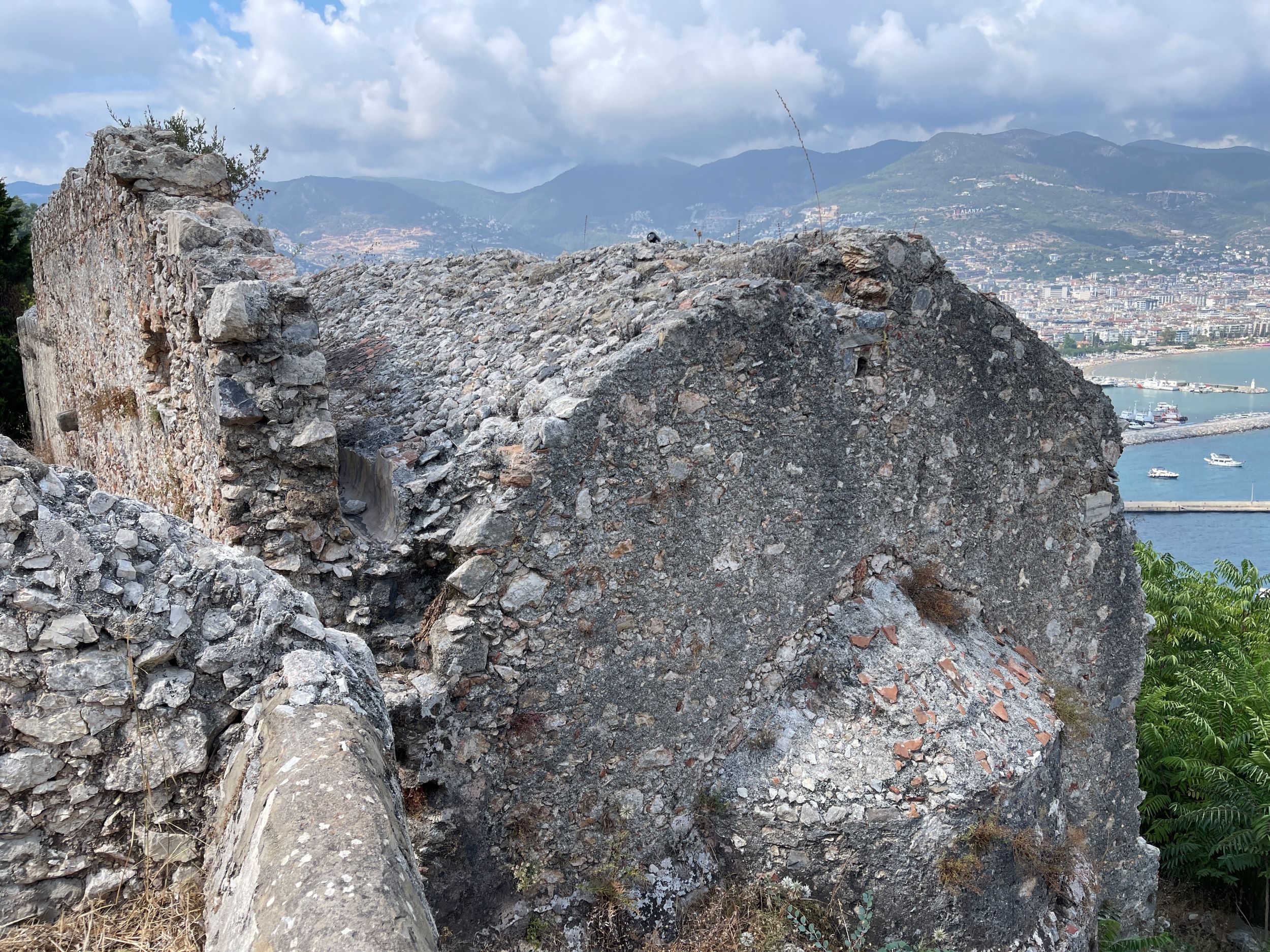
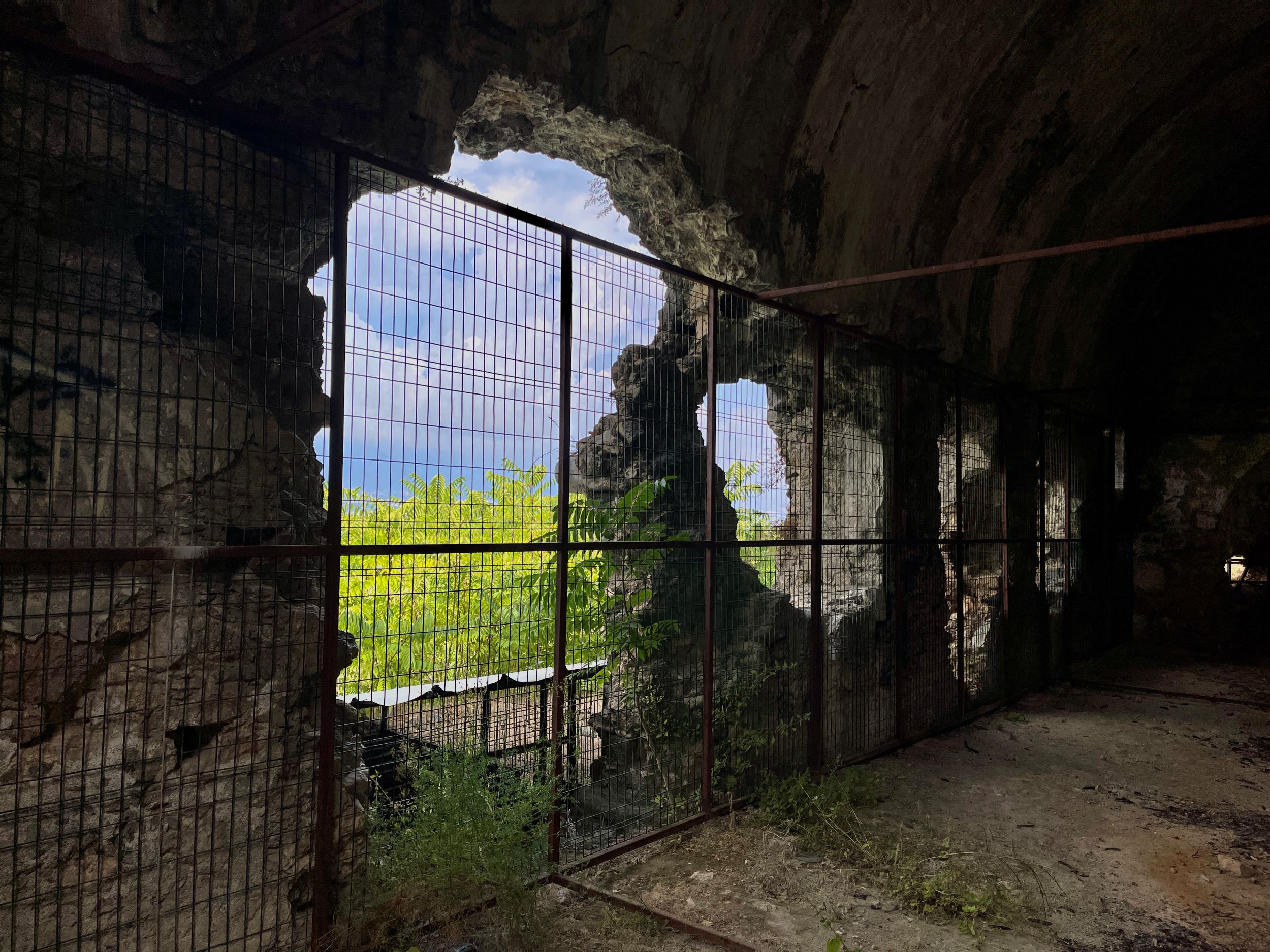
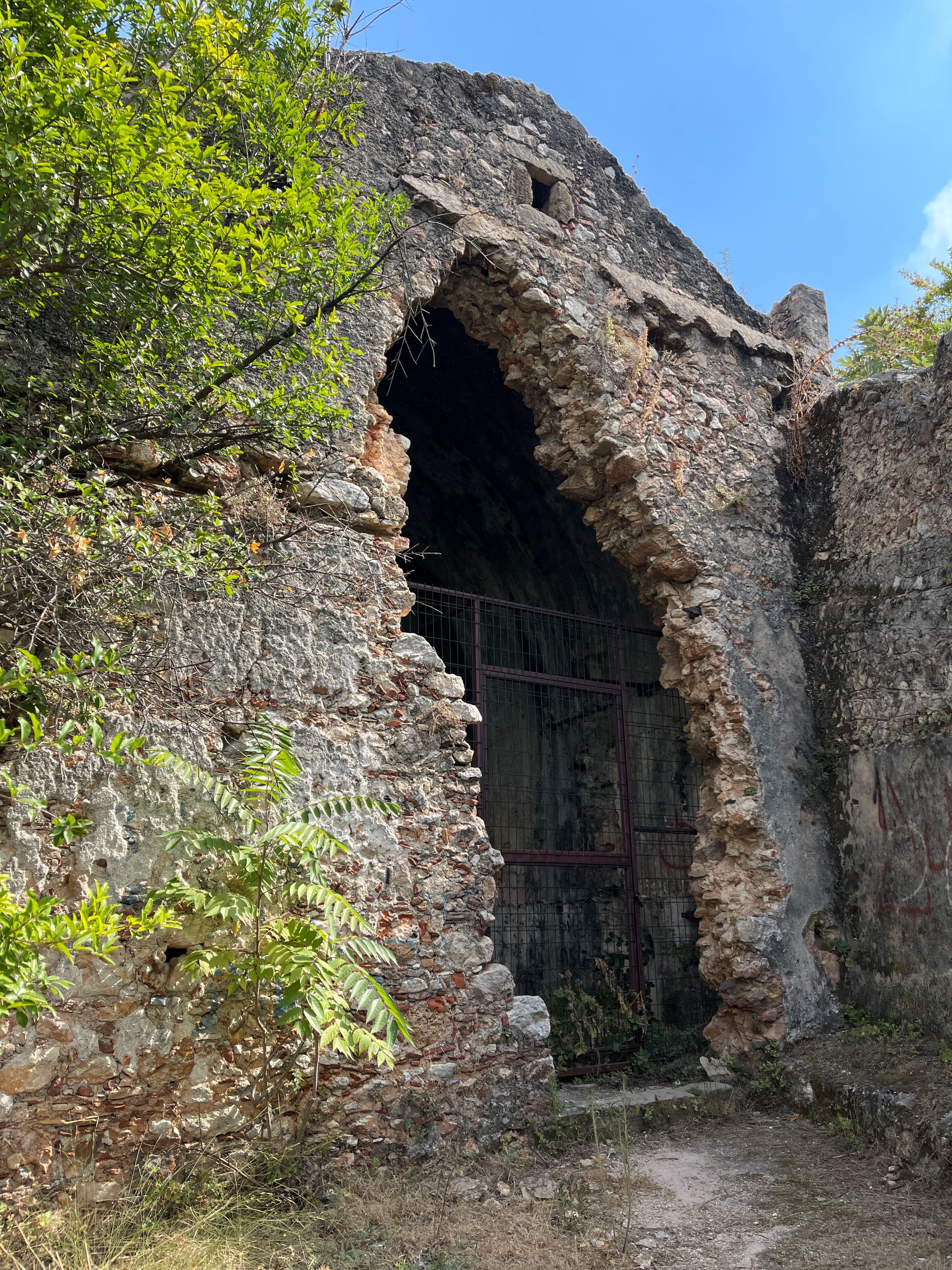
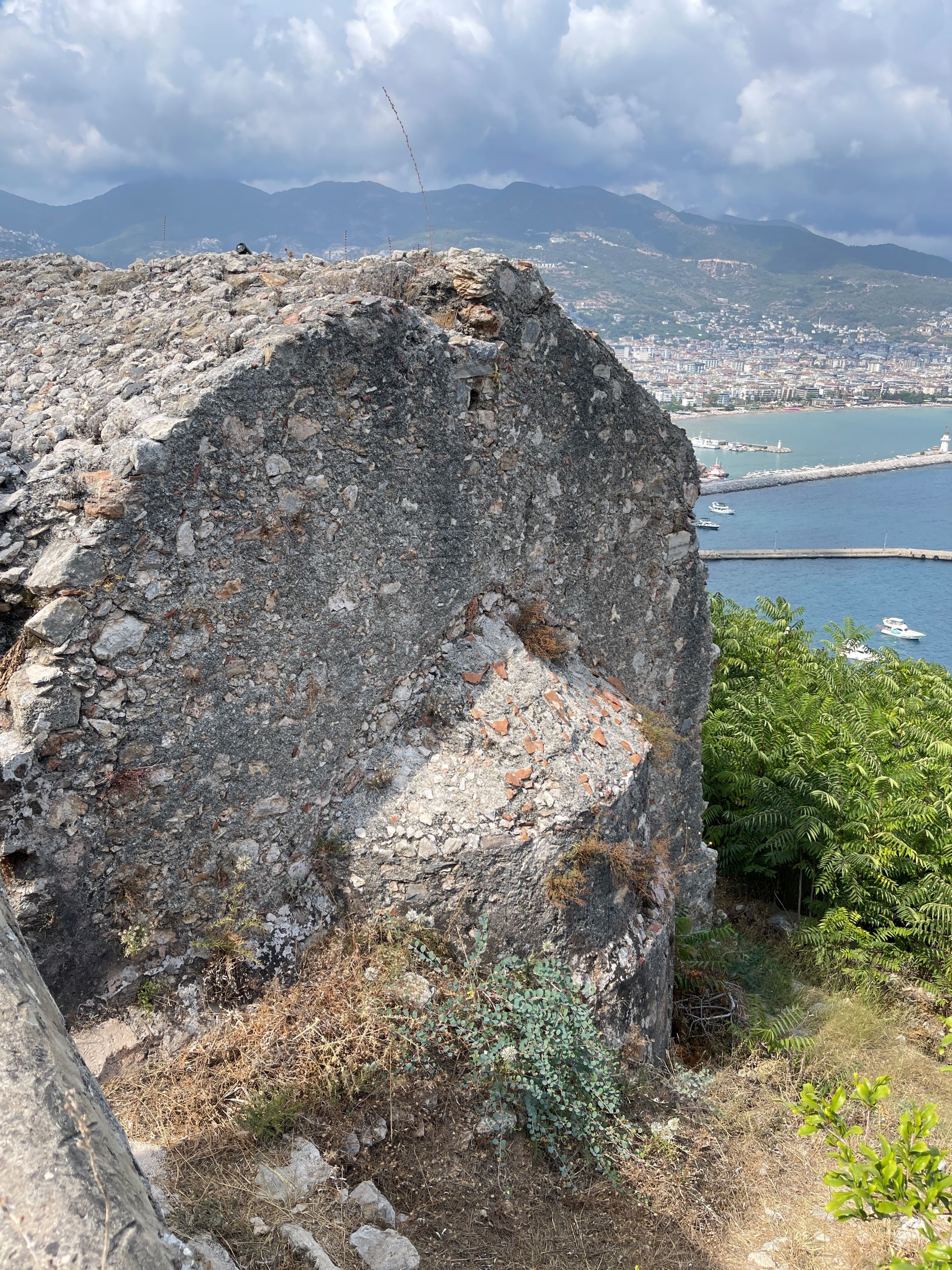
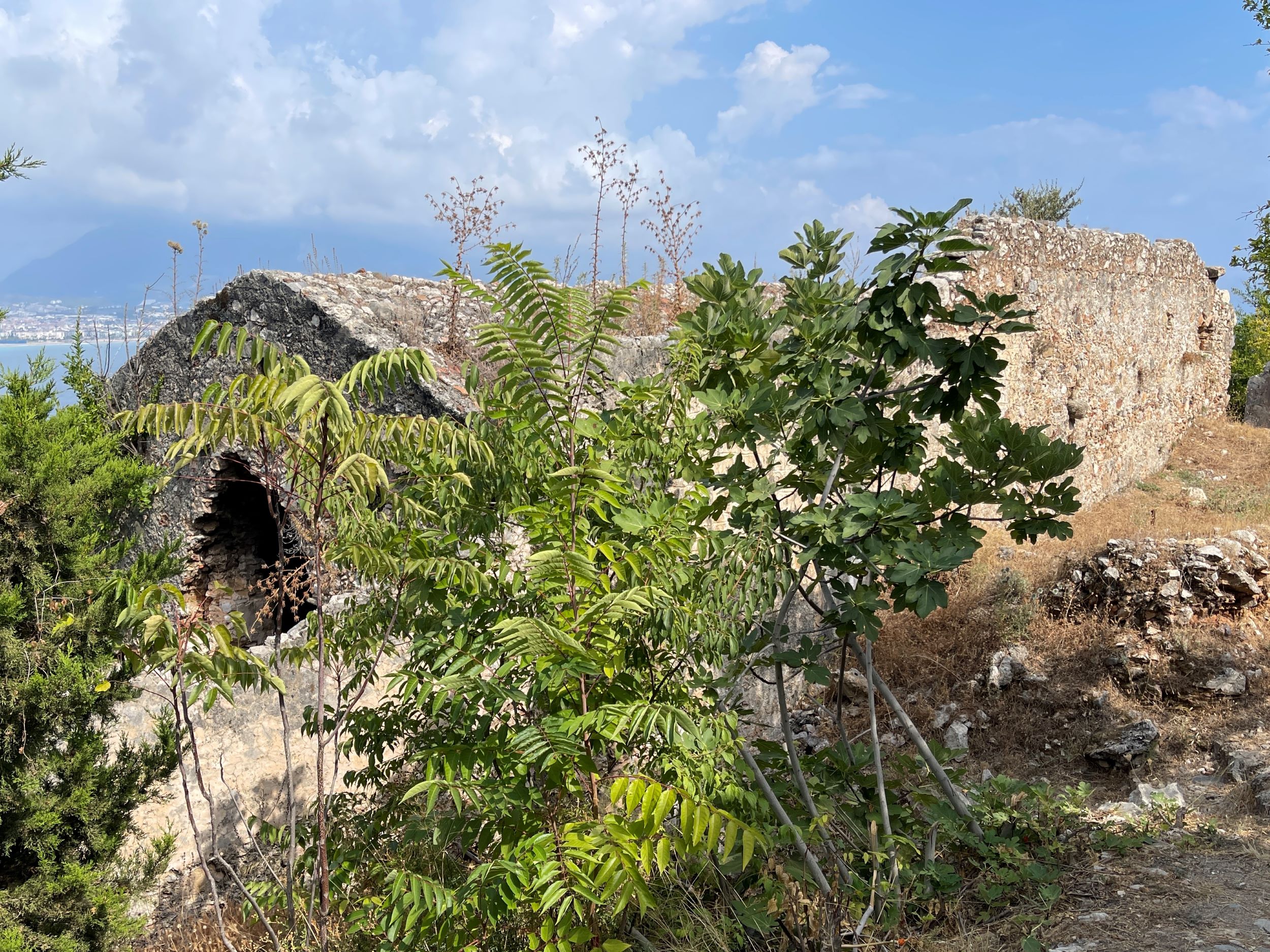
The Church of Hagios Konstantinos and Hagia Eleni is a 19th-century Greek Orthodox church located in the Tophane section of Alanya Castle. The church is dedicated jointly to Roman Emperor Constantine I, who legalized Christianity, and his mother, Saint Eleni (Helena); it bears the names of both saints because, in the Orthodox tradition, these two saints are commemorated together. The exact date of construction, the patron, and the architect of the building are unknown. Although some studies cite 1839 as the construction date, it is noted that there is no inscription in the church to confirm this, and the primary source for this date cannot be identified; therefore, it is not appropriate to definitively date the structure to 1839.
In the oral history records of the Greek community of Alanya, the church is mentioned as one of the principal Greek Orthodox places of worship in Tophane. According to information recorded in 1964 from Markos Markoglou, an Alanya native who participated in the population exchange, the local priest, Stefanos, served at the church and did not speak Greek; furthermore, the Greek boys’ school was located in the church courtyard.
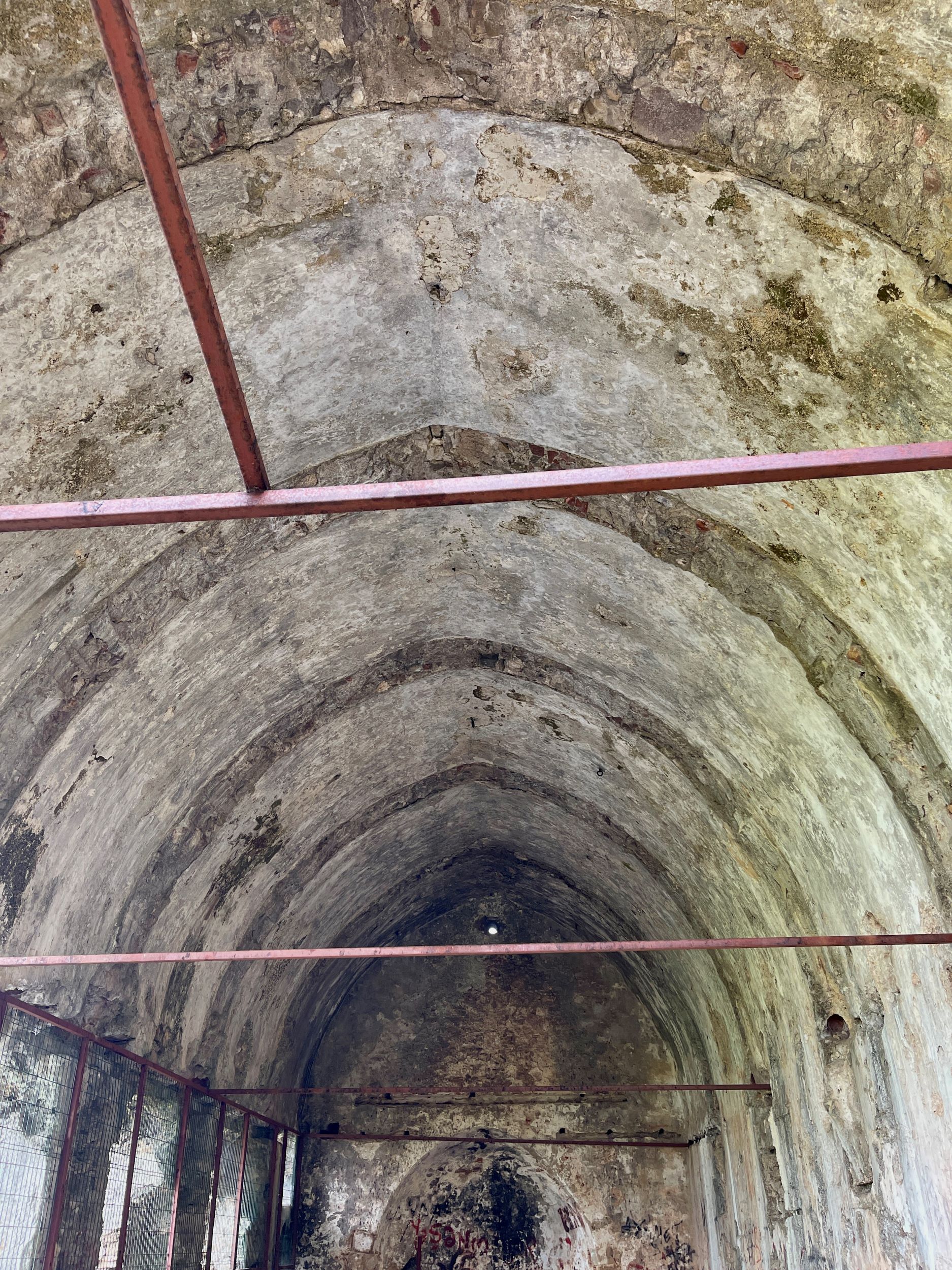
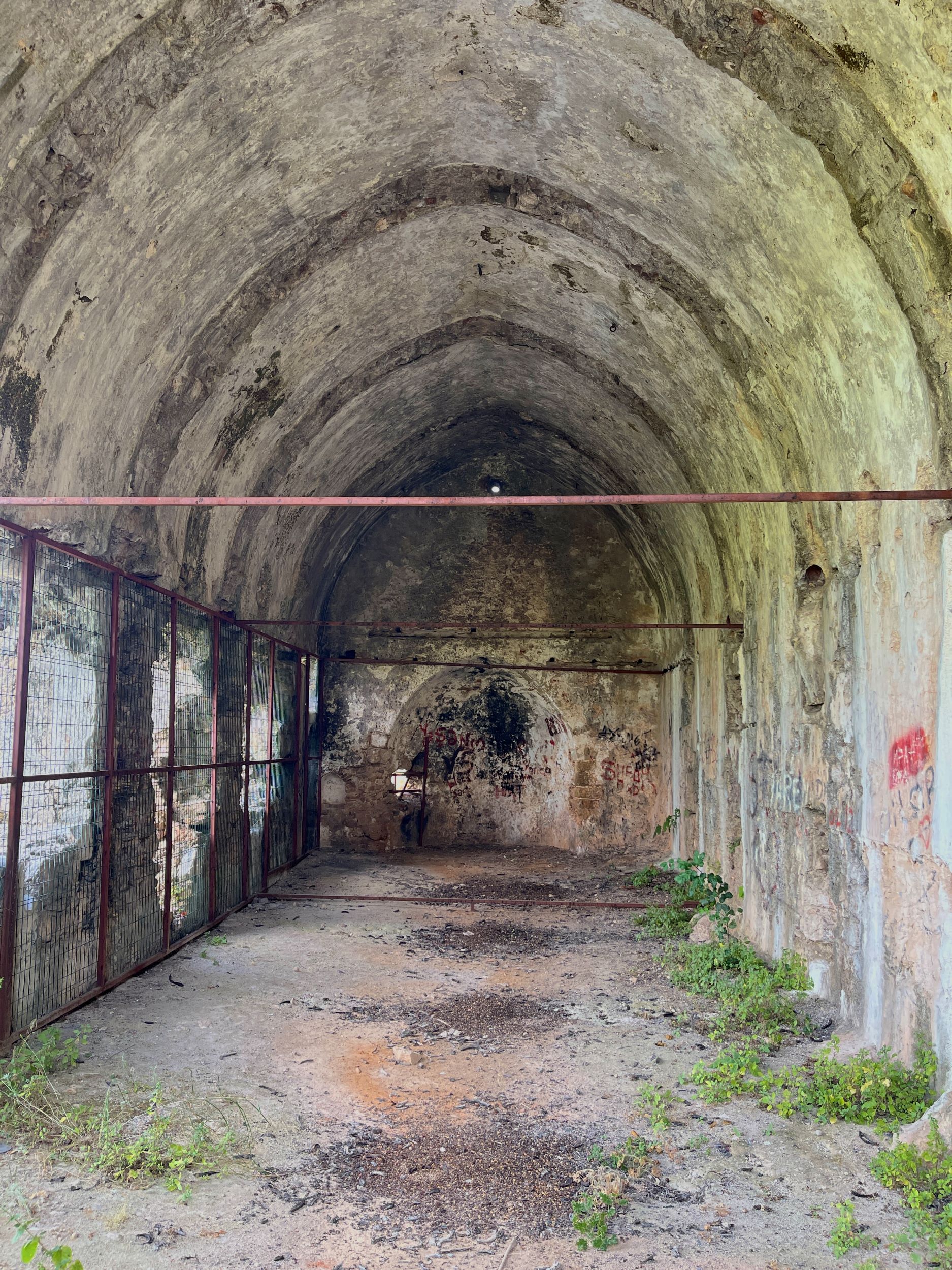
The church has a rectangular plan and a single nave and was constructed of rubble stone. Architectural evidence suggests that its original roof was a pointed vault and that there was a gallery level within the interior. Traces indicating the presence of frescoes have also been identified in the structure, which features a semicircular apse; however, most of the decorations have not survived to the present day. The building is currently partially collapsed and in a state of ruin.
Ottoman documents dating from 1892 record that permission was granted for the comprehensive restoration of two Christian places of worship within Alanya Castle, named “Cebrail” and “Aya Elena.” In the Antalya Cultural Inventory and local historical studies on Alanya, it has been accepted that the Church of Hagios Konstantinos and Hagia Eleni was restored in 1892–1893, as “Aya Elena” is identified with this church. However, since a separate Agia Eleni chapel, distinct from the main Konstantinos–Eleni Church, is also mentioned in Greek oral history records dating from 1964, it cannot be definitively stated that the “Aya Elena” referred to in the Ottoman document is this specific structure. Therefore, the 1892–1893 restoration should be considered a probable but unconfirmed historical association.
Source:
- Pavlos V. Rampaounis, Alaya: Around the Religious Life of the Place, 2018, National and Kapodistrian University of Athens, Department of Philology.
- Esra Tay, “Church Construction in the Antalya Sanjak After the Tanzimat,” Erciyes Academy, 36/2, 2022, pp. 781–809.
- Özge Açıkalın, Architectural Analyses of the Churches of Alanya and an Examination of Their Current State of Preservation, Süleyman Demirel University, Master’s Thesis, 2019.
- Leyla Yılmaz, “An Example of a Late Ottoman-Period Church in the Tophane Neighborhood of Alanya,” Konya Kitabı X, 2007.
- Süleyman Beyoğlu, “Non-Muslims in Alanya,” Alanya XIIth History and Culture Symposium, 2012.